
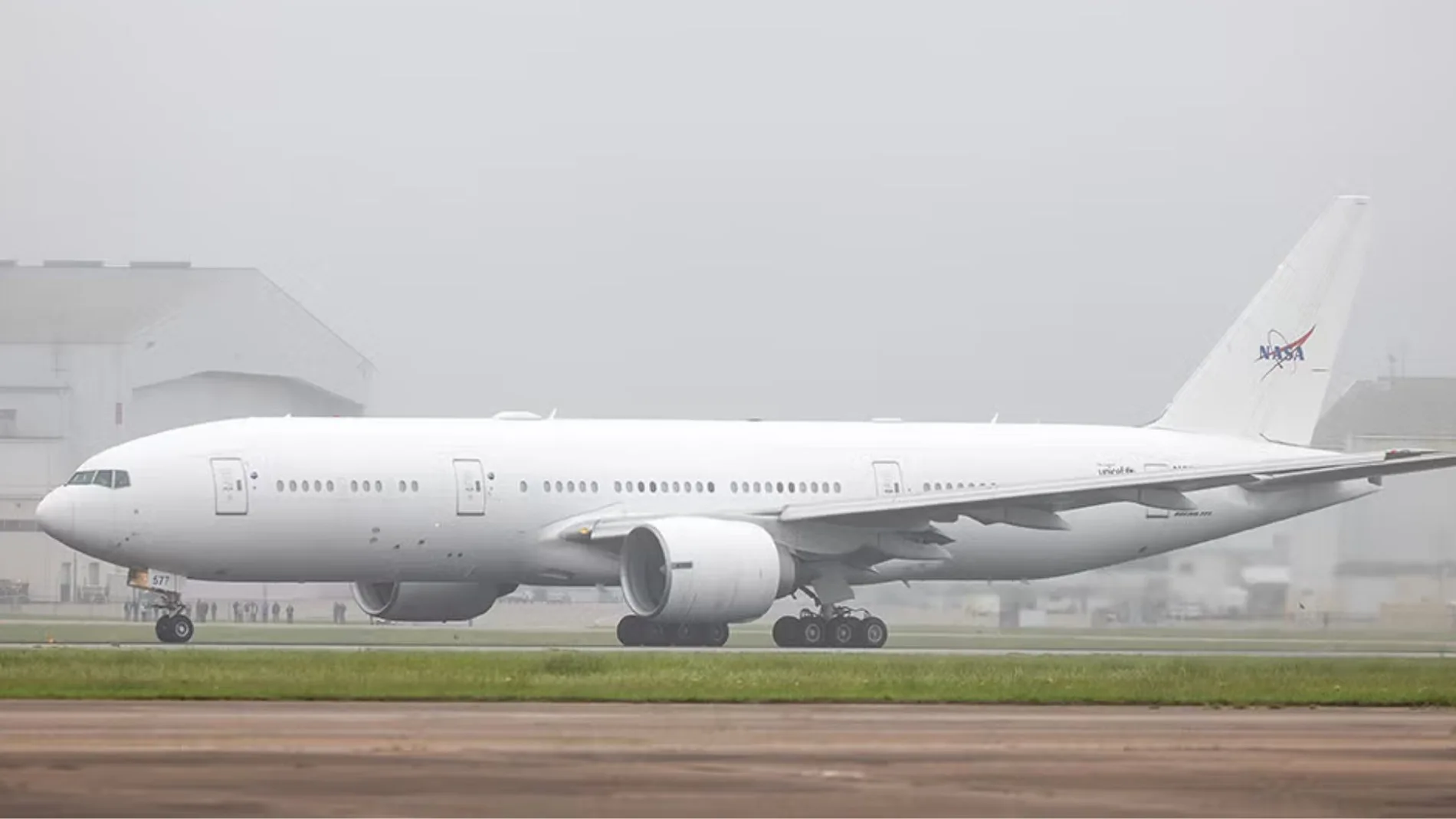
The POT has received its new flying laboratory, a Boeing 777 Retired commercial vehicle that has been modified for more than a year in Waco, Texas, to enter service with the space agency. The plane, replacement of the Douglas DC-8 of the agency, now retired, landed this Wednesday in the Langley Research Center of NASA, in Virginia, converted into the largest and most capable research laboratory in NASA’s Earth Sciences fleet.
‘NASA airborne missions use cutting-edge instruments to explore and understand our planet. NASA 777 will be the largest airborne research laboratory in our fleet. It will collect data to improve life on our planet and expand our knowledge of the Earth system as a whole.‘, he stated Derek Rutovicprogram manager Airborne Science at NASA headquarters in Washington.
NASA acquired the 777, previously operated by Japan Airlinesin 2022 to replace the retired DC-8. The gigantic passenger plane has been subjected to ‘deep structural modifications’ to become the agency’s next-generation airborne scientific laboratory.
The transformation into NASA 777
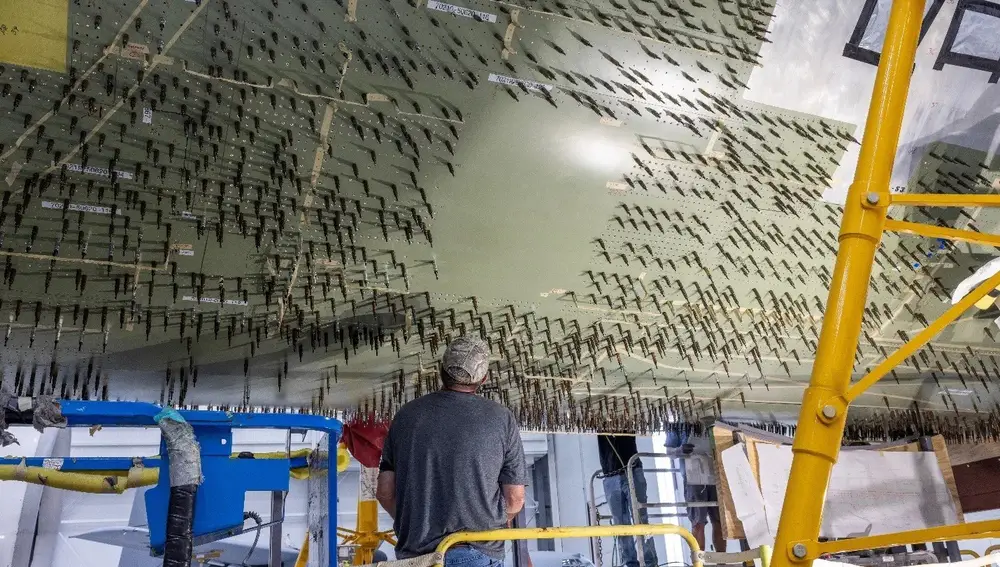
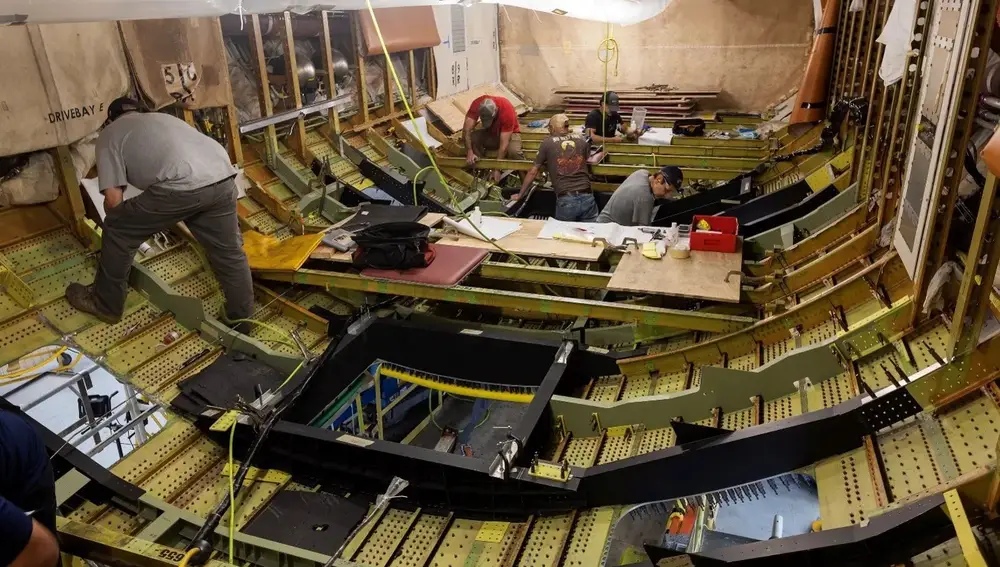
L3Harris Technologies engineers began the transformation in January 2025. This has required significant structural modifications, being necessary open areas of the fuselage to install specialized hardware. This included enlarging the cockpit windows into observation points and making dedicated openings in the underside of the fuselage so that advanced sensors and remote sensing instruments have a clear line of sight to the Earth’s surface.
The modifications also included the installation of specific research posts and a complex wiring system to connect payloads equipped with advanced sensorssuch as lidar and infrared spectrometers.
The DC-8 was a legend during the 37 years it was operational, studying everything from polar ice to volcanic ash. Replacing it was no small task. What differentiates the 777 is its enormous autonomywhich allows it to stay in flight much longer than previous aircraft. Can stay in the air for 18 hours straight and transport 34,000 kilos of equipment at a maximum altitude of 13,100 meters.
Additionally, the aircraft has been designed to accommodate up to 100 researcherscreating a huge analysis center in mid-flight. With a scope of 16,700 kilometersyou can explore some of the most remote areas of the Arctic and Atlantic in one go.
‘I am excited about what the 777 will bring. It gives us the ability to bring together more partners, more educational opportunities and more instruments. That will make a real difference in the data we collect going forward.‘, he stated Kirsten Boogaardhead of the NASA 777 program at NASA Langley and former deputy director of the agency’s DC-8 program.
The NURTURE mission
NASA already has its first big mission prepared, NURTUREacronym in English for the North American Upstream Atmospheric Structure Recognition and Tropopause Uncertainty Experiment.
In January 2027, NASA 777 will fly to high-impact winter systems to collect atmospheric datafrom North America and Europe to the Arctic, Greenland and the North Atlantic. will search ‘polar vortices of the tropopause’the invisible atmospheric engines behind extreme cold waves capable of paralyzing cities.
With this mission, NASA hopes improve prediction of extreme weather eventswhich could save lives and avoid billions in infrastructure costs thanks to comprehensive measurement of these events.