
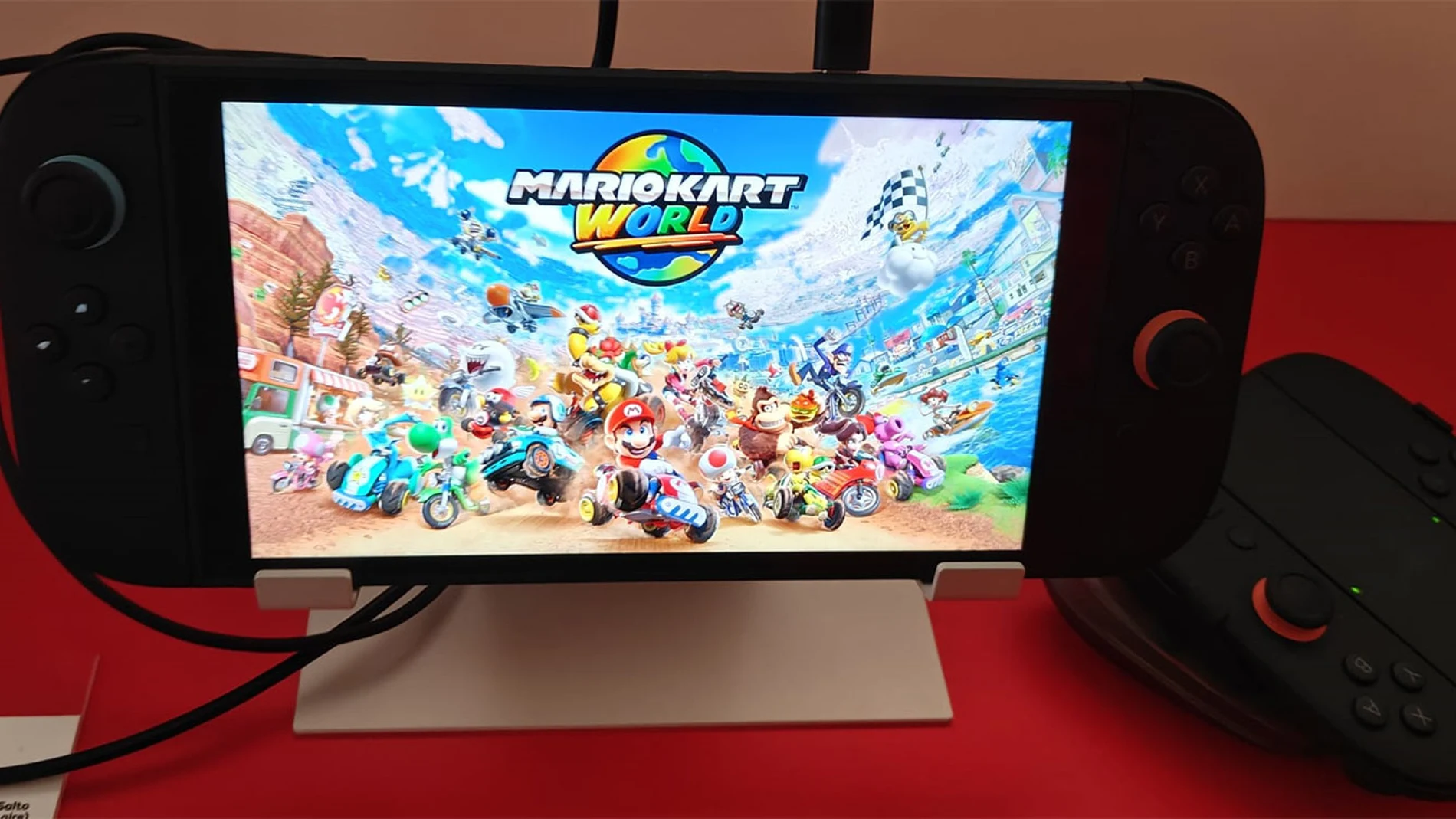
The revision in the price of Switch 2 can be interpreted as a sign that the traditional console model begins to show symptoms of exhaustion. For analyst Joost van Dreunen, this increase should not be taken as an isolated case, but as a sign that eThe business no longer works the same as in previous decades. His thesis maintains that the market no longer behaves according to the patterns of other generations, and that mid-cycle sales and forecasts based on past generations They have lost a good part of their reliability.
The old rules are starting to fail
All this derives from the increase in the price of the hybrid console, which It will cost 499.99 euros from September 1, 2026compared to the current 469.99 euros. The revision represents an increase of 30 euros compared to its launch price in the European market. This same policy will also be applied in other markets, after several years in which manufacturing consoles is increasingly expensive. A good example of this is that Sony and Microsoft had already raised the price of their systems during this generationsomething unusual in a business where it was normal to reduce hardware over the years.
Van Dreunen considers that the case of Nintendo is especially revealing due to its traditionally prudent way of operating, since the Kyoto house has always has closely monitored its licenses, costs and supply chainin addition to betting for years on hardware with a lower price than that of its competitors. Precisely, the fact that Nintendo raises the price of its new console before the first year on the market suggests a problem that goes beyond a simple rate review.
Nintendo as a notice
The analyst interprets it as a sign that The previous model is beginning to become obsolete. For years, it was common for a console to come onto the market at a high price, stay that way for the first few years, and then drop in price to reach more players. In the current generation, however, just the opposite has happened. PS5, Xbox Series and now Switch 2 are more expensive products, while Manufacturers face higher costs for components, memory and logistics.
The situation also comes at a delicate moment for the market itself, since sales advance at a slower pace than in other stages and a growing part of the business is now divided between services, subscriptions, PCs, mobile phones and games capable of staying active for years without depending so much on a new machine. This forces us to rethink concepts that the industry took for granted. Seven-year cycles, mid-generation sales and periodic hardware renewals no longer seem such reliable references. Manufacturing technology costs more and more and many players cannot bear these increasingly high costssomething that inevitably complicates the classic model.
An increasingly difficult business
The question is to decide if the industry wants to sell machines or offer entertainment. If everything continues to revolve around hardware, each price increase can drive away more players. On the other hand, if games, services and long-term access are the basis of the relationship with the user, Manufacturers will have to look for other formulas so that their platforms remain active for many years. In reality, the underlying problem is no longer whether companies will have to adapt, but how each one will do it when the usual rules no longer serve.