
Today the entire football planet lives pending a single match: FC Barcelona – Real Madrid corresponding to matchday 35 of Laliga EA Sports. One of the most important games of the season is coming, a new Clásico with much more than a title at stake. Arbeloa’s men have set themselves as a priority objective to prevent FC Barcelona from becoming champion and seeks to close a complicated season with a claim against its eternal rival at the Spotify Camp Nou.
Meanwhile, in Barcelona They are already preparing to go wild in a packed stadium.
But the Clásico provides for everything and not just for wins or errors or successes on the pitch or in the VAR. The party of parties is alsoIt’s a good excuse to remember anecdotes and legends from both clubs. And the fact is that culés and meringues are united by history and have been key in the political and social future of Spain.
A strange episode
One of the episodes most incomprehensible in the history of Spanish football – of which each team gives its particular version – occurred in the month of October 87 years ago and links Real Madrid with the Catalan championship in 1936.
On July 17, 1936, the Spanish Civil War broke out and the rebels, led by Emilio Mola and Francisco Franco, began to take control of some cities. The football season begins with apparent normality, but On October 3 of that year, the Spanish Football Federation announced the suspension of the 1936/37 season.. When the Civil War broke out, the clubs had to face economic ruin and many players lost their lives on the battlefield or went into exile.
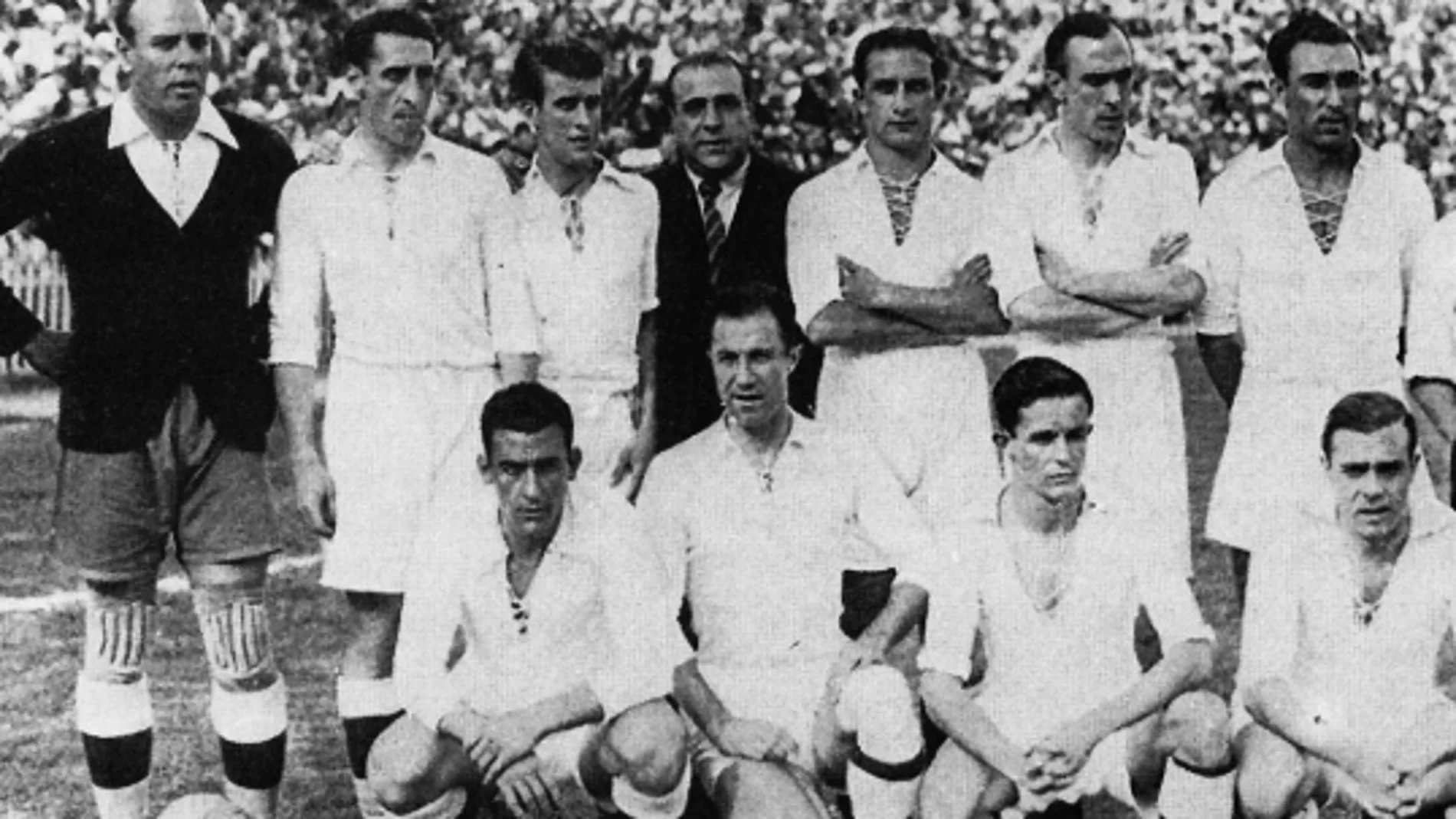
Soccer was impossible, and Pablo Hernández Coronado, who had been the team’s goalkeeper and by then was general secretary of the club, He conceived the idea of moving Madrid to Catalonia and enrolling it in the Catalan championship. By then the front was still very far from Barcelona. Madrid had a good team. They had been the last Cup champion, a few days before the war, beating Barça 2-1 in the final.
Madrid took the lead in the first minutes with goals from Eugene and Lecuebut Escolà’s goal in the 29th minute left the scoreboard uncertain until the end. This match was his last as a Real Madrid player. Ricardo Zamorawho made several decisive stops to lift the title.
Many official organizations moved from Madrid to Barcelona, Valencia and Alicante to prevent them from falling into the hands of the rebels.
In Madrid, The General Directorate of Security had prohibited any sports competition. Likewise, the Popular Front had seized the Royal Spanish Football Federation, the Castellana Football Federation, the Athlétic Club de Madrid (as the current Atlético de Madrid was called in those years) and Real Madrid.
Likewise, at the end of August and despite the bombings and the depletion of their squads, Madrid and Athletic began training for the following season, but they only played a few friendly and charity matches. In Madrid, the Public Order Delegate had banned all official football tournaments.
However, Madrid and Athlétic wanted to compete, so they tried to join the Valencia Super-regional Championship and Murcia. To prevent a possible closure of the road between Valencia and Madrid, it was decided that it was best for both teams to settle in Valencia or Alicante for the duration of the tournament.
Everything seemed to be on track, since even the first day had been drawn, including both teams, but at the last minute, The Federation did not allow the Madrid teams to participate in the Super-regional Championship, in principle, because it did not consider it safe enough.
Barça refused to give up their field to the “guest”
Real Madrid, at the request of its Technical Secretary, Pablo Hernández Coronado, In mid-October 1936, it offered to play as a “guest” club in the Catalan Championship, which had the participation of Barcelona, Spanish, Badalona, Gerona,Sabadell and Granollers. Madrid He had just won the Cup against Barça on June 21, 1936. One more reason to add could be a certain culé fear that Madrid could win the Catalan Championship against them. This would mean that a non-Catalan team that represented ideals contrary to those defended by Barcelona could be champion of Catalonia.
Determined to play, the white team moved to Catalonia with the goalkeepers Espinosa and Alberty, the defenders Ciriaco, Quesada and Bonet, the midfielders Pedro Regueiro, Villita, Valle and Antonio Bonet, and the forwards Luis Marín, Luis Regueiro, López Herranz, Lecue, Malbo, Emilín Alonso, Alfonso Sanz and Emilio Sánchez.
On October 23, the Barcelona press, announced that the Union of Football Professionals of Catalonia supported the inclusion of Madrid in the competition “out of social and citizenship duty”. The following day, the Football Players’ Union agreed to send the pertinent letter to the Spanish Federation, which at that time was also subject to a delicate seizure process, and was being managed precariously from Barcelona by Secretary General Ricardo Cabot.
The Spanish welcomed the proposal with affection, but not Barcelona, which refused to lend its stadium.
In any case, the prospects for a settlement were hopeful and Madrid He decided to rent a spacious chalet in El Masnou to set up his headquarters and began his training.
A few days later, a meeting of all the Catalan clubs was called, which showed their support for Madrid, with the exception of Barcelona. The refusals of Barça and the Catalan Federation ended Real Madrid’s chances of participating in the regional competition of Catalonia.
The Catalan Federation, through its President, Ramón Eroles, argued that the championship could not be altered based on regulatory principles. The subsequent offer to host, individually, to Madrid players who wanted to play for Catalan clubs was rejected by Madrid.
Another solution proposed to the Madrid club was the creation of another championship taking into account the Catalan Federation and other federations to organize a competition in a larger area where the Republic was still established. All this with the imminent suspension, if said new competition was carried out, of the cup that was being played. However, the Madrid He was not interested in this proposal.
Barça and its “racial essence”
According to the minutes of the meeting of the Barça Employees Committee on October 14, 1936, the Club opposed the inclusion of Madrid in the Catalan Championship so as not to “mixify nor lose any of its racial and deeply spiritual essences that constituted the basic foundation of its splendid history.”
In other words, that Only Catalan teams could play in the Catalan Championship so as not to ruin their identity.
Real Madrid, in a note to the press, expressed its surprise at such a decision, but there was no turning back. Madrid did not play in the Catalan championship and left the El Masnou mansion.