
Water management in a context of climate change and scarcity requires progress in maximizing its use, recovering resources, increasing the energy efficiency of treatment facilities, decarbonizing the sector and accelerating the transition to the circular economy.
All of these objectives have been covered by the European project REWAISE, financed by the Horizon 2020 program and with a budget of more than 16 million euros, in which 25 organizations from 11 countries have worked for six years, which Aqualia has coordinated and has recently completed and presented its results.
Main milestones
Among the objectives achieved are recovery rates in seawater desalination stations close to 80% in desalination processes, reductions of up to 17% in energy consumption in the purification process and decreases of up to 42% in water losses in distribution networks thanks to advanced monitoring and operational optimization tools.
Furthermore, the solutions developed have made it possible to recover added value resources present in wastewater, produce fertilizers for agricultural use and generate high-quality renewable biogas (biomethane), which contribute to making infrastructure processes more efficient and sustainable.
The project has also demonstrated the potential of complementary water sources to reduce pressure on conventional resources. Thus, seawater desalination has addressed the optimization of energy consumption and incorporated wind and solar thermal energy; and the reuse of treated water allows different qualities to be obtained depending on the use to which it will be put: agricultural irrigation, urban washing or industrial uses.
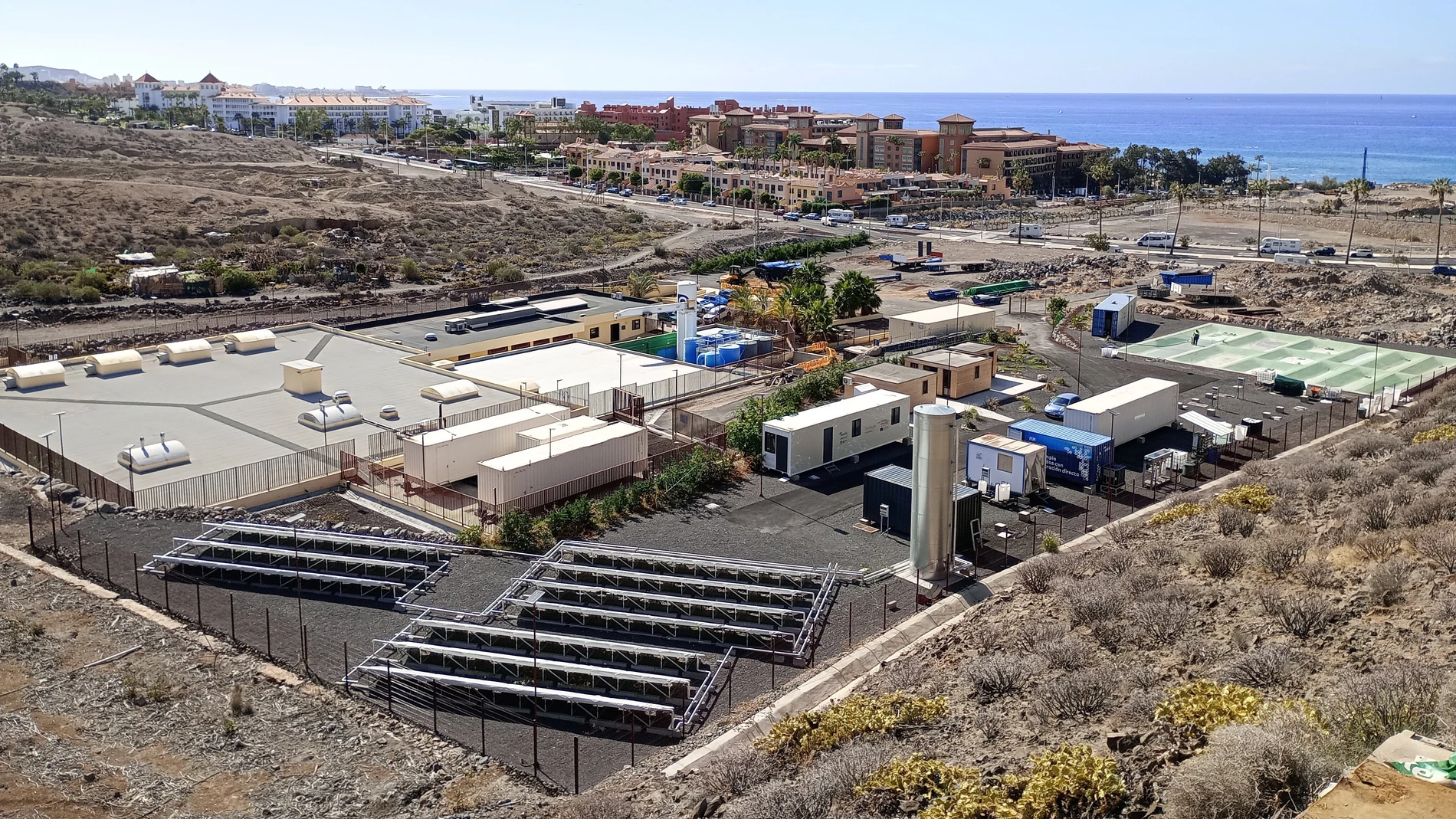
To develop and validate the technologies, work has been done in nine Living Labs, real test benches where innovative technologies – related to the availability of water resources, energy efficiency and the decarbonization of the sector – can be developed and tested, the real effectiveness of the models verified and their replicability verified on an industrial scale.
The Living Labs, in turn, have been structured into three large European hubs: Mediterranean, with locations in the territories of Tenerife, Dénia, Almería and Extremadura; Continental, with experiences in Sweden, Poland and the Czech Republic; and Atlántico, developed in the United Kingdom and northern Spain.
Living Labs in Spain
The three Spanish sites are linked to Aqualia. In Moaña, Pontevedra, 80% of the sanitation network has been digitalized, which has digital tools that will improve its management. In Tenerife, the technologies developed at the WAVE innovation center have made it possible to achieve recovery rates of drinking water from seawater close to 80% and obtain products such as Alma de Mar gourmet salts. In Salamanca, nutrient recovery solutions have shown the ability to obtain high quality biogas and produce up to 22 tons of struvite per year and in Íscar biosolids are obtained, both for agricultural use.
Beyond technological advances, the project has strengthened collaboration between water operators, public administrations, research centers and companies in Europe, facilitated the replicability of the solutions developed in different geographical and climatic contexts, and promoted new alliances with other European initiatives to accelerate the adoption of new technologies and more sustainable management models.