
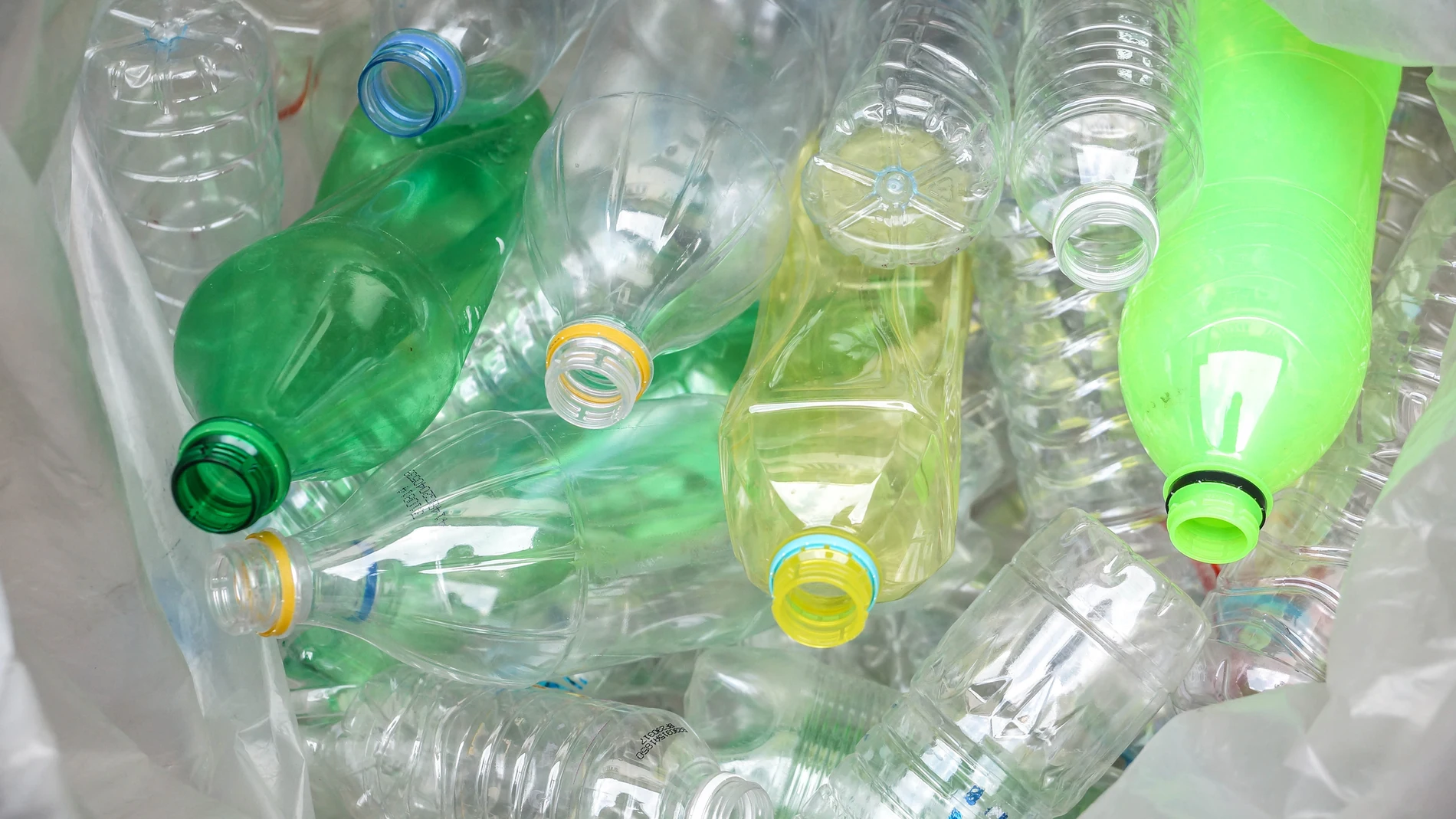
Plastic is one of the most used synthetic materials in the world due to its low cost, durability and high malleability. However, it is also one of the most serious and persistent pollutants on the planet. Because of this, many scientists and architects are looking for new ways to reuse this component to reduce its presence in nature and make people’s lives easier.
One of the most surprising and useful projects related to the recycling of this material is the one being carried out by the Nigerian engineer Yahaya Ahmed in Kaduna, where he has already achieved build 15 homes out of plastic bottles filled with sand. An idea that arose after observing the large amounts of waste that accumulated in cities and the problems they caused by clogging drainage systems during the rainy months.
It all started as an experiment in which Ahmed, director of the Association for the Development of Renewable Energy, wanted to put into practice the knowledge he had acquired from a German inventor, as he explained to the magazine “PUNCH”. With this idea in mind, he decided collect 14,800 bottles, fill them with sand and begin the construction of what would be their first house.
He gave work to unemployed young people to collect the material
This house was built between 2012 and 2013 thanks to the collaboration of collection teams, who were in charge of collecting all the plastic bottles that accumulated in the gutters, farms and streets of the city. These teams were made up of both professionals and unemployed youthwho were offered a sum of money in exchange for contributing to cleaning up the environment.
Once they had the necessary material, construction began. To do this, they filled all the bottles they would use by hand and began to incorporate them into the walls of the house thanks to a mixture of laterite and coarse sand. As Ahmed explained, his goal was not to completely replace traditional construction materialsso they continued to use cement, as well as wood and glass for doors and windows.
Observing that the first house was completely stable and that the bottles fulfilled their function, the project expanded. Ahmed’s organization began building this type of affordable housing both in Kaduna and in other Nigerian cities such as Kano or Port Harcourt. Including great challenges such as the construction of a property with three bedroomswhich currently acts as a home and office.
Their structures can remain intact for between 200 and 250 years.
To demonstrate that his construction method is capable of supporting multi-story structures, the engineer also built a five-bedroom duplex located in Abuja. In total, the project already has 15 homes built incorporating plastic bottles in their walls. Something that not only reduces final costs, but also provides different benefits for those who reside in them.
As Ahmed explained, the presence of plastic and sand increases the insulating capacity of the walls of a home. This ensures a cool temperature during the hottest summer days, as well as maintaining heat in the winter months, allowing its residents to save on air conditioning and heating systems. Likewise, it came to ensure that its structures They can remain intact for between 200 and 250 years.
Despite its advantages, this practice has not spread rapidly in the country. According to the engineer himself, this is due to different issues such as the lack of government support or the difficulty when requesting construction permits. Added to this is the difficulty in finding plastic bottles, which has allowed reduce the presence of plastics on the streets and clogging of drains.