
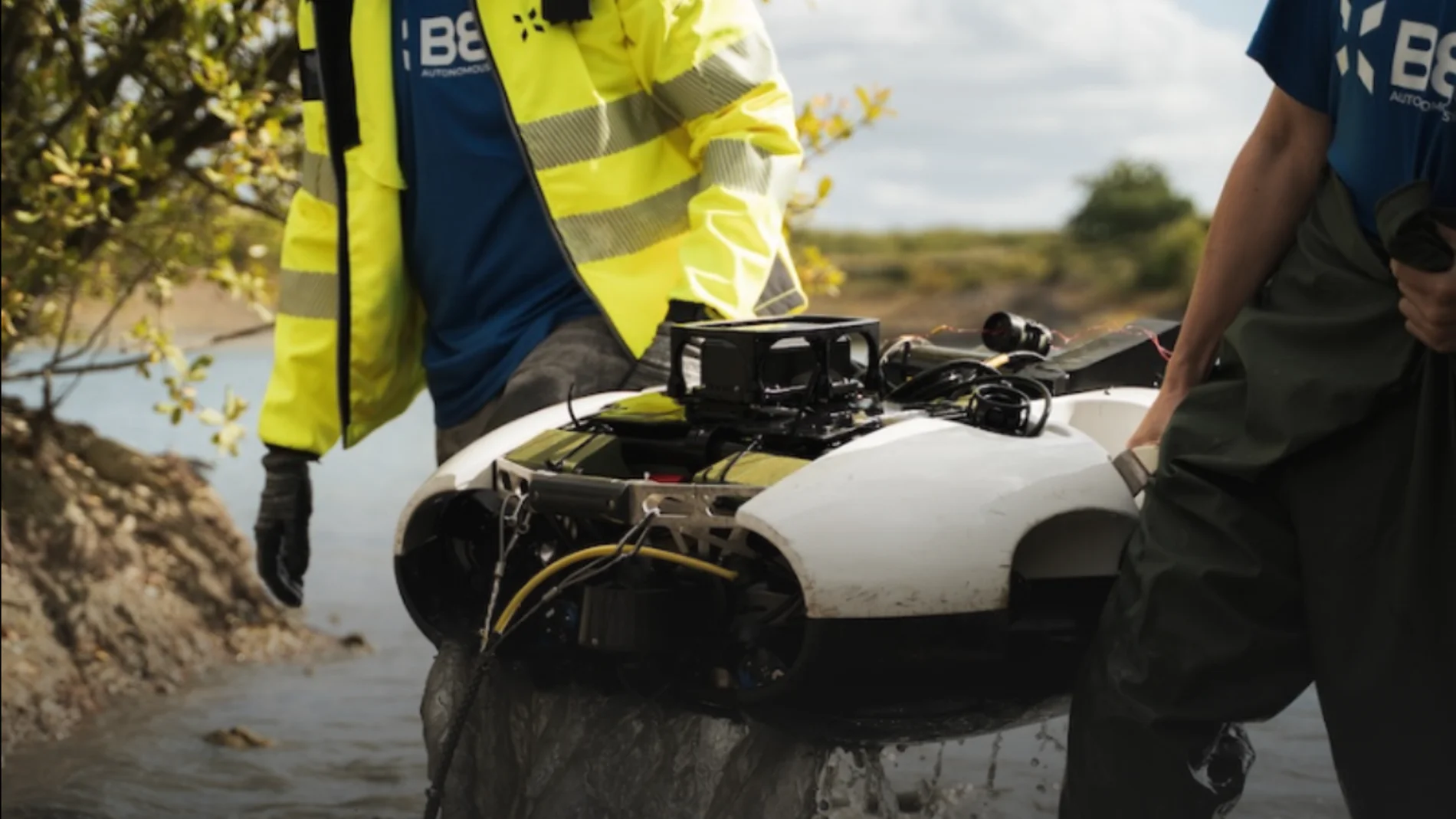
An underwater mine can remain hidden for years and turn a sea passage into a threat to any ship that passes through it. Detecting it is just the beginning: someone has to identify it, get close enough to intervene and neutralize it without causing an explosion. that endangers those who carry out the operation. To solve that problem, Singapore-based company BeeX has developed ALPHA, an underwater drone capable of approaching submerged explosives, placing a neutralizing device and retreating before activating the charge remotely.
The company demonstrated this capability during an event in the United Kingdom, organized by the defense consultancy Copper Turtle with the participation of representatives from the British Navy, industry and academia.. The vehicle intervened on two targets: a mine moored underwater and a steel plate suspended from a buoy that rotated unpredictably.. This second test added a significant difficulty: the drone had to maintain its position and place the neutralizer on a moving surface, instead of on an object resting on the seabed.
The key to ALPHA is that it can stop and remain stable in the water. Unlike other underwater vehicles designed primarily to move and map the bottom, this device can approach a target and maintain a precise position while its sensors help inspect it. during the demonstration operated semi-autonomously, under human supervision from a laptop, and combined sonar and cameras to examine targets.
Once positioned next to them, the drone placed the neutralizers supplied by the British company Alford Technologies. After checking that they were ready, it was withdrawn and the charge was activated using an acoustic firing system developed by Blueprint Subsea, which transmits the order through the water without the need to connect the explosive via a cable. After each detonation, ALPHA again used its sensors to assess the damage and check the result.
The system brings together technologies from several companies. In addition to acoustic and visual sensors, The demonstration incorporated EPULSE, from ELWAVE, an electrical detection system that allows objects of interest to be identified even when the water is cloudy and visibility is reduced. It can also help locate objects exposed or partially buried on the seabed. This combination is important because a mine is not always suspended in water nor is it easily visible from the outside.
The stability of the vehicle is not a minor detail. The movements of the device can introduce noise into the measurements and make the data difficult to interpret. Remaining motionless next to a target improves inspection conditions and facilitates more precise intervention. Furthermore, BeeX showed that its engineers could access the system from Singapore via Starlink and remotely modify certain mission parameters. Connectivity could also facilitate remote control of future operations, although underwater communications and mission conditions impose limitations that must be taken into account.
The military interest goes beyond replacing a diver with a robot. Traditional demining operations may require specialized vessels, human teams and remotely operated vehicles. An autonomous system capable of moving without a permanent cable, locating a target again and maintaining position to intervene could reduce personnel exposure and allow multiple units to be deployed to cover larger areas. ALPHA is also designed to be able to operate from unmanned surface vesselswhich would expand the possibilities of working without crews near the dangerous zone.