
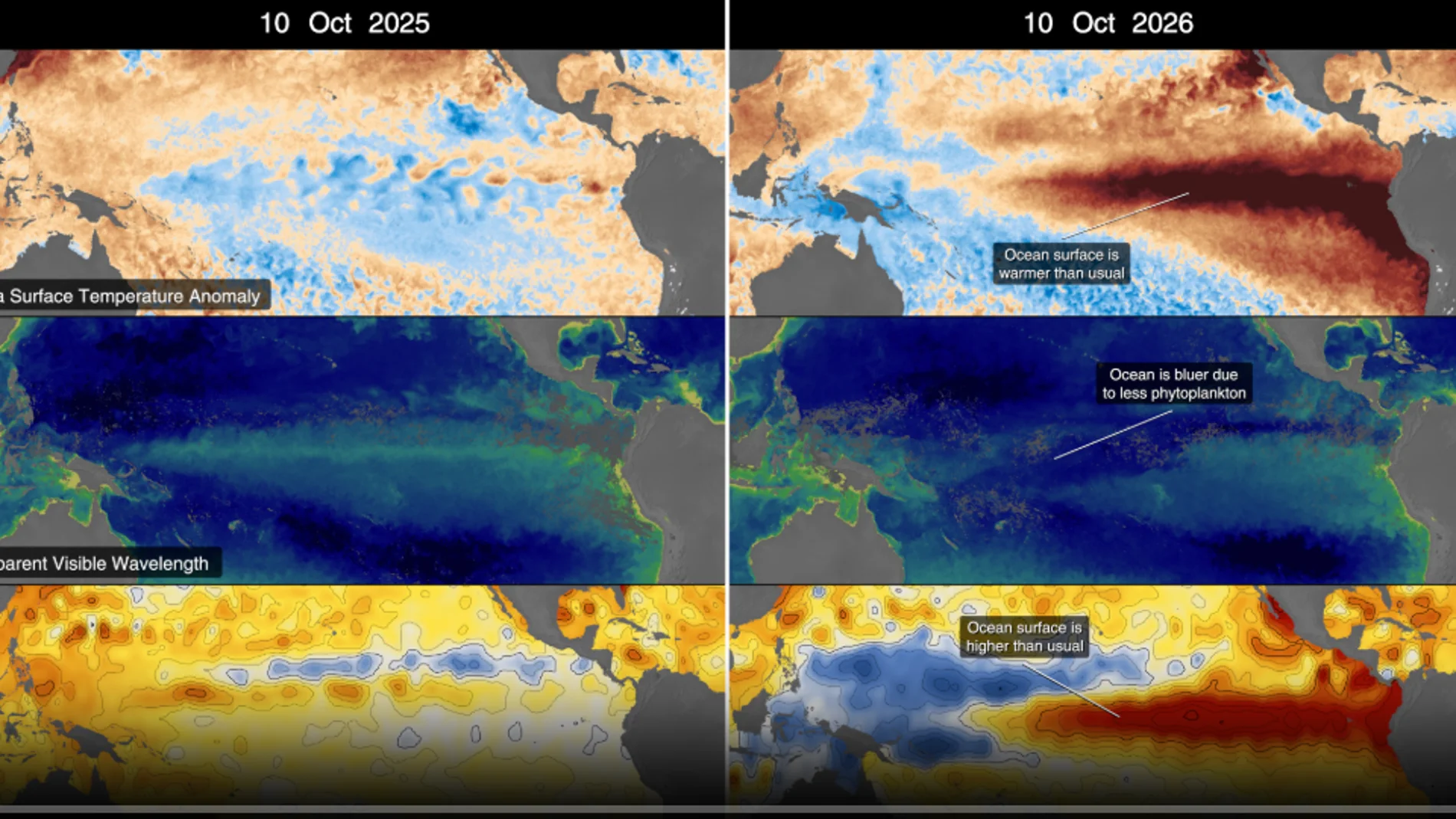
The current episode of The Child could be among the most intense on record and give an additional boost to the global average temperature during 2027. However, in statements collected by Ep. the Eltiempo.es meteorologist and doctor in Physical Sciences, Mar Gomezclarifies that in Spain there is no direct relationship that allows us to predict a warmer, rainier or drier winter as a consequence of this phenomenon.
“Unlike other regions of the planet, where its effects on precipitation and temperatures are much better established, in our country There is no clear and direct correlation between this phenomenon and a certain atmospheric pattern“explains Gómez. For this reason, he emphasizes that it cannot be stated with certainty what type of winter will be recorded in Spanish territory as a result of El Niño.
A phenomenon of great magnitude on a global scale
According to the forecasts of the World Meteorological Organization (WMO)this El Niño episode could reach unprecedented intensity, reaching outside the usual monitoring scales of the last four decades. The expert warns that the latest forecasts indicate that “it could become one of the most intense episodes of which we are aware, and even exceed historical records”.
In the equatorial Pacific Ocean, WMO data contemplate anomalies up to 3.8 °C above the usual for the quarter from November to January, “an extraordinary figure that reflects the magnitude of ocean warming associated with this episode“, highlights the meteorologist.
Gómez explains that El Niño is an alteration of the coupled ocean-atmosphere system that modifies the Walker circulation, weakens the trade winds and displaces regions of tropical convection. Its effects can extend thousands of kilometers “through atmospheric teleconnections”altering circulation “on a large scale and modifying temperature and precipitation patterns in numerous regions of the planet.”
Possible impact on temperatures in 2027
The influence of this phenomenon, which “could last until 2027”will be more evident on a global scale, since it favors the transfer of heat from the Pacific Ocean to the atmosphere. In this way, it could raise the average temperature of the planet by a few tenths, an increase that would add to the current global warming.
Given that this effect usually manifests itself with a certain delay compared to the peak intensity of the phenomenon, an additional boost in global temperatures is expected in 2027. Even so, the expert emphasizes that this does not imply that “it will necessarily become the warmest year on record.”
For the expert, the scientific signal is “very clear” and points to a phenomenon of extraordinary intensity. However, he concludes by calling for caution and recommends “waiting to know the evolution of the episode and its average intensity for several months to determine if it finally becomes the most intense.”