
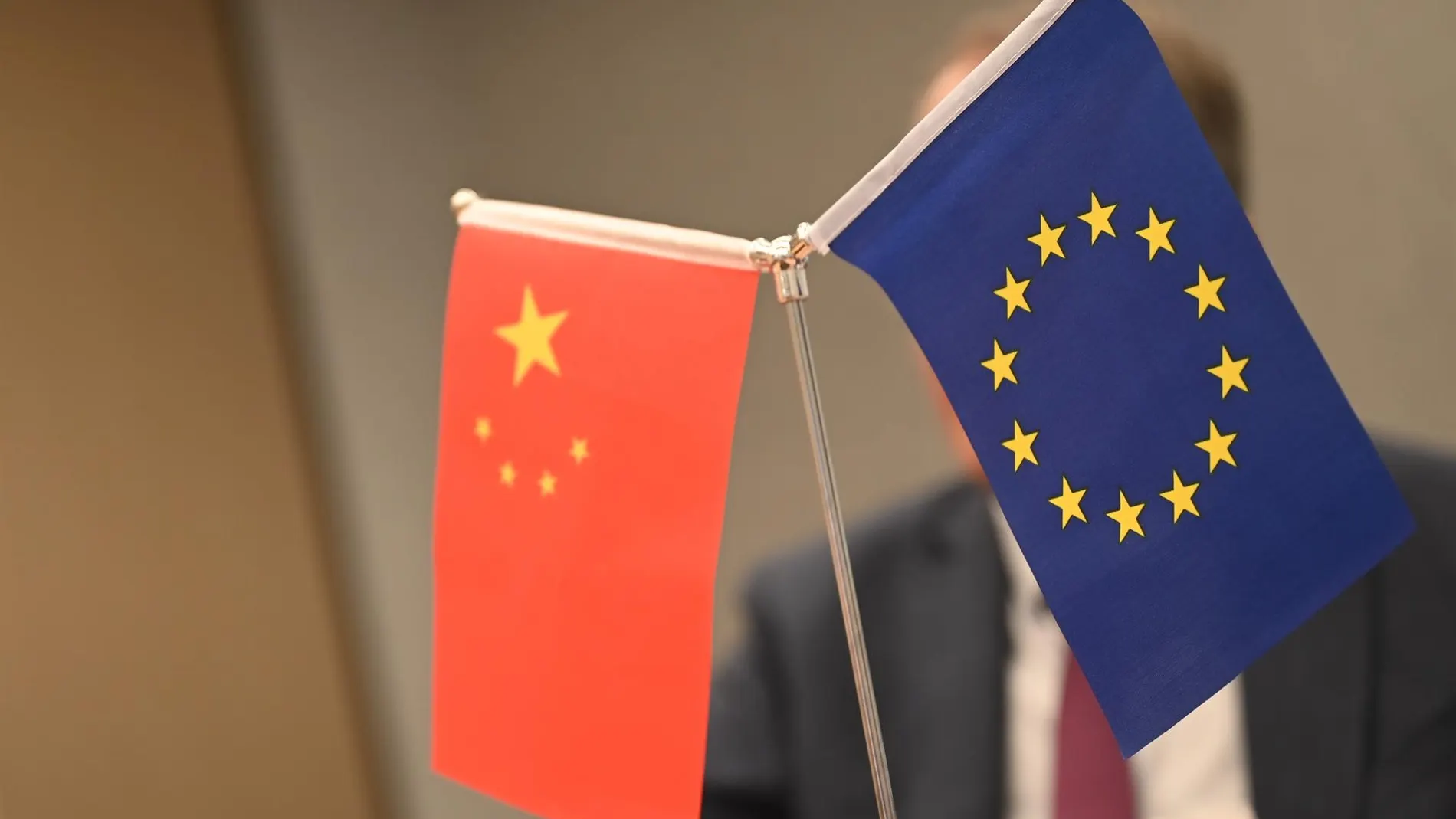
In recent decades, China has managed to become one of the great global economic superpowers. Its growth over the last 50 years has been considered by some experts to be one of the most surprising in modern history. However, this trend could be in danger, as revealed by the recent stock market collapse this October 27, 2026.
Today, the Asian stock market has been characterized by two clear trends. The first, the boost from South Korean and Japanese technology companies after Anthropic’s request to go public on the Nasdaq. And, the second, the notorious collapse of China, which is at its lowest level in the last 14 months and with HSBC, one of the largest banking and financial services organizations in the world, con a drop of approximately 6%.
This downward trend has caused the Chinese stock market to suffer losses of more than 3.5 trillion dollars in capitalization since the last month of May. An issue caused, among other factors, by the economic model that its industry has followed in recent decades and a notable loss in the consumption of its nationals. Something that could significantly affect European productions and, more specifically, their profits.
Why has the Chinese stock market recorded losses?
China’s CSI was recently reported to have entered the bear market after falling 20% lower than the figures obtained at its June peak. This has caused ten weeks of losses for the Asian giant, as revealed by the figures in the Chinese benchmark index that brings together the 300 stocks with the highest capitalization and liquidity listed on the Shanghai and Shenzhen stock exchanges.
These figures represent their worst drop since the data recorded during the 2020 pandemic, when their exports suffered a drop of 17.2% between the months of January and February, paralyzing the country’s economy. However, the current context is quite different from what the Asian giant had to face at that time, since China’s exports have grown by 4.5% in 2026.
The main reason that can explain this decline is found in the excess production of its different industries. According to figures analyzed by the Mercador Institute for China Studies, the 23.8% of its national companies in the industrial sector present losses and yet they continue to produce at a level well above the demand of their domestic consumers. This means that they have to lower prices to be able to compete with other companies.
How does this issue affect Europe?
Due to slowed national consumption, Chinese companies have increased their exports to, among other regions, Europe, with the intention that Sales abroad allow you to increase your profitsas the strategic consulting firm Roland Berger explained in an analysis of what is known as China Shock 2.0. Something that has been observed in the increase in industries such as automobiles, textiles, machinery or steel.
This issue causes a clear imbalance in competition between companies of national origin and those of Chinese origin. Well, the latter offer their products at a much lower cost that European companies cannot afford without significantly reducing their profits. Something that has caused the European Union to be considering the possibility of increase restrictions on exports of the Asian giant, especially in sectors such as chemicals, furniture and machinery, according to Bloomberg.
Specifically, on October 9, news broke of a new agreement between the EU and Beijing to reduce the trade deficit that the former maintains with China. Among the measures announced by the European Commissioner for Trade, Maros Sefcovic, was the reduction of “more than half” of exports of the Asian giant, among other industries, the automobile industry. Likewise, the agreement also included the reduction of tariffs for products of community origin.