
A United Nations report estimates that 2.2 billion people lack drinking water on our planet. Much of them has to do with the absence of water treatment plants, a nearby water source or poor infrastructure. But there may be a solution, according to a recent study published in Proceedings of the National Academy of Sciences: Extract water from the air.
Although said this seems like a utopia, the reality is that on our planet there are about 13 million gigaliters (a 1 followed by 9 zeros) of water suspended in the atmosphere. While this represents only a fraction of the total water on Earth, it continues to constitute a substantial source of fresh water. So much so that, at 2.2 billion people without access to water, almost 6 million liters correspond.
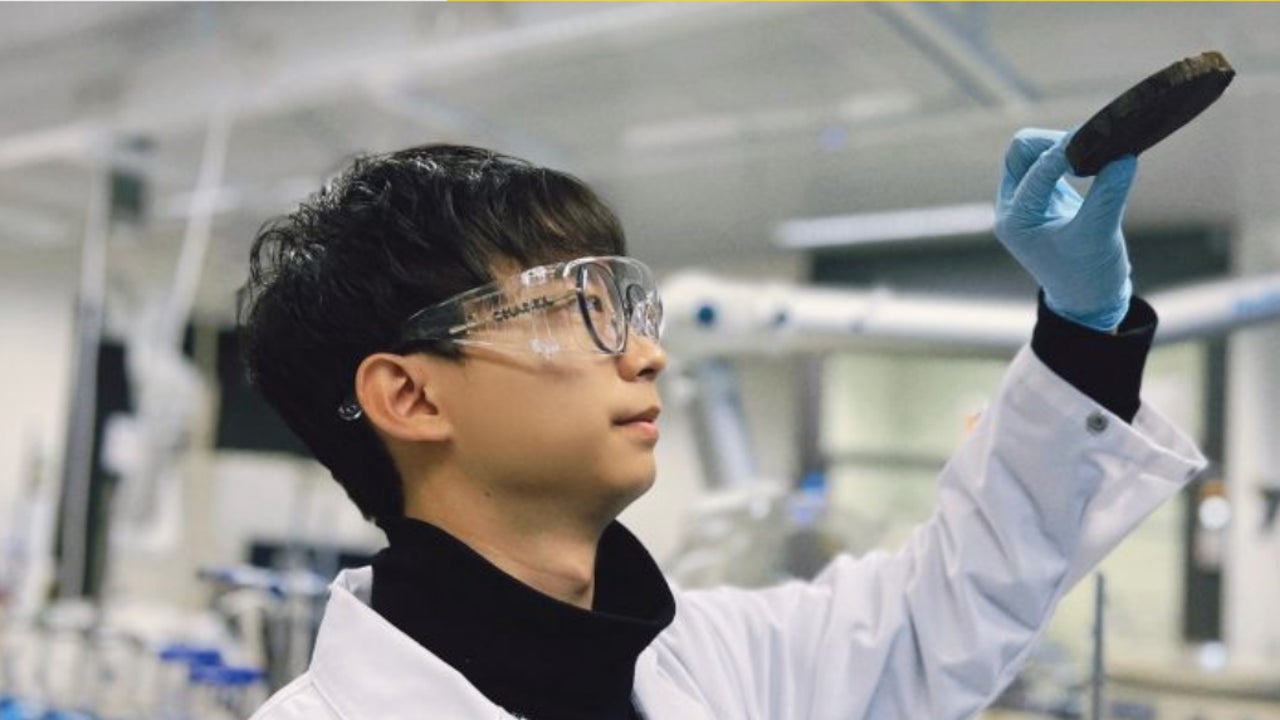
The study, led by Xiaojun Ren, describes a light nanomaterial as a pen capable of extracting drinking water or rather of water vapor present in the air. Ren’s team maintains that this material, an aerogel of graphene and calcium oxide, You can retain your weight in water more than three times and achieve it much faster than existing trade technologies. These characteristics allow you to have direct applications for the production of drinking water from the air.
The study is part of an international collaboration led by the Center for Excellence for Carbon Science and Innovation of the Australian Research Council, the University of Nueva Gales del Sur, the expert Rakesh Joshi, and the Nobel Prize, Sir Kostya Novoselov.
“Our technology It will have application in any region where we have enough moisture, but limited access or limited availability of clean drinking water – Joshi explains in A statement -. This is an excellent example of how interdisciplinary and global collaboration can lead to practical solutions to one of the most pressing problems in the world: access to drinking water. ”
The nanomaterial is based on the very studied graphene oxide, which consists of a single thick atom. Graphene oxide has good water adsorption properties, which allow water to adhere to the surface of a material. For its part, calcium also has good water adsorption properties. Ren’s team decided to observe what was happening if both were combined.
An important characteristic of the materials that adsorb water effectively are the strong hydrogen bonds between the water and the material that is adsorbed, something that both graphene oxide and calcium possess. The stronger the hydrogen bond, the greater the water adsorption capacity of the material. But this effect is enhanced if calcium is interspersed with oxygen in graphene oxide.
“We measure the amount of water adsorbed on graphene oxide and measure X. We measure the amount of water adsorbed on calcium itself and obtained Y. By measuring the amount of water adsorbed on the graphene oxide interspersed with calcium, we obtained much more than x+y. Or as if 1+1 were a number greater than 2 – add ren -. One of the reasons for the extraordinary capacity of the material to adsorb water”
As if this were not enough, the aerogel designed with this system is one of the lightest materials created by the human being.
“The only energy that this system requires is the small amount necessary to heat it at about 50 degrees and release the water from the aerogel, ”explains Daria Andreeva, co -author of the study.
Simulations modeled in supercomputer explained the complex synergistic interactions at the molecular level and They will allow to design even better systems for the generation of atmospheric water, offering a sustainable solution to the growing challenge of fresh water availability in regions with water stress around the world, according to the authors.