
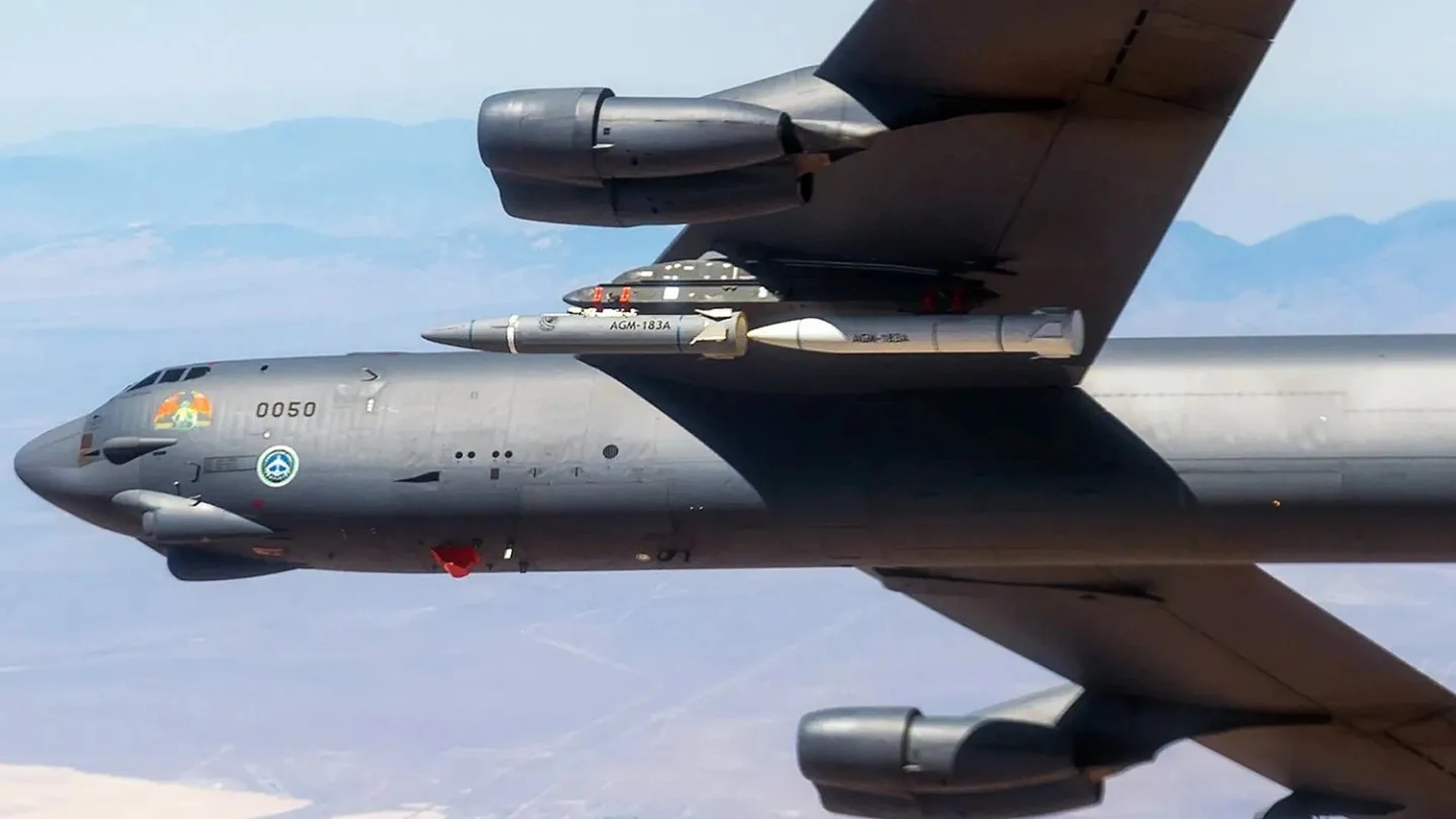
Three years ago it was almost canceled and now it is going to become the first operational US Air Force hypersonic missile. The military institution has awarded Lockheed Martin a $694 million contract to produce the hypersonic missile AGM-183A ARRW. The order was formalized on September 29, but was not made public until yesterday, according to The War Zone, which does not specify how many units will be manufactured or when deliveries will begin.
In 2023, A series of failed tests led the Air Force to consider its cancellation to concentrate resources on the HACM. This other hypersonic cruise missile uses a motor scramjet or supersonic combustion ramjet that is powered by oxygen from the air, continues to be developed and is still in the flight testing phase. Despite what it seemed then, The ARRW was not finally canceled after the prototype phase and has ended up being brought forward.
The official statement presents the award as a decisive milestone that ‘marks the formal transition of the hypersonic powered glide missile program from the prototype and flight test phase to production, and consolidates the Air Force’s commitment to deploying high-speed attack options from outside the range of enemy defenses‘.
This system of powered glide that uses the ARRW combines two different phases. After being launched from a plane, a rocket accelerates it and lifts until reaching the appropriate speed and altitude, before detaching the cover from its tip and release a wedge-shaped vehicle.
The vehicle continues towards the target without using your own enginetaking advantage of the speed and height obtained during the initial impulse. It glides through the atmosphere at speeds greater than Mach 5 or 6,125 km/hthe condition to be considered hypersonic, following a relatively shallow trajectory and with the ability to maneuver during the journey.
The combination of speed, trajectory and maneuverability makes it difficult for enemy defenses to detect and intercept it. These features allow you to quickly attack targets of high value or that only offer a brief opportunity to attack.
The Secretary of the Air Force, Troy Meinkhighlights in the statement that ‘by moving the ARRW from testing to production, we provide our combatant commands a reliable, high-speed attack weapon, capable of penetrating the most advanced access and area denial systems‘.
‘The deployment of the ARRW improves our ability to threaten targets anywhere in the world. This hypersonic weapon provides the joint force with a flexible and rapid response option in environments where the enemy can put up intense resistance,’ says the head of the Air Force General Staffthe general Ken Wilsbach.
Integration plans include bombers B-52 and B-1while another variant, called Increment 2. This will incorporate a new seeker to guide in the final phase towards moving targets, including warships, and a data link in addition to seek to reduce ARRW costs.