
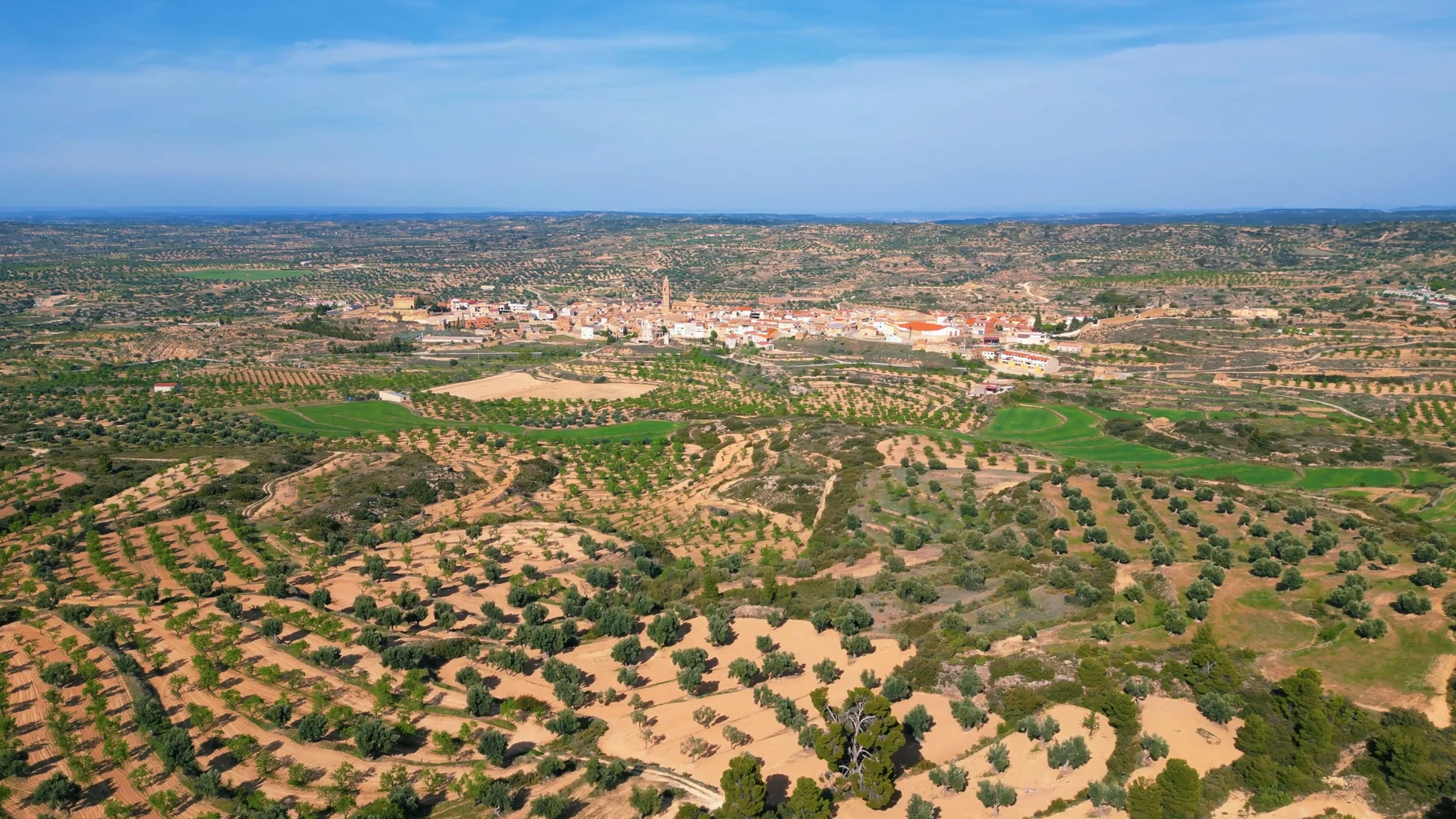
Aragón is one of the Spanish communities that hides the most secrets in its towns. Beyond the increasingly popular municipality of Libros, which has just reopened the old mining galleries with a tour that allows you to observe what the daily life of the workers in the area was like; There are other towns that, without being Albarracín, They also preserve the charms of medieval times.
one of them is Valdealgorfa, a small municipality in Bajo Aragón, Teruel with barely 581 inhabitants, but which hides among its streets a medieval architecture that has little or nothing to envy of its neighbor Albarracín. Located in the Matarraña region, the streets of this town allow you to get a little closer to the history of the area, present in its architecture.
This municipality hides an old refrigerator and a network of underground cellars
However, one of the main peculiarities of this small town is its underground network. Being a dryland area, its inhabitants had to develop different systems to gain access to water and combat high temperatures. It was then that the old refrigerator arose, which can be visited inside a tourist route known as Las Bóvedas del Frío.
This refrigerator was built in the last quarter of the 17th century and has the capacity to hold 370 tons of snow, thanks to its 10 meters high and just over 8 meters in diameter. Being an essential deposit to guarantee the trade of snow and ice in the area. Although this is not the only underground construction that stands out, so does its network of wineries.
Beneath the typical stone mansions and palaces of the area, there are some caves carved into the rock which were traditionally used as warehouses. As was the case with the refrigerator, its inhabitants used the temperature and humidity conditions of the subsoil, as well as the unevenness, to create an extensive network of wineries.
A historic center marked by the presence of Renaissance mansions and palaces
However, its streets are also worth a visit. Its medieval influence means that it can be seen the remains of the ancient portals that protected access to the town. Today, only the Portal de Alcañiz and the Portal de San Roque are preserved. The latter also still preserves a small chapel in its upper area dedicated to the saint of the same name.
Walking through its historic center, you can also find its parish church, dedicated to the Nativity of Our Lady. Its construction dates back to the beginning of the 18th century and stands out for its bell tower, its Latin cross floor plan and its main doorway, with Solomonic columns and its semicircular arch, following the Baroque style. And the Convent of Santa Clara, which was built between the 17th and 16th centuries and made of stone and masonry.
Another point of obligatory interest are the numerous Renaissance palaces that can be found in the area. Among them, stands out the palace of the Baron of Andillabuilt between the 16th and 17th centuries. Its architecture is divided into two parts: the first, a large two-story house, and the second, a tower with a hipped roof.
Finally, the nature and hiking lovers You will also find in Valdealgorfa an ideal destination. In this municipality there are different routes, with difficulties for all fans, such as the Fuente Rueda Route, the Pozo de la Cadena Route or the Balsa Montañés. In them, you can see the presence of almond trees, holm oaks, olive trees and pine trees, among other species.