
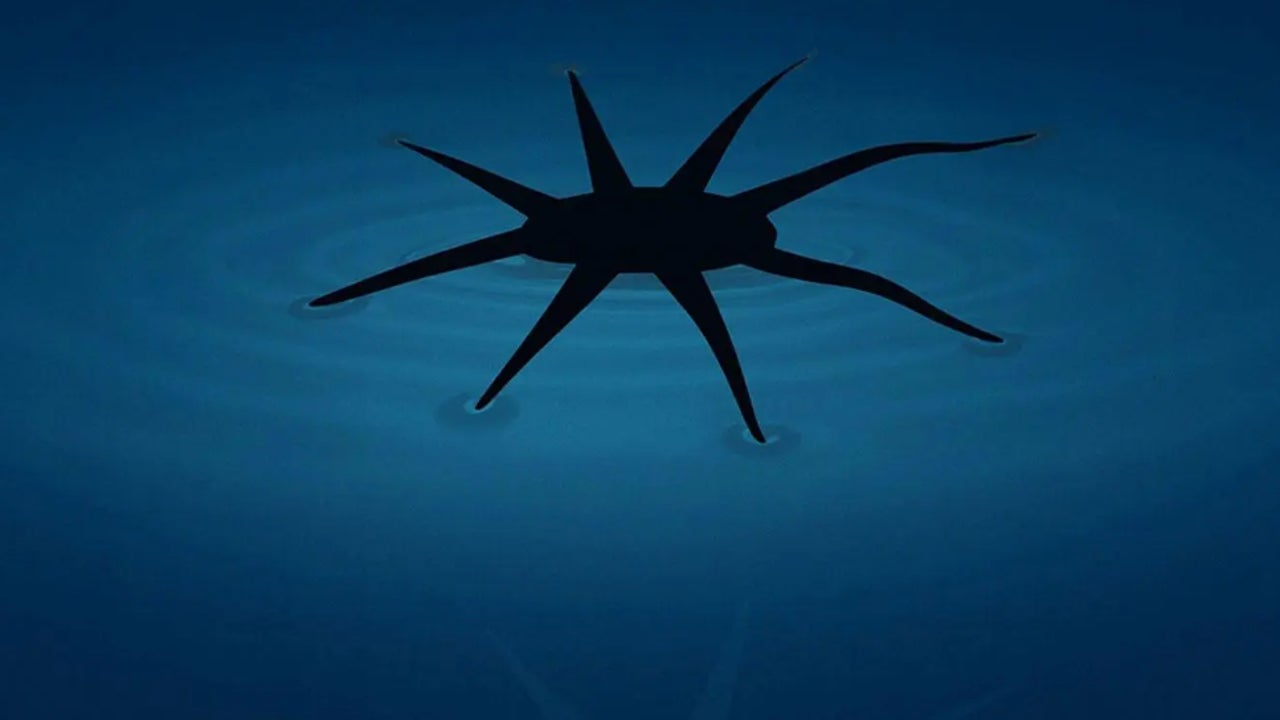
We know the insects that walk on the water, the commonly shoemaker insects or water mosquitoes. Your ability is because your legs are Covers of hydrophobic hairs that, when interacting with the surface tension of the waterthey catch small airbags, allowing them to float and move without sinking.
Now let’s imagine small robots traveling the surface of a lake or a pool to check the water quality or looking for people in flooded areas. This technology is becoming a reality thanks to scientists from the University of Virginia. Inspired by nature and aquatic shoemakers, created two prototypes that can be promoted on liquid surfaces.
The first, called Hydroflexor, rows on a surface with movements similar to those of a fin. The second, called Hydrober, walks with A movement that mimics the aquatic insects. The key innovation that made it possible is a technology developed by the team called Hydrosprad.
To float and move on the surface of a liquid, Robots need ultrafine and flexible films (nature hydrophobic hair). Traditional methods to manufacture these films involve producing them on a rigid surface, such as glass, and then transferred to the water, which often damages or breaks the film. However, the Hydrospread technique allows you to manufacture films directly on the liquid.
Those responsible for the advance detail this process in a study published in Science Advances. First, they deposited liquid polymeric ink on the surface of the water, where extended forming an ultrafine and seamless film.
Then they used a laser to cut and model the movie, creating the shapes of the legs and the robot’s body directly on the water. The films are composed of two different layers. By applying heat from an external infrared fountain, the two layers expanded at different speeds. This difference caused the film to bend and deform, generating movement.
https://www.youtube.com/watch?v=g3qmq8iw0wy
“Our study eliminates fragile transfers after the manufacture of soft devicesshortening the distance between soft films and the manufacture of the structure, and establishes an optimized route for the design and implementation of functional soft devices directly in liquid environments, ”says the authors in a statement.
The Hydrospread method constitutes a great achievement in soft robotics, since it works with various types of inks and liquids, which enables the scalable mass production of these complex devices. Ultimately, this technology allows scientists to transform fragile films into soft and robust devices, ready for use in aquatic environments, such as water quality monitoring, assistance in search and rescue work or environmental detection.
Beyond robotics, technology could be used to Create ultrafine and resistant films for portable medical devices and flexible and highly durable components for next -generation electronics.