
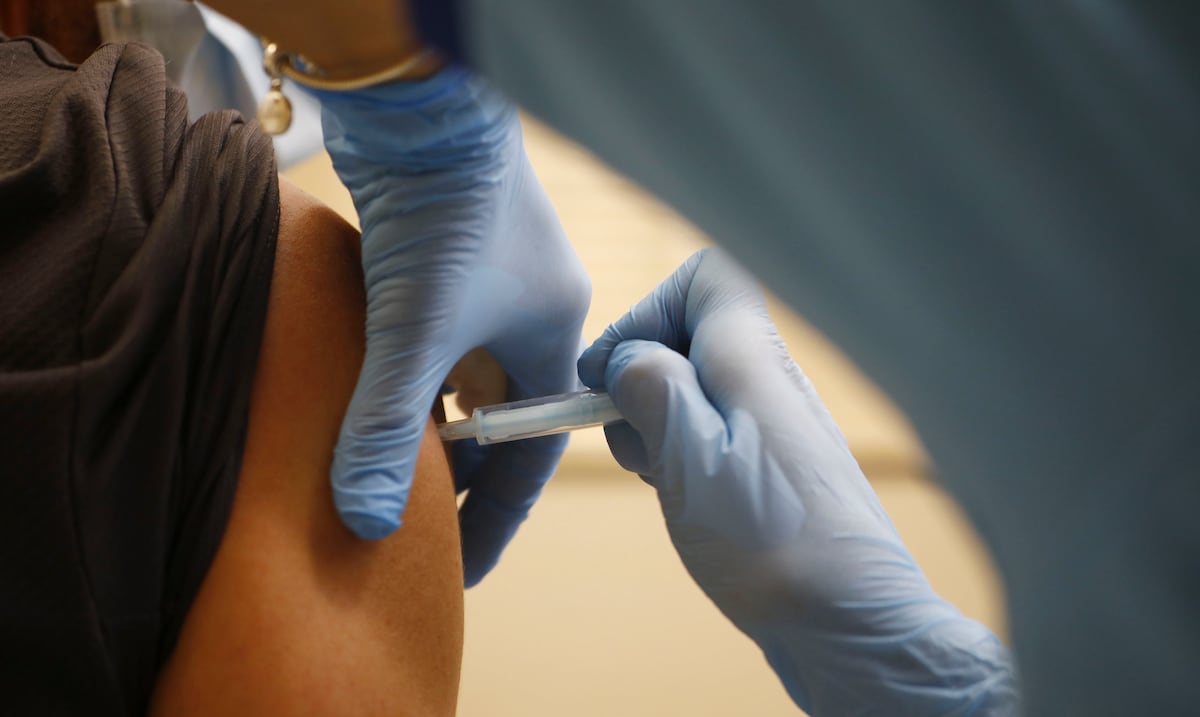
A team of scientists at Columbia University has created and tested in mice a bacteria that teaches the immune system to destroy cancer cells, opening the door to a new class of personalized vaccines against primary tumors and metastases.
These microbial vaccines can even prevent future recurrences, according to the study whose details were published this Wednesday in the journal Nature.
In studies using mouse models of advanced colorectal cancer and melanoma, the bacterial vaccine was able to suppress the growth of primary and metastatic cancers or, in many cases, eliminate them without affecting healthy parts of the body.
The bacterial vaccine proved to be particularly more effective than peptide-based therapeutic cancer vaccines that have been used in numerous previous clinical trials.
“The most important advantage of our system is its unique ability to coordinately restructure and activate all branches of the immune system to induce a productive antitumor immune response. We believe this is why the system works so well in advanced solid tumor models that are particularly difficult to treat with other immunotherapies,” explains Andrew Redenti, a doctoral student at Columbia University.
This vaccine is personalized for each tumor: “Each cancer is unique: tumor cells harbor different genetic mutations that distinguish them from normal healthy cells. By programming bacteria that direct the immune system towards these specific cancer mutations, we can design more effective therapies that stimulate the patient’s own immune system to detect and eliminate their cancer cells,” says Nicholas Arpaia, head of the research together with Tal Danino.
Bacteria and cancer
Bacteria have been used against cancer since the late 19th century, when Dr. William Coley, a surgeon at New York Hospital, observed tumor regression in a subgroup of patients with inoperable tumors who were injected with bacteria.
Today, bacteria are still used in patients with early-stage bladder cancer.
Researchers now know that some bacteria can naturally migrate to and colonize tumors, where they can grow in an environment often devoid of oxygen and locally trigger an immune response, but used in this way, bacteria often do not precisely control or direct the immune response to attack cancer.
To create the new bacteria, the team used part of a probiotic strain of E. coli bacteria to which they introduced multiple genetic modifications to precisely control the way the bacteria interact with the immune system and educate it to induce the destruction of the immune system. tumor.
These genetic modifications have also been designed to block the innate ability of bacteria to evade immune attacks against themselves, meaning they can be easily recognized and eliminated by the immune system and are quickly eliminated from the body if they do not find the tumor.
When tested in mice, the team found that these intricately programmed bacterial cancer vaccines recruit a wide range of immune cells that attack tumor cells, while preventing responses that would normally suppress immune attacks directed against the tumor.
The bacterial vaccine also reduced cancer growth when given to mice before they developed tumors, and prevented the same tumors from regrowing in mice that had been cured, suggesting that the vaccine may have the ability to prevent cancer. reappear in patients who have experienced remission.
Vaccines for patients
In people, the first step to create these microbial vaccines would be to sequence the patient’s cancer and identify their unique neoantigens. The bacteria would then be engineered to produce large amounts of the identified neoantigens and inoculate them into the patient to treat the tumor.
In this way, the immune system would be boosted to eliminate cancer cells and prevent metastasis.
Additionally, vaccines are designed to counteract cancer’s ability to mutate rapidly and evade treatment.