
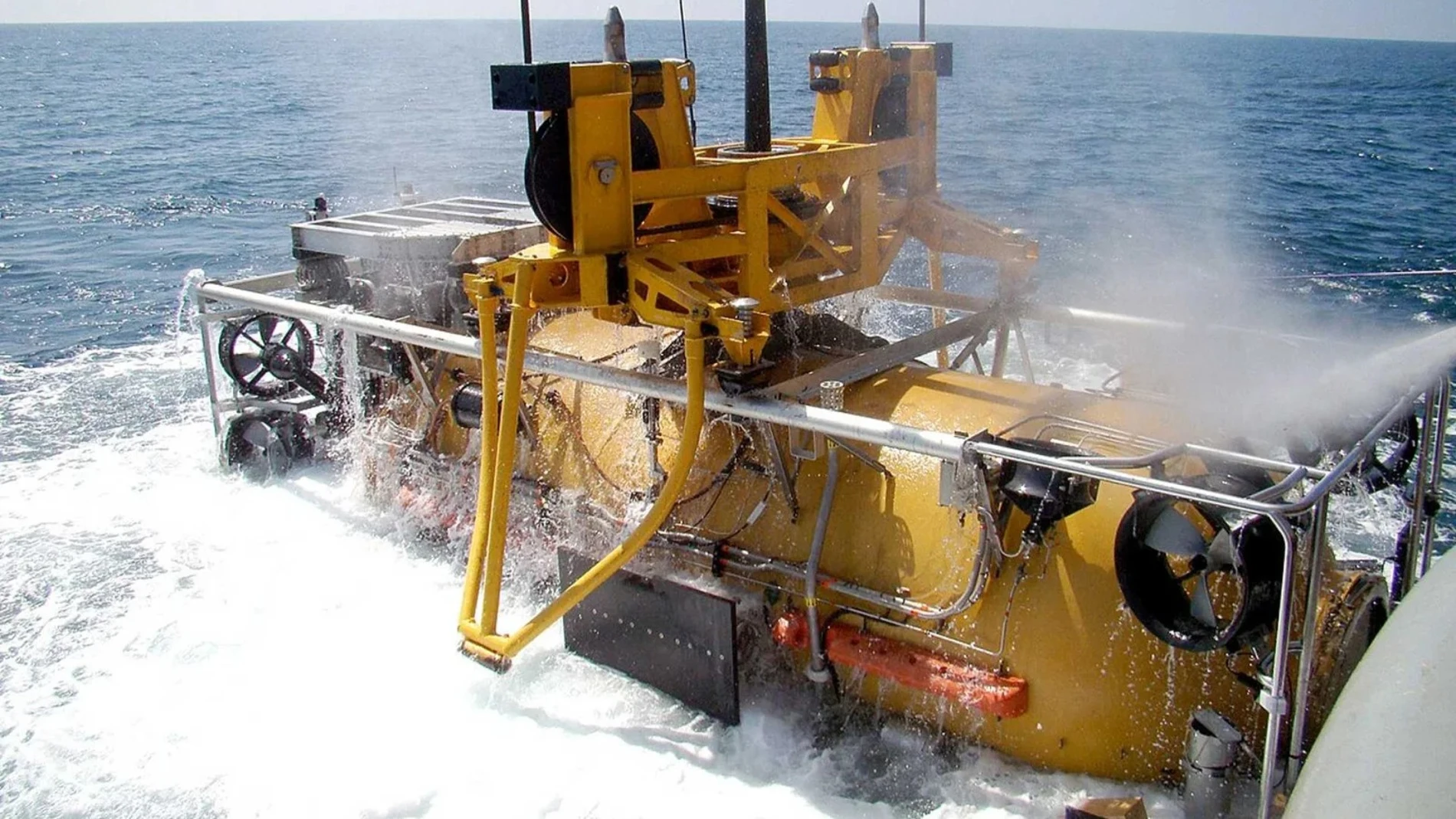
The United States Navy wants to reduce to just 72 hours the time needed to begin rescuing survivors from a crashed submarine anywhere in the world. To achieve this, it is preparing a new generation of rescue systems which should be smaller, modular and much easier to transport than the equipment currently used, reports the specialized defense media Army Recognition.
The new program is called NextGen Submarine Rescue System or NGSRS and aims to replace the current Submarine Rescue Diving and Recompression System or SRDRS. The latter is not just a rescue submarine, but a set of vehicles and equipment intended to locate a crashed submarineinspect it, evacuate its occupants and control the pressure to which they have been exposed.
Currently, a rescue operation anywhere in the world with the SRDRS has an established Time to First Rescue, TTFR, 96 hours. This indicator measures how much time can elapse from when the response is activated until evacuation of survivors begins. The Navy is already working with a goal of 72 hours during the sea trials of their submarines, but Now he wants to be able to meet that deadline in an emergency that occurs practically anywhere on the planet..
The United States’ intention is to achieve this mainly reducing the enormous logistical effort required to deploy this equipment. The current system has to be prepared, transported to an airfield, loaded onto transport planes, flown to an airport close to the accident, and then traveled by road to a port. There it must be installed on a suitable ship, which will still have to sail to the submarine’s position.
This complicated route explains why the speed of the underwater vehicle is not the main challenge. Each additional aircraft represents a new loading, flight, unloading and ground transportation operation.. Furthermore, it is enough for one of the necessary modules to be delayed to prevent the rescue from starting. The Navy wants for this significantly reduce the number of flights and allow teams to travel on both C-17 Globemaster III military aircraft and commercial freighters.
The size of the system also determines what happens once the nearest port is reached. The NGSRS must occupy less space so that it can be installed on a greater number of commercial vessels available in the areaknown in this type of operations as vessels of opportunity. It is even being studied that the equipment can be manipulated with the cranes already installed on board some commercial ships, rather than relying on specialized launch and recovery systems.
Future vehicles will also have to solve a medical problem which can be as important as getting the survivors out of the submarine. A flood or breakdown can significantly raise the pressure inside the submarine’s habitable compartments. The occupants cannot immediately return to normal atmospheric pressure because they could suffer decompression sickness. The Navy wants the new vehicles to be able to pick up crew members from environments up to 5 ATAabout five times normal atmospheric pressure, and perform part of the decompression inside the vehicle itself.
The project is still in an early phase and the Navy has not selected the final design. This Wednesday, the office PMS390 of the Naval Systems Command brought together various companies in Washington to define technical requirements and study issues related to the design, maintenance, certification and operation of the future system. The intention is to have the SRDRS substitute within five years from the award of the design and development contract.