
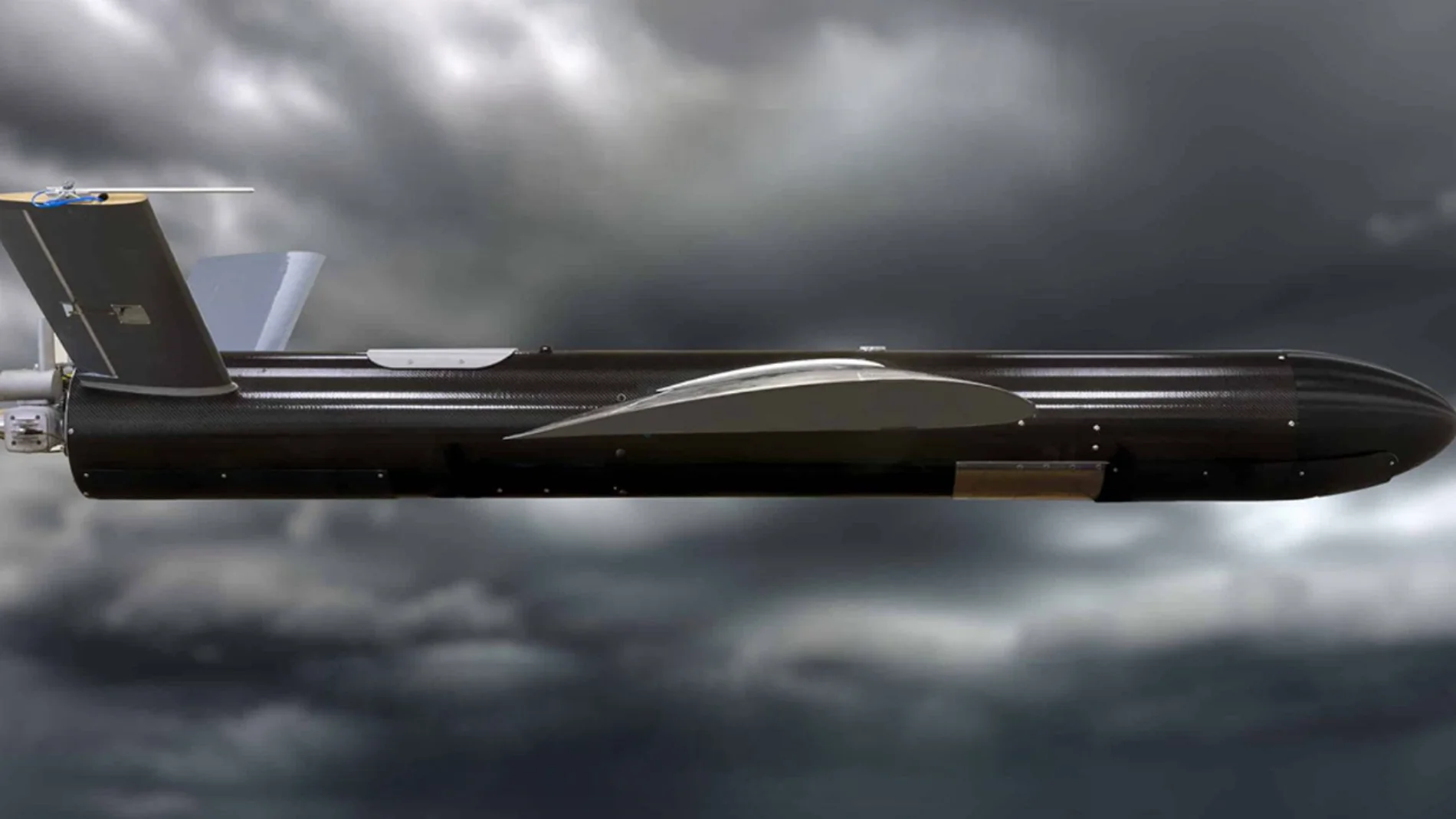
For much of the 20th century, a military aircraft was a slow and very expensive piece of engineering. Months of manufacturing, complex industrial chains and parts capable of withstanding decades of service. Now, The US military begins to explore just the opposite philosophy: cheap, modular drones, manufactured in a matter of hours and designed, literally, not to return.
The change has a lot to do with what is happening in Ukraine. There, small modified commercial drones have shown that a machine costing a few hundred euros can destroy armored vehicles worth millions. The result has been a radical transformation of modern warfare: It is no longer important only to have the most sophisticated weapons, but to be able to produce thousands of systems quicklyrepair them on the spot and assume that many will be destroyed.
In that context, the United States Army and Air Force are accelerating the development of 3D printed drones. Some are recognition. Others are designed as “one-way attack drones”, a technical expression that sounds almost innocent but means something very specific: kamikaze drones.The idea is as simple as it is disturbing. Instead of making complex, reusable aircraft, these systems function more like smart munitions with wings. They are launched towards a target, impacting and destroying themselves in the process.
One of the most striking projects is HANX, developed by the United States Marine Corps. It is the first 3D printed US military drone that meets NDAA safety requirements, legislation that limits the use of technological components of Chinese origin in military systems. And the US has already signed a contract with AEVEX for its development.
The drone can be assembled within military units themselves, quickly modified and adapted to different missions. According to data published by the Marines, costs less than 700 euros per unitseveral times less than many conventional tactical drones.
Traditionally, manufacturing a military drone meant relying on large contractors, specific parts, and international supply chains. With additive printing, many parts can be produced locally. A digital design can be sent to any base in the world and converted into a functional aircraft in a matter of hours.
Another example is SPARTA, introduced by the US Navy. Its structure can be printed practically overnight and is designed so that small groups of soldiers can repair or modify it without relying on specialized technicians. The system has autonomy of between 30 and 60 minutes and ranges of more than 30 kilometers. The speed of development is also striking. While a traditional military program can take years, some of these drones have gone from initial design to field testing in just a few months.
But perhaps the most profound change is not technological, but economic. For decades, destroying a target meant using extremely expensive missiles. In many recent conflicts, countries have ended launching interceptors worth hundreds of thousands of dollars against improvised drones worth just a few hundred. The equation is unsustainable. That is why the Pentagon is beginning to think in terms of quantity rather than quality. Some official documents already openly talk about deploying hundreds of thousands of disposable drones before 2028. And here 3D printing fits almost perfectly.
It allows manufacturing quickly, cheaply and close to the front. It also facilitates something essential in modern conflicts: constantly iterating. If a design fails, the file is modified and the next version can be printed the next day. There is no need to redesign an entire industrial chain. and maybe The most revealing fact of all is this: some of these drones cost less than the tire on a modern fighter plane.