
The hantavirus outbreak aboard the MV Hondius has put international focus not only on the severity of the disease, but also on the ship’s own itinerary. Its route, designed as an exclusive expedition, has now become the key to understanding where the infections could have occurred.
Throughout more than 10,000 kilometers of crossing the South Atlantic, the cruise made several stopovers on isolated islands and territories with little human presence. Precisely that route, far from typical tourist routes, is the one that is now health authorities are analyzing to trace the origin of the outbreak.
The MV Hondius is not a typical cruise ship. It is a polar expedition ship, prepared to navigate in extreme conditions and with capacity for about 170 passengers. There were 147 people on board, including passengers and crew, of more than 20 nationalities.
The trip began as an experience of scientific and nature exploration, but has ended marked by an outbreak that leaves, until now, several deceased and numerous people affected with symptoms compatible with hantavirus, a rare disease that is usually transmitted by rodents.
The route of the MV Hondus, scale by scale
The cruise itinerary is important to understand the evolution of the outbreak. These have been the main stops:
- Ushuaia (Argentina) – April 1
The ship set sail from the southern tip of America. Ushuaia is the usual starting point for expeditions to Antarctica and the South Atlantic.
- South Sandwich Islands – April 5 and 6
One of the first stops. These volcanic islands, with no permanent population, are known for their wildlife and extreme conditions.
- Tristan da Cunha – April 13 and 14
Here it is already analyzed whether there could have been any environmental contact relevant to the origin of the virus.
- St. Helena, Georgetown – April 22-24
One of the key points of the tour. On this Atlantic island there have been landings, first serious symptoms and transfer of sick passengers. It is one of the most prominent scales in research.
- Ascension Island – April 27
In this phase of the trip, several cases with respiratory symptoms and medical complications had already been detected.
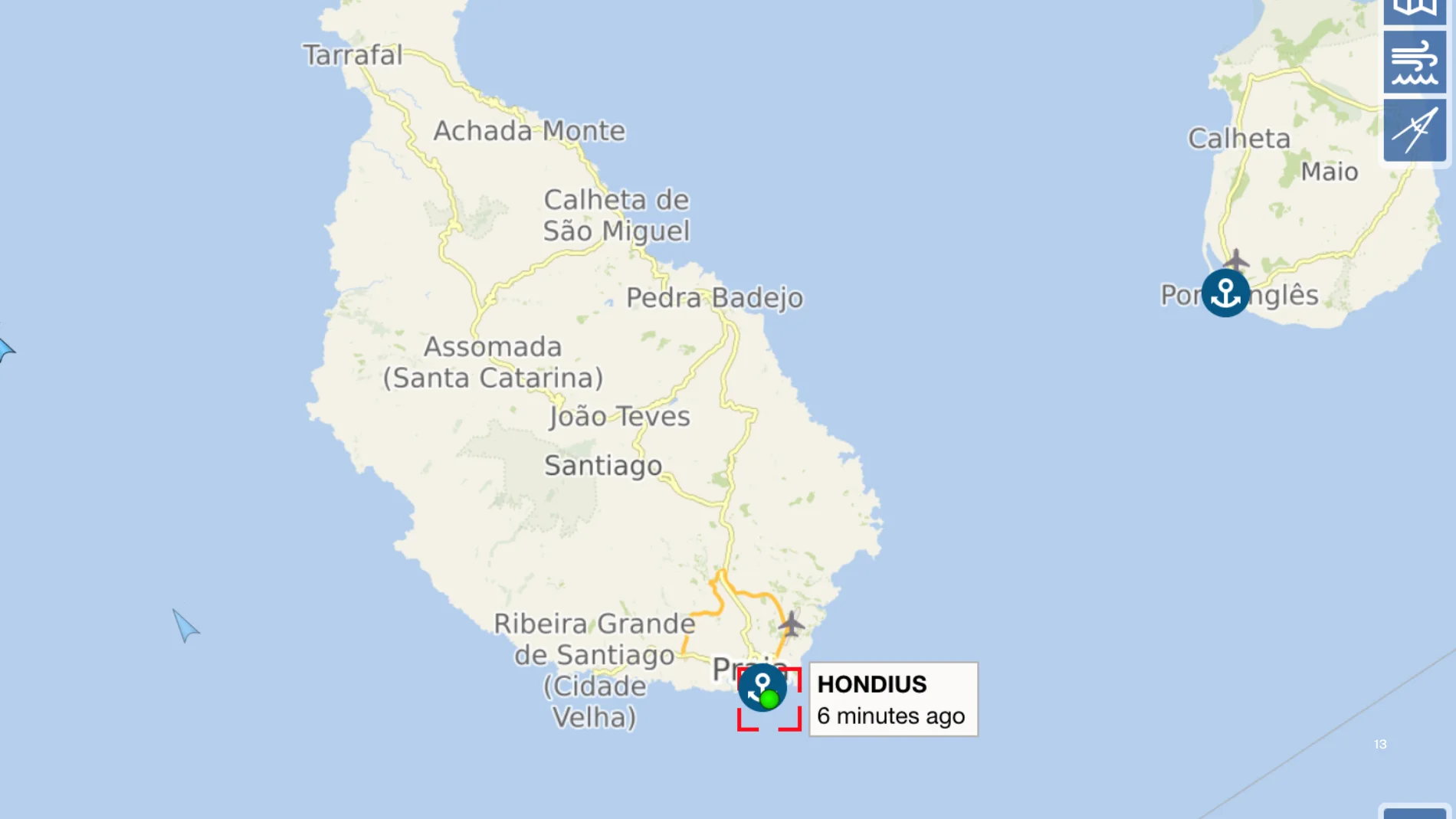
- Cape Verde (Praia) – May 3 (current position)
The ship remains off the coast of Praia without initial authorization to dock. Here the severity of the outbreak is confirmed and international health control protocols are activated.
Where the infections occurred
Although there is still no official confirmation on the exact origin of the outbreak, Health authorities focus their analysis on several stages of the journey:
- Remote areas with the possible presence of rodents, the main route of transmission of the hantavirus.
- Disembarkation moments, where there may be environmental exposure.
- Intermediate phases of the trip, when the first symptoms began to appear.
The fact that the virus is barely transmitted between people reinforces the hypothesis of a contagion linked to the environment at some of these stops.
The case of the MV Hondius has highlighted the risks associated with extreme routes, even on trips organized with high safety standards. Currently, all eyes are on that route, on each stopover, on each date and each movement of the ship, in order to be able to know how the hantavirus outbreak began on one of the world’s most unique cruise ships.