
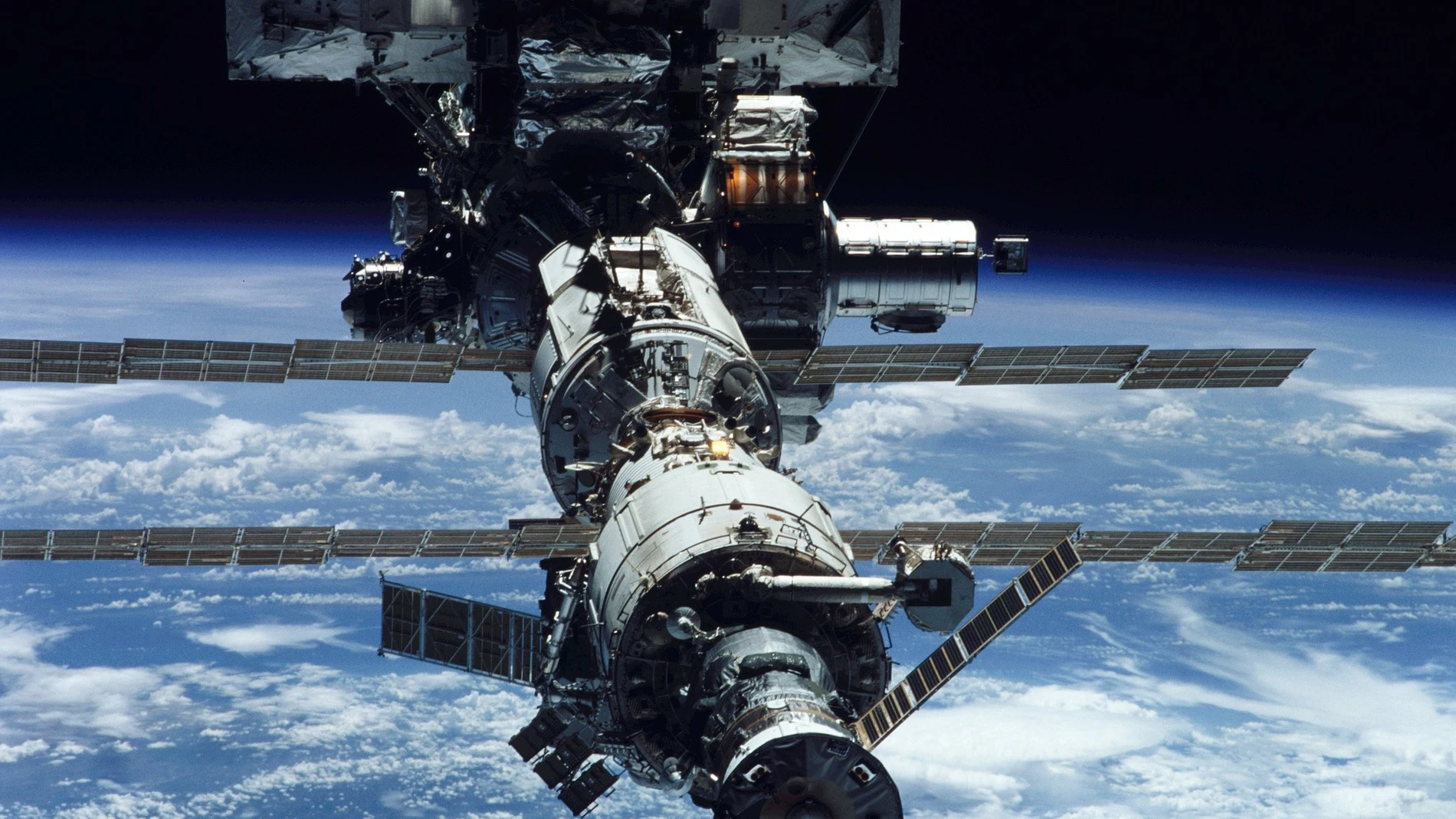
The POT revealed this Thursday that the Russian segment of the International Space Station is once again losing air to space, reopening a problem that engineers believed they had stabilized earlier this year. For the past five, NASA engineers and Roscosmos have been trying to fix a persistent air leak on the ISS. The culprit? Microscopic cracks hidden in a small Russian transfer tunnel called the PrK modulewhich connects to a service module docking port Zvezda. Because these fractures are tiny, finding and repairing them has been a constant nightmare for teams on the ground.
In January, it seemed that space agencies had finally won the battle. NASA announced that, after numerous inspections and new layers of sealant, the air pressure inside the module had reached a ‘stable configuration’. But that relief has been short-lived. The repair hasn’t lasted long and the Russian segment again leaks air into space.
The problem reappeared May 1just after the Russian cosmonauts finished unloading supplies from the cargo ship Progress 95 and they will detect a ‘slow pressure drop’ inside the PrK transfer tunnel.
‘The teams performed a data analysis that indicated a loss of just under half a kilo of air per day. Roscosmos allowed the pressure in the transfer tunnel to gradually decrease while monitoring the loss rate. The area now remains at a lower pressure, with small repressurizations when necessary. “There is no impact on station operations, and NASA and Roscosmos are coordinating next steps,” said the NASA spokesperson. Josh Finch.
Maximum threat level
Publicly, NASA has downplayed the real danger of space station leaks. However, behind closed doors, the story is very different.as reported by Ars Technica. Internally, NASA uses a 5 × 5 risk matrix to classify the hazards of space flight. On that scale, Russian leaks have received a ‘5’ for both probability and consequently the maximum threat level..
So far, the cash-strapped Roscosmos has managed to contain the problem by simply keeping the leaky PrK module hatch closed to the rest of the station. The plan was to continue operating like this until 2030, the scheduled date for the withdrawal of the ISS.
However, NASA and the US Congress are debating whether to keep the space station operational. until 2032 or even longer. With some of the station modules operating in space for almost thirty years, these recurring cracks raise serious doubts about whether extending their useful life is a safe and realistic strategy.
To keep the station operational beyond 2030, NASA needs the go-ahead from its international partners, including Russia. The problem is worse because NASA does not want to abandon the ISS until private and commercial space stations are ready to replace itso that astronauts have a destination to go to.
Unfortunately, preparing for this commercial replacement is being a complicated path. NASA’s strategy is to help finance private space stations and then pay to use them as a customer. But when NASA proposed a new plan at its event Ignition last March, suggesting that private companies first attach their new modules directly to the old ISS, the industry response was lukewarm at best. Private space companies are reluctant to keep the old station alive any longer and insist they will be ready to launch their own independent platforms in 2030.