
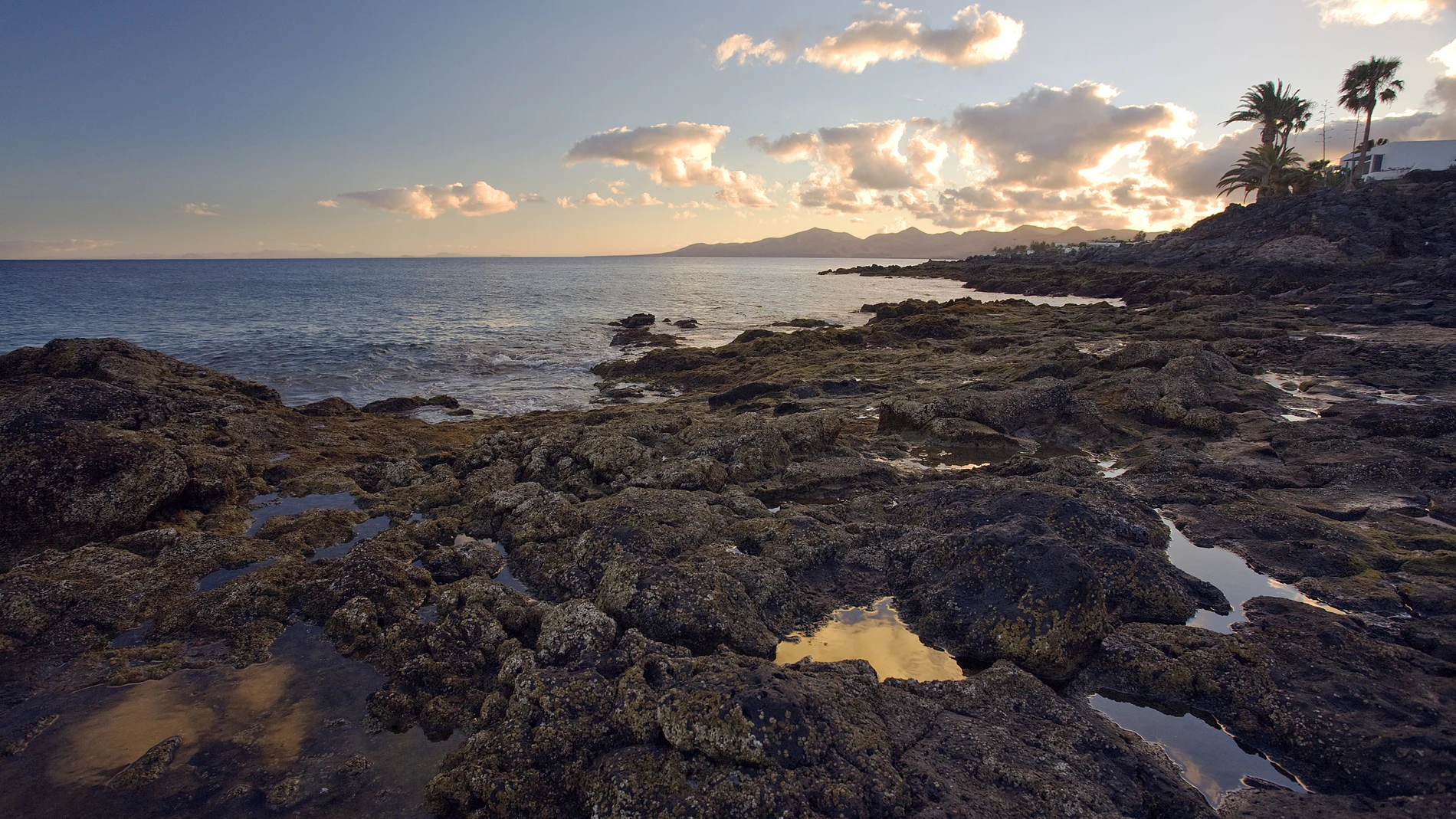
The Canarina Foundation and the Sustainability Observatory have just presented “SOS Costas Canarias”, the first comprehensive and public diagnosis of the real state of the archipelago’s coastline. The report, prepared during two years of work, brings together for the first time data that was dispersed on urbanization, environmental risks, tourist occupation and critical infrastructure on the island coast. The figures are overwhelming: almost a fifth of the land located in the first 500 meters of the coast is already artificialized; In Lanzarote, 43% of the unprotected coastal land within that strip has been transformed; and more than 80,000 people live in areas exposed to the risk of marine flooding. The general director and president of the Canarina Foundation, Anne Striewe, maintains that the problem responds to an unbalanced development model. “Everything is interconnected: all the environmental and social problems that the islands are experiencing right now derive from the fact that only the economic part has almost always taken precedence,” he tells LA RAZÓN.
One of the most worrying aspects of the study is the existence of “developable land” within protected natural spaces and the location of essential infrastructure in areas vulnerable to marine flooding. These include desalination plants, thermal power plants and public facilities. “We are seeing how the coast is being completely built up,” Striewe warned. The researcher recalled that the scenario is worsened by the expected increase in storms and extreme phenomena associated with climate change.
Rethink the model
The director of the Canarina Foundation also warns about the dependence on coastal infrastructure for the basic supply of water and electricity. “The population in the event of a catastrophic event could be left without water and electricity supplies,” he points out, while calling for rethinking the territorial growth model and studying the relocation of strategic facilities.
Striewe considers that tourism development and foreign investment have profoundly modified the population’s relationship with the Canary coast. “Every time the landscape is transformed more and more and more full of cement, ports, golf courses and hotels.”
According to the biologist, The Canary Islands currently lose about four kilometers of natural coastline per year due to urban pressure. In his opinion, decisions about the territory cannot continue to be made without scientific support. “It is a very dangerous vacuum for decisions to be made without scientific information to support it,” he stressed.
Among the measures proposed by “SOS Costas Canarias” are an immediate moratorium on new developments on the coastal strip, the review of territorial planning and the reinforcement of the network of protected natural spaces. For Striewe, the answer should not depend on ideological positions. “In the end we are talking about data and this is unquestionable,” he maintains. The Canarina Foundation also defends agroecology projects, ecosystem regeneration and environmental education as part of the solution.