
The big problem with humanoid robots is not only getting them to walk. It is making them good enough and, above all, cheap enough to manufacture thousands or millions of them. A humanoid needs dozens of joints capable of moving precisely. In each one there are motors, reducers, sensors, electronics and control systems. They are complex and expensive pieces. But Samsung seems to have found a shortcut.
Instead of starting from scratch, it could be taking advantage of something it has been doing for decades: manufacturing motors in huge quantities for household appliances. According to South Korean media, the company is using motor technology from its home appliance division to develop the actuators for its new humanoid. AND These components can represent up to 60% of the manufacturing cost of a humanoid robot. If the information is confirmed, Samsung’s advantage would not be so much in having invented a new type of robot. It would be something much less spectacular and much more important: knowing how to manufacture it cheaply.
To understand it, we can think about our own body. The brain decides that we want to raise an arm, the nerves transmit the order and the muscles generate the force necessary to move it. Something similar happens in a robot. Artificial intelligence can decide what to do, sensors tell it what is happening and Actuators convert those orders into movement. They are, in a way, his muscles. A humanoid robot needs many of them: for the shoulders, elbows, wrists, hips, knees, ankles… And it is not enough for them to be powerful. They have to be small, precise, efficient, resistant and capable of controlling movement with enormous delicacy. This is where Samsung’s possible advantage appears. The company already has enormous experience manufacturing motors for washing machines, vacuum cleaners, refrigerators and other devices. Adapting that industrial capacity to robotics could allow it to reduce both development and manufacturing costs.
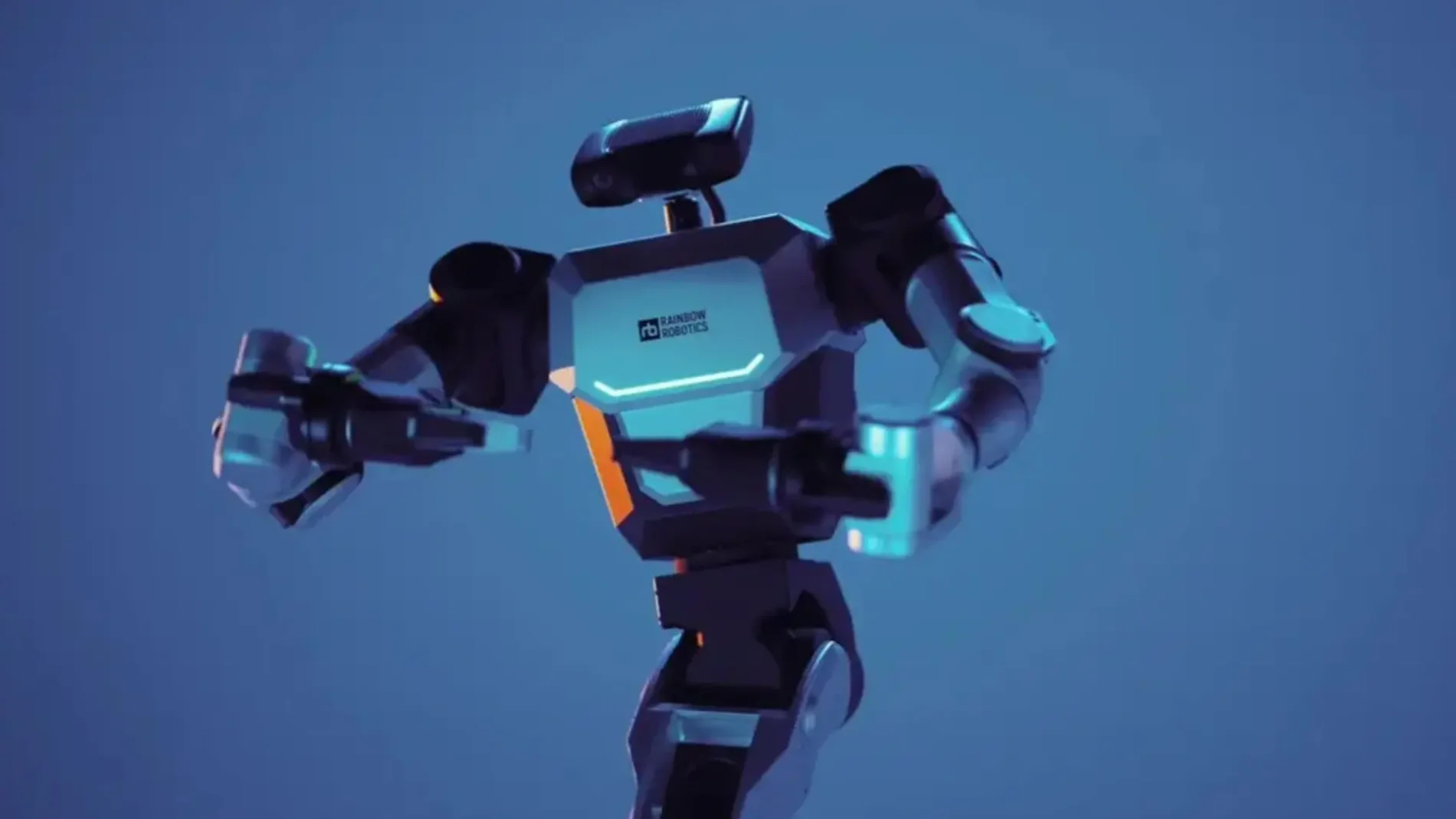
The story also has a curious element. Samsung already has a public robotics strategy. In July 2026, it created its Robotics eXperience (RX) division and has Rainbow Robotics, a South Korean company specialized in robotics in which Samsung became a majority shareholder. But The humanoid that the Korean media is now talking about would be a separate project, developed internally and confidentially.
That means that Samsung would be following two paths simultaneously. On the one hand, the open development around Rainbow Robotics and on the other, a project of its own that would be directly taking advantage of its industrial capabilities. And according to information published in South Korea, the internal humanoid has already reached a level of functioning that exceeds that of some national competitors.
But… it’s a good idea to put a big asterisk here. Samsung has not publicly presented this robot nor has it yet offered complete specifications. Therefore, the statements about sYour performance should be considered information from Korean media and not independent results. The real battle will be to manufacture millions and at a reasonable price. The humanoid industry could thus be approaching a turning point similar to that experienced by consumer electronics: at first it was important to get the device to work; Then, manage to manufacture it millions of times and reduce its price every year. Samsung could be the pioneer.