
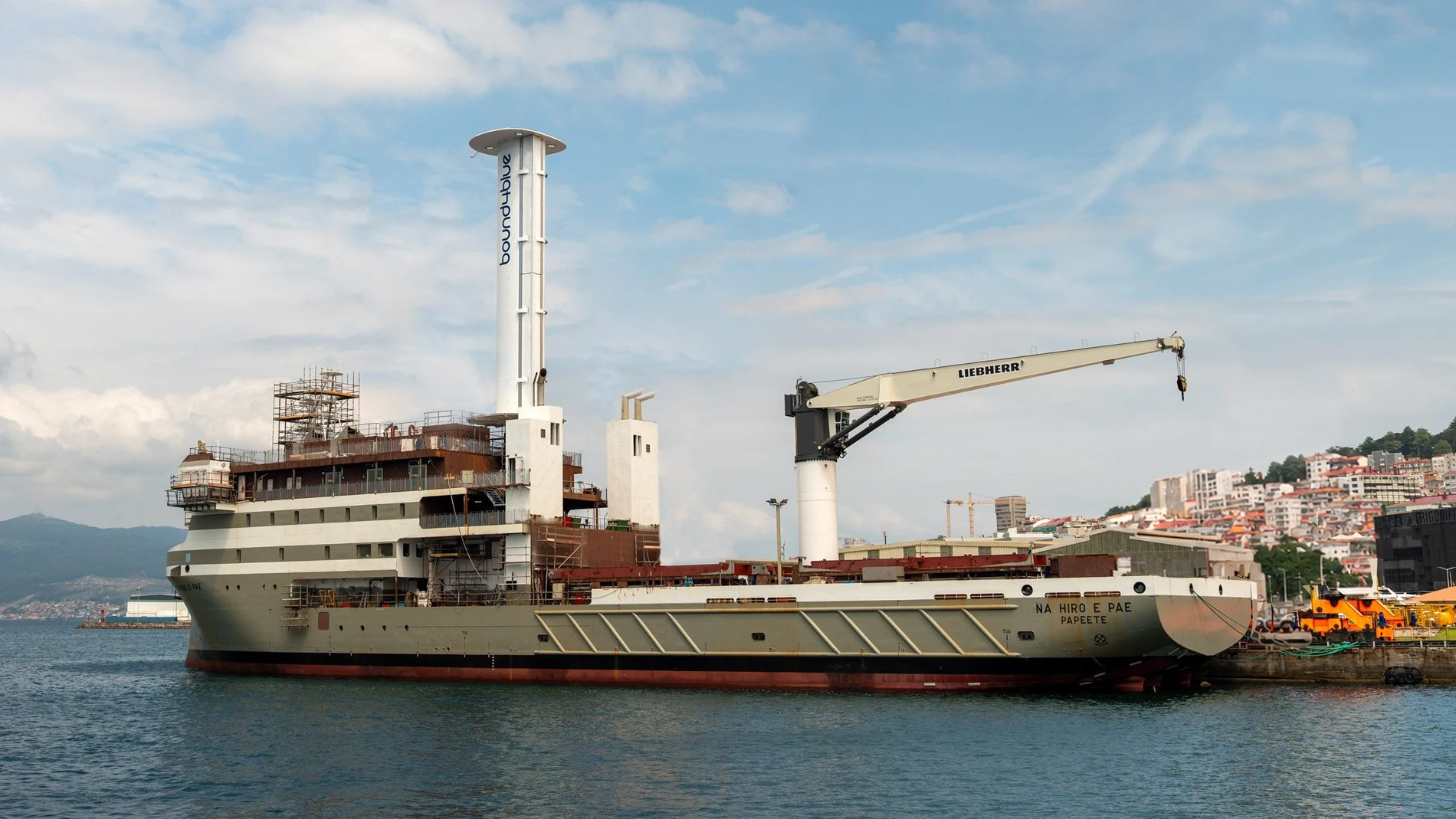
Maritime transport once again looks to the wind to reduce fuel consumption, although new sails They bear little resemblance to those that powered ships for centuries. He Na Hiro E Pae just released in Vigo a vertical structure of 22 meters call eSAILdeveloped by the Spanish company bound4bluewhich converts it on the first known multipurpose cargo ship to incorporate a wind propulsion system.
This gigantic structure does not replace engines nor does it turn the freighter into a traditional sailboat. Its function is to take advantage of the wind to generate part of the thrust during navigation, reduce the work of the main engines and reduce both fuel consumed and emissions.
What is a suction sail like the eSAIL?
The eSAIL belongs to a category known as suction candle and works through principle of supportsimilar to how the wing of an airplane does. When the wind surrounds the sail, the thin layer of air that circulates next to its surface loses energy due to friction and can separate before reaching the back. This creates a wake turbulence and reduces the force generated. To avoid this, a fan located at the top draws in a small amount of that air through an area with small openings. The suction helps the flow re-attach to the surface and stay stuck to it for longer, greatly increasing the downforce it generates.. By orienting the sail correctly, part of that force is directed forward, reducing the effort required from the engines and saving fuel.
This active air control explains the main advantage over a conventional rigid sail of the same size. According to bound4blue, the eSAIL can produce up to seven times more propulsion force and requires a reduced surface areasomething important on a ship that must keep the deck clear to quickly load and unload goods.
The installed unit works autonomously and does not require continuous crew operation. The company estimates that it will allow reduce the boat’s energy consumption by around 10%although the real savings will depend on the wind, the course and the conditions of each crossing.
Na Hiro E Pae, the world’s first wind-assisted multipurpose freighter
‘Multipurpose vessels have traditionally been considered a complicated segment for wind energy due to the flexibility required by its operations and the associated integration demands,’ explains Jose Miguel BermudezCEO and co-founder of bound4blue, in a statement.
A multipurpose freighter is designed to transport different types of goods and adapt to operations that are not limited to moving containers. In this case it is also about a mixed vessel that will carry food, supplies, general cargo and passengers between Tahiti and the remote Southern Islands of French Polynesia.
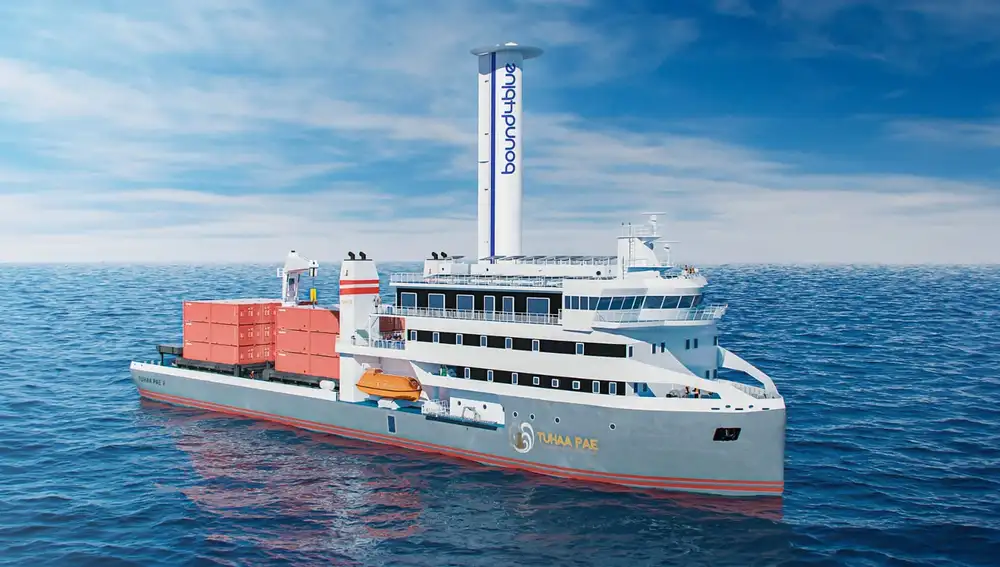
The Na Hiro E Pae has been built at Armon Vigo Shipyards for the Polynesian shipping company SNA Tuha’a Paewith design Cotenaval and the suction candle supplied by bound4blue. The freighter has 89 meters in lengthability to transport 1,500 tons of supplies and space for up to 200 passengers. It also incorporates electric propulsion through POD nacelles, efficient waste management systems, autonomous production of fresh water and engines prepared to use biofuels or synthetic fuels when available in the region.
The sail has been developed and supplied by bound4blue, a Spanish engineering company founded in 2014 and with headquarters in Cantabria and Barcelona. The installation was completed in Armon Vigo Shipyards before the delivery of the ship, which was also built there with Spanish naval architecture Cotenaval. ‘We hope that Na Hiro E Pae will lead the way for other ambitious shipping companies that want to take advantage of the benefits of sustainability,’ says Bermúdez.
‘Sustainability was a fundamental objective throughout the design process and the eSAIL constitutes an important part of a broader set of technologies that will help us reduce energy consumption and environmental impactwhile maintaining the reliable transportation services that our communities depend on,’ concludes Boris Piel, technical director of SNA Tuha’a Pae.