
It all started at the end of World War II. In 1945, the first generation fighters were born, the first to fly by jet. They were followed by those capable of breaking the sound barrier (2nd generation) and then the multipurpose ones and, later, those that inaugurated the digital era, with greater maneuverability. Finally, the 5th generation arrived, the current one, in which stealth and the use of data become a constant. But, as happened with the previous ones, This too is coming to an end and the ground is being prepared for the sixth generation of fighters.
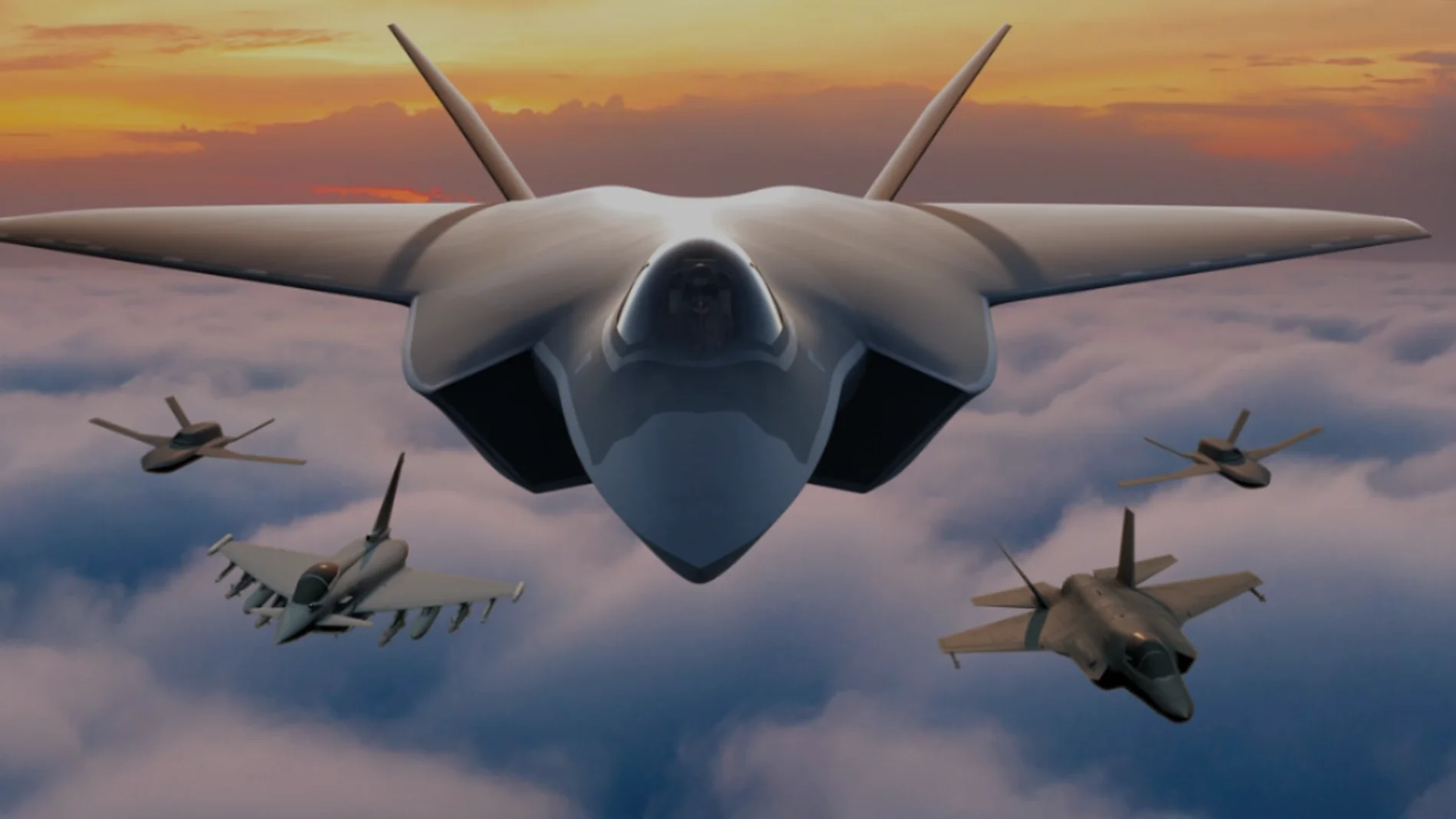
For the first time, the two major sixth-generation Western programs They have stopped talking only about concepts to start putting dates on one of the most important moments in the life of any aircraft.: his first flight. While the United States ensures that the F-47 will take off during the current administration, the GCAP (Global Combat Air Programme), developed by BAE Systems, is preparing the premiere of the Tempest future technology demonstrator around 2027.
The F-47 is part of the American Next Generation Air Dominance (NGAD) program and is called to replace the F-22 Raptor, the fighter that for two decades has represented the air supremacy of the United States. Its development is led by the US Air Force and responds, above all, to the need to maintain superiority over competitors such as China, with its J-36.
The Tempest, for its part, was born within the Global Combat Air Program (GCAP), an alliance between the United Kingdom, Italy and Japan that aims to create a replacement for the Eurofighter Typhoon and the Japanese Mitsubishi F-2. More than a single aircraft, the GCAP represents an enormous industrial and technological project which unites three countries in the design of the next generation of combat aviation.
There is a widespread idea that the first flight serves to confirm that a new plane works, but in reality just the opposite is true. When a demonstrator takes off for the first time, Engineers do not expect to see that everything has gone perfectly. What they are looking for is to discover what is still not working exactly as they expected. Every unexpected vibration, every small aerodynamic deviation or every unforeseen behavior provides information that is impossible to obtain through computer simulations or ground tests.
What exactly is a technology demonstrator? The Tempest and F-47 that are on the takeoff runway will not yet be the fighters that will end up entering service. And that difference is important. A technological demonstrator is not intended to represent the definitive model. Its mission is to validate specific technologies: verify that the aerodynamics respond as expected, verify the stability of the aircraft, test flight control systems or study how sensors and software interact with each other. It is, in a way, a gigantic laboratory with wings.
The urgency surrounding these programs was recently reflected in the statements of Lieutenant General Dale White, responsible for some of the US Air Force’s main aeronautical programs. “Characterized by extreme collaboration with industry partners, the F-47 program has entered its engineering and manufacturing development phase with unprecedented maturity,” White said in a press conference. “The F-47 will fly during this administration.”