
In the Iberian Peninsula they have passed some of the most important civilizations in European history. One of them, that of the old Roman empireleaving not only customs and traditions that still endure over time, but also works of architecture that impress those who contemplate them.
Summer vacations are one of the best opportunities to discover the secrets hidden in some of the Spanish towns. Beyond the beach or the mountains, some prefer to dedicate their time to learning a little more about the rich history of our territory, and one of the most important and notable today is the passage of the citizens of ancient Rome.
The wealth and strategic location of Hispania For Ancient Rome, some of the most important cities for the empire were found there, such as Emerita Augusta, the current Mérida; Tarraco, now Tarragona; or Carthago Nova, currently Cartagena. In them, and in many other cities in Spain, you can find buildings that remember that the citizens of Spain walked through their streets. one of the most important empires in history.
The Los Milagros aqueduct, in Mérida
When you think about Roman buildings in Spain, one of the first images that appear in your mind is Merida with hisLos Milagros aqueduct. In addition to the Roman Theater, the Extremaduran capital has a colossal aqueduct 827 meters long and 27 meters high. It was built, approximately, during the time of the Julio-Claudian dynasty or the Flavian family. This was declared a National Monument in 1912 and UNESCO World Heritage Site in 1993.
The main function of this civil engineering work was transport water from the Proserpina reservoir or Charca de la Albuera, as explained by Turismo Mérida. To do this, at the northern end of the aqueduct, they built a lime pool with which to clean the waters and make them reach the population clean. In addition, this pool was also used as a fountain. Its visit is free, so those who travel to the capital of Extremadura will be able to marvel at this construction in a way totally free.
The most important work of Roman civil engineering: the Segovia aqueduct
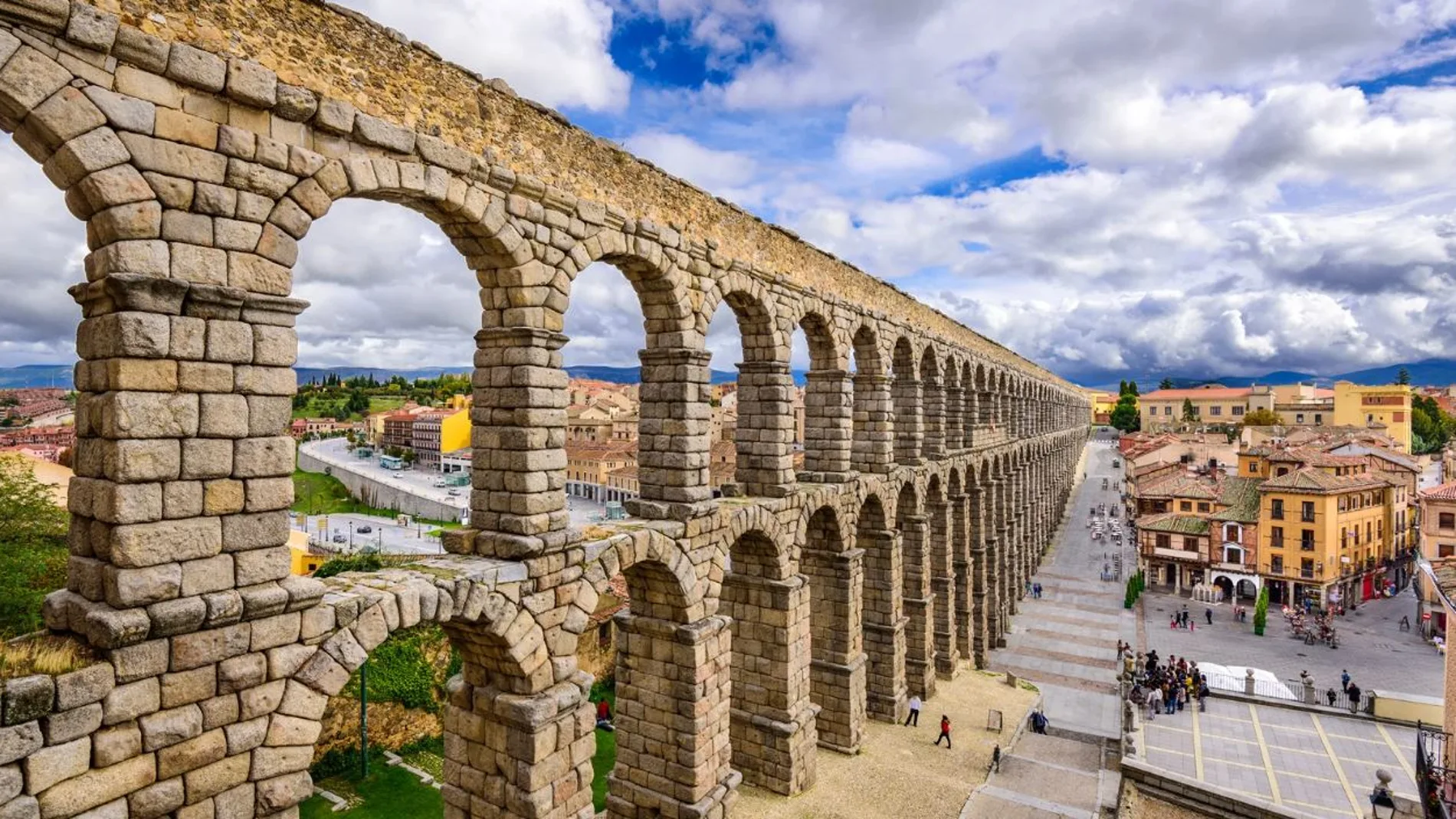
Another of the best-known aqueducts in our country is the Segovia aqueductin Castilla y León. This is considered one of the most important works of Roman civil engineering in Hispania and surprises those who see it due to its great state of conservation. In total, the aqueduct runs about 17 kilometersconnecting the waters of the Fuenfría spring to the city, where ‘El Caserón’ is located, a cistern in which the water is stored.
Its construction dates back approximately between the 1st and 2nd centuries AD. C. and in it you can findr 167 arches that allow it to support its weight. Due to its grandeur, in 1884 it was declared an asset of cultural interest, with the category of monument, and in 1985, a world heritage site. This aqueduct continued transporting water until 1973 and now it has become one of the most visited monuments in our country.
The Roman bridge of Alcántara, the highest in the world
Returning to Extremadura, another of the most impressive works of civil engineering that the Romans left in Hispania was the Roman bridge of Alcántara, in Cáceres. With a length of 197 meters and a height of 58.2 meters, this work holds the title of being the highest Roman bridge in the world. Thanks to him, citizens could cross the Tagus Riverbecoming a key element for two very important routes such as the Vía de la Plata and the Vía de Lisboa a Braga.
Beyond its grandeur, you can also find small details that reveal its importance for the empire. Among them, an inscription ordered to be made by Gaius Julius Lacer, its builder, in which one can read the phrase “Pontemperpetui mansurum in saecula mundi” (It will last as long as the world lasts). In addition, there are also commemorative tombstones and a dedication to Emperor Trajan.
The Roman bridge of Córdoba
Continuing with the bridges, another of the most popular and beautiful that is still preserved from Roman times is the Córdoba bridge. In addition to its imposing mosque, the Andalusian city also hides one of the most important Roman civil engineering works. This bridge was built approximately in the 1st century BC. C. with the objective that citizens could safely cross the Guadalquivir River without having to use any boat.
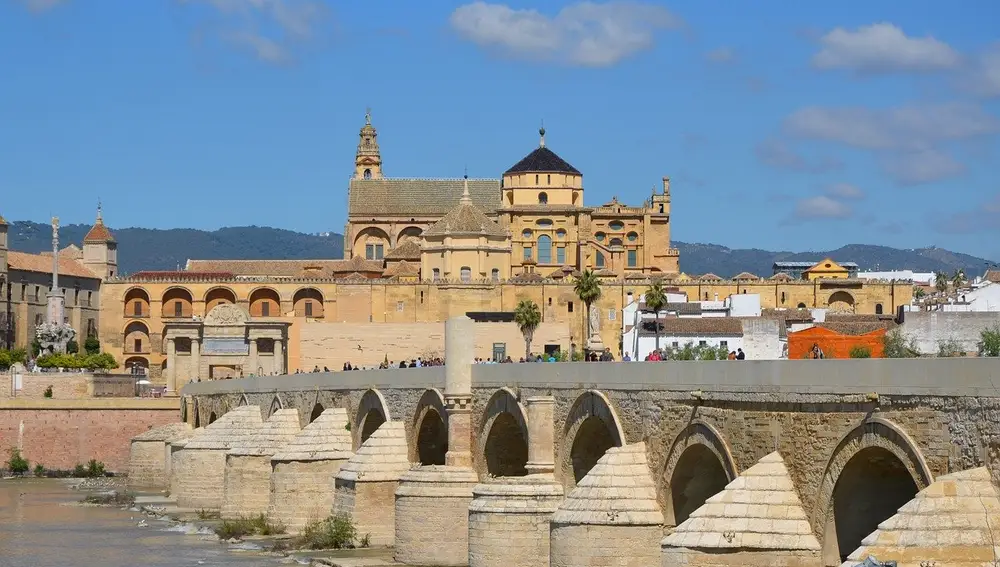
In total, this bridge runs 331 meters longalthough it has been remodeled several times. For this reason, currently the main structure dates back to the Middle Ages, according to Tourism of Córdoba. During the tour, you can also see different elements, such as the Calahorra defensive tower, the Puente gate or the triumph of San Rafael. The latter was made by Bernabé Gómez del Río in the 16th century.
The wall of Lugo, the most important fortified area of the Roman era
Finally, and more in the defensive field, another of the Roman works that still impresses visitors with its magnitude is the Roman wall of Lugo. This has a length of 2266 metersamong which you can find 85 towers with which the historic center of the ancient city of Lucus Augusti (Lugo) was completely protected.
Thanks to its state of conservation and its height, between 10 and 15 meters, it is considered the most important and best preserved fortified area from the Roman era in Hispania. In it, you can find ten doors that give access to the interior of the city, although only five of them date back to Hispanic times; These are: Porta Miña, Porta Falsa, Porta de San Pedro, Porta Nova and Porta de Santiago.