
For years, UFOs were the territory of speculation. Today, however, they have become the object of institutional analysis, official reports and academic debate. But that change in status has not necessarily brought more answers. Quite the opposite.
A good example is the analysis published in The Conversation by James Dwyer, a social studies expert at the University of Tasmania, who reviews the latest files declassified by the United States on UAPs (acronyms for unidentified anomalous phenomena). His conclusion is as cautious as it is disturbing: the documents do not solve the mystery, but they make it clear that something is happening and that “something” is not new. What has changed is the context in which it is observed.
One of the most interesting points of the analysis is how it shifts the focus from the observed object to the observing system. For decades, sightings depended on human testimony, often ambiguous or difficult to verify. Today, however, We are talking about data collected by military radars, infrared sensors, satellites and high-precision tracking systems. That completely changes the conversation. Because when a pilot makes a mistake, we can doubt. But when multiple sensors coincide in detecting the same object, the question stops being psychological or cultural and becomes technical: what exactly are we seeing?
The analysis mentions some of the best-known cases in this new context, such as videos captured by US Navy pilots, in which objects appear that would move without following conventional trajectories. Sudden accelerations, impossible changes of direction or absence of visible propulsion systems are some of the elements that have fueled the debate.
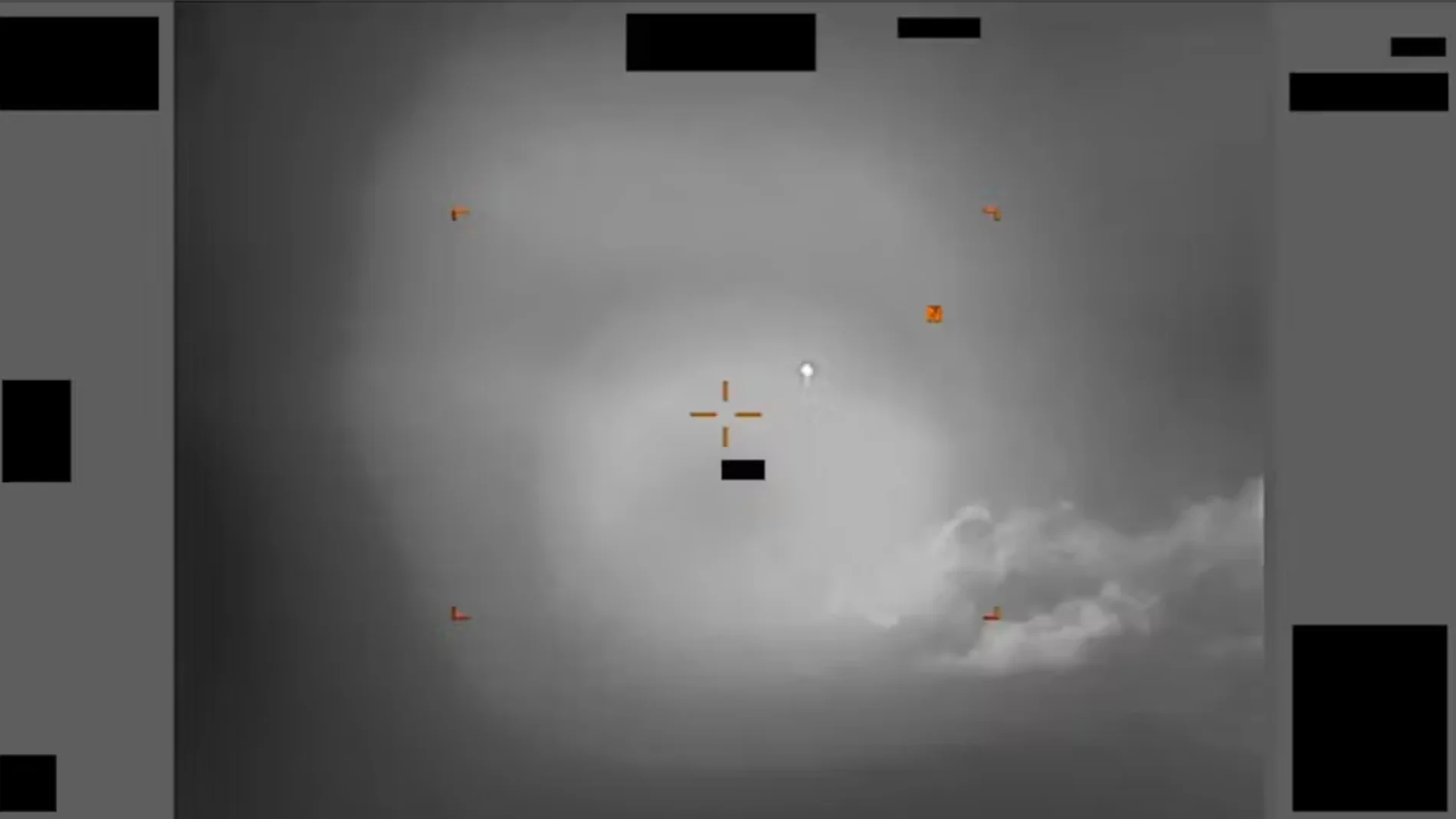
In fact, one of the cases mentioned in the analysis is a reflection of these strange behaviors: “One of the most intriguing recordings was shared at a US Congressional hearing in 2025. It was apparently recorded by an MQ-9 Reaper drone, which was tracking a UAP. The drone fired a Hellfire missile at the object and apparently hit it. The object appeared to momentarily deviate from its trajectory, suggesting that it was a real physical object, but apparently suffered no damage and continued on its course.”.
However, Dwyer insists on a key idea: the extraordinary nature of the observed behavior does not necessarily imply an extraordinary origin. This is where its analysis is especially valuable, because it introduces an element that often becomes invisible: the difficulty of interpreting complex data in equally complex environments. A distant object observed from a moving aircraft, with limited sensors and variable atmospheric conditions, It can give rise to readings that are easily interpreted in many ways. In other words: seeing something strange does not mean understanding it correctly.
The text also highlights another fundamental change: the move from institutional silence to “controlled transparency”, no matter how oxymoronous it may sound. For much of the 20th century, governments tended to minimize these phenomena or relegate them to the realm of the anecdotal. Today, however, There are specific offices dedicated to collecting, analyzing and publishing information on UAP. This shift does not respond so much to a scientific opening as to a strategic concern.
An unidentified object in military airspace is, above all, a security problem. It may be experimental technology from another country, unconventional surveillance systems or, at best, poorly understood natural phenomena. In all scenarios, ignoring it is not an option.
But Dwyer also introduces a suggestive idea: perhaps we are not facing an increase in strange phenomena, but rather an increase in our ability to detect them. We live in an era saturated with sensors, where more and more systems record data continuously. It is logical, therefore, that more anomalies appear. And anomalies, by definition, are what we do not yet know how to classify. In that sense, the new archives do not represent so much an advance in the understanding of the phenomenon as an expansion of the “catalog of the unknown.”