
Margarita Robles and Fernando Grande-Marlaska are fighting a decisive battle today at the table of the Council of Ministers. Both will throw roles at each other’s heads. The Government will approve the declassification of the reports handled by different Defense and Interior departments before, during and after the massive entry of some 80,000 migrants into Ceuta.
Government sources clarify that Moncloa will not put a single document on the table. It will be each minister who presents the classified documentation corresponding to their respective departments to their colleagues at the Moncloa Palace.
Robles will keep the reports that depend on Defense and, fundamentally, those prepared by the National Intelligence Center and other military intelligence agencies. Marlaska will do the same with the documentation of the Interior and the State Security Forces and Corps after the internal criticism he has received for not having had prior knowledge of the report from the National Center for Immigration and Borders, dependent on the Police.
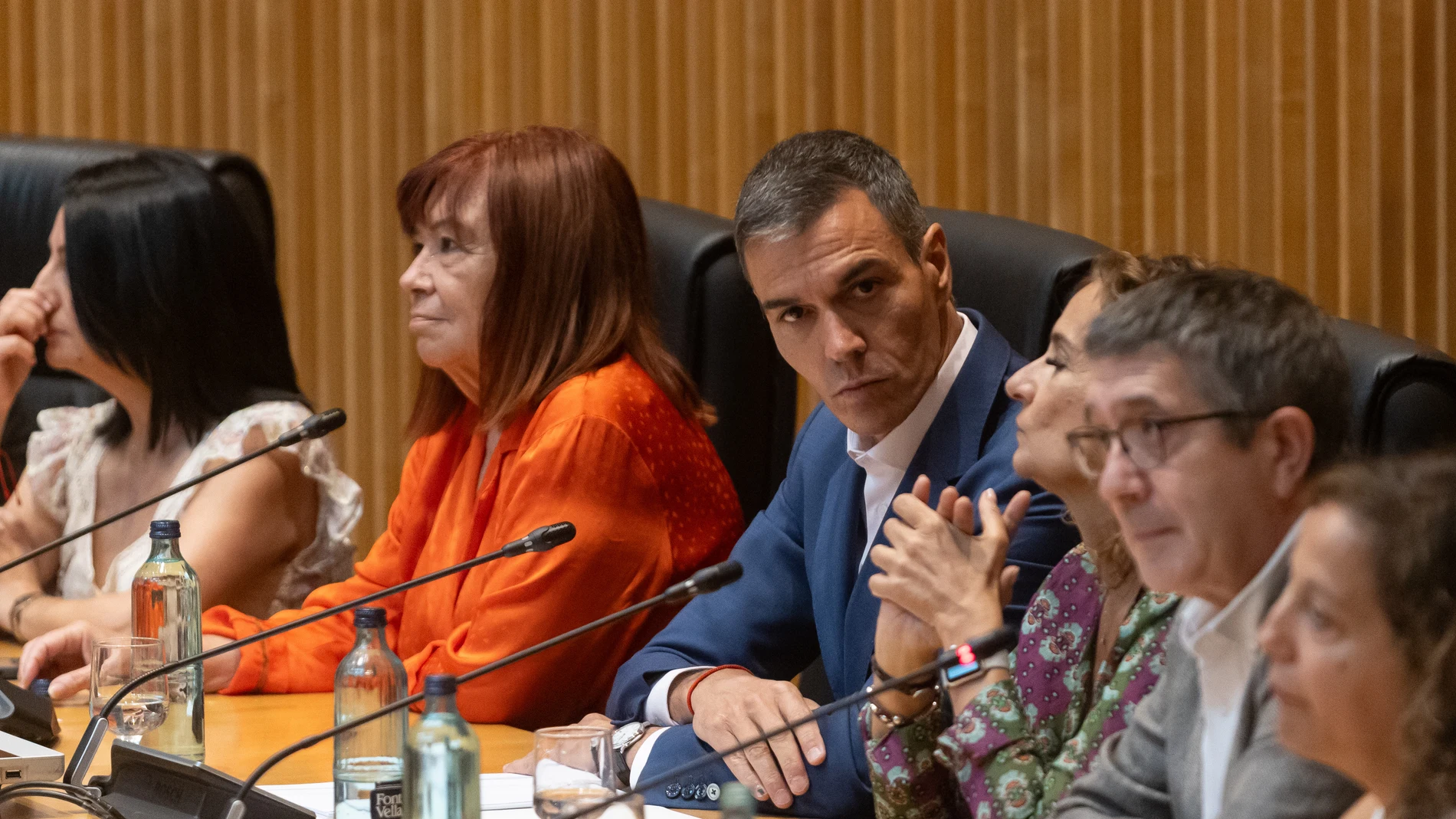
The Minister of Defense already expressed her caution when Sánchez announced the declassification from the Congress platform last week. While the president informed the deputies that he would make public the police and intelligence reports related to the Ceuta crisis, Robles remained seated and did not applaud the announcement. The gesture did not go unnoticed by anyone. What’s more, it was so obvious that even Gabriel Rufián immediately turned it into a throwing weapon. «Almost everyone here has applauded (…) except one person, Mrs. Robles. “You have a major problem,” he snapped at the president.
Defense then was quick to downgrade any interpretation as an open challenge to the head of the Executive. Sources from the department headed by Robles made it clear that there was “no problem” in declassifying the CNI documents and that Robles would not pose any veto to the decision.
But the Ministry did introduce an important caution at the same time: Intelligence reports cannot receive exactly the same treatment as internal notes prepared by the Police or the Civil Guard. The CNI works and shares information with foreign intelligence services and part of the documentation it handles may come from third countries.
For this reason, Defense warned that any publication should be carried out preserving the sources, methods and relations of international cooperation. The discussion, therefore, has not revolved these days only around what is declassified, but also about how far the Government can go when these documents come to light tomorrow.
However, behind these cautions there is another, much more political battle.
In Defense they trust that the declassification will end up proving Robles right. Their expectation is that the documents prove that the CNI did inform the Government of the risk of a massive entry into Ceuta. A different matter is whether the intelligence services could anticipate that that threat would end up becoming an avalanche of between 70,000 and 80,000 people.
The declassification will allow Sánchez to respond in one fell swoop to the successive revelations about the prior warnings and, especially, to the Cenif report that pointed to indications of Moroccan permissiveness. Moncloa intends to reduce the margin for future leaks: if all the documents come to light, any new report can be compared with the set of information that the Government then managed.
The movement coincides with a perceptible change in the discourse towards Rabat. Sánchez has gone from defending Morocco’s actions with great caution to publicly raising doubts about its behavior during critical hours. “This Government is not afraid to confront other foreign powers,” he warned in Congress.
Moncloa still does not attribute intellectual authorship to Morocco, but it also does not publicly rule out all suspicions about its actions. The difference is important. Sánchez wants the papers to prove that no one anticipated such an avalanche; Defense hopes that they will demonstrate that the CNI warned of the risk. The two statements are not necessarily incompatible, but the publication will allow us to know how far each notice went and what information each ministry had on the table.