
He San Juan Bay Estuary began the public comment process for the new “Estuary Plan”, which establishes the actions that the entities responsible for managing the public and private infrastructure and the natural resources of the region must implement, in collaboration with the communities, to restore and conserve the ecosystem and its hydrographic basin.
The advertisement offered Brenda Torres Barretoexecutive director of the Estuary, at the press conference of the eighteenth Water Quality Daywhich will be held tomorrow, Saturday.
“To all sectors, private, public and community, I urge you to review the ‘Estuary Plan’. The preparation of the ‘Estuary Plan’ may sound like a passive action in the face of so many pressing issues, but I assure you that it is a solid tool to ensure that entities responsible for the water resource and its environment take responsible and scientifically correct actions.. I invite you to access the documents that – together with experts and governments responsible for gray and natural infrastructure – have been prepared,” said Torres Barreto, through a press release.
“Every citizen can make a difference from where he is and understands it is relevant. What is unacceptable is non-action, since this valuable resource demands a voice and depends on the citizen to be able to offer it. Integrating the perspective of all sectors is the only way to achieve a plan that guides the sustainable development effort in the metropolitan region of San Juan in a concerted manner.”he added.
Citizens will be able to comment on the five chapters that address critical issues for the San Juan Bay estuary, for example, water infrastructure, integrated materials and waste management, adaptation of estuarine ecosystems to extreme events and the protection of communities, and the promotion of a culture of integrated management.
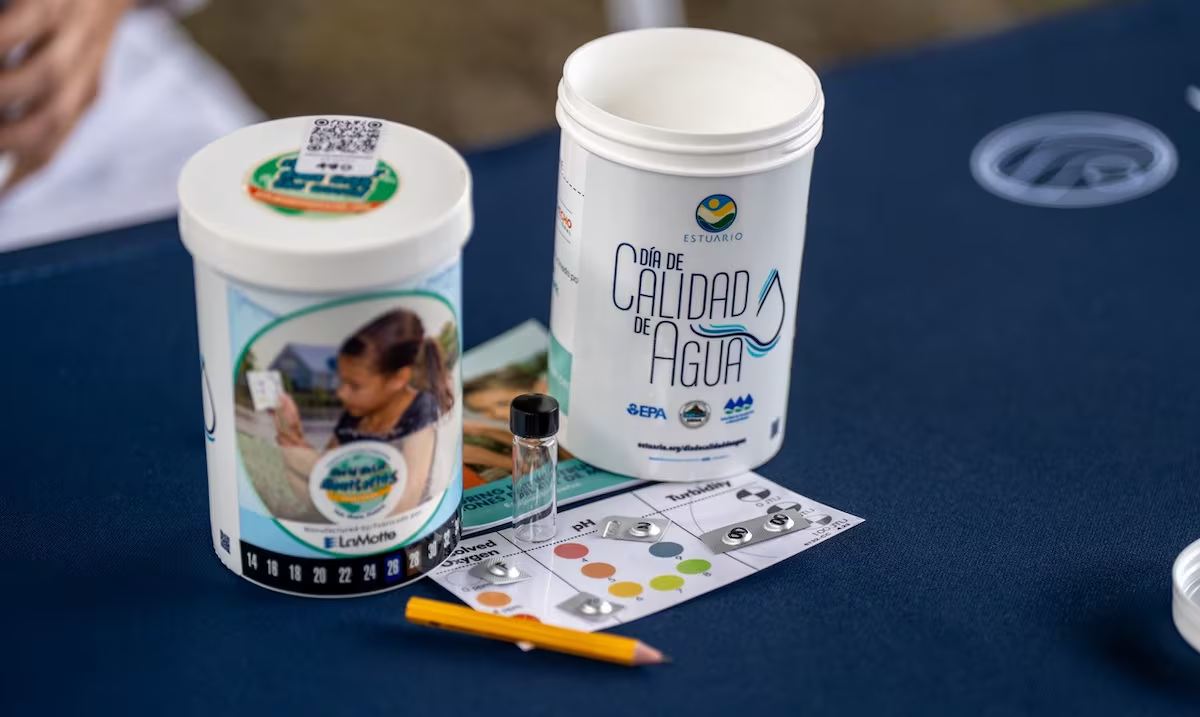
On the other hand, Water Quality Day will take place tomorrow, Saturday, for a period of two hours, from 9:00 am to 11:00 am. Through simple monitoring at more than 200 points throughout Puerto Rico, people will have the opportunity to evaluate the water quality of places they choose.
So far, there will be more than 110 groups of participants, with more than 1,150 people. There will be 18 stations open to the public and around 120 bodies of water to monitor.
For more information about the open stations that will receive citizens, registration and training workshops, you can visit this page.