
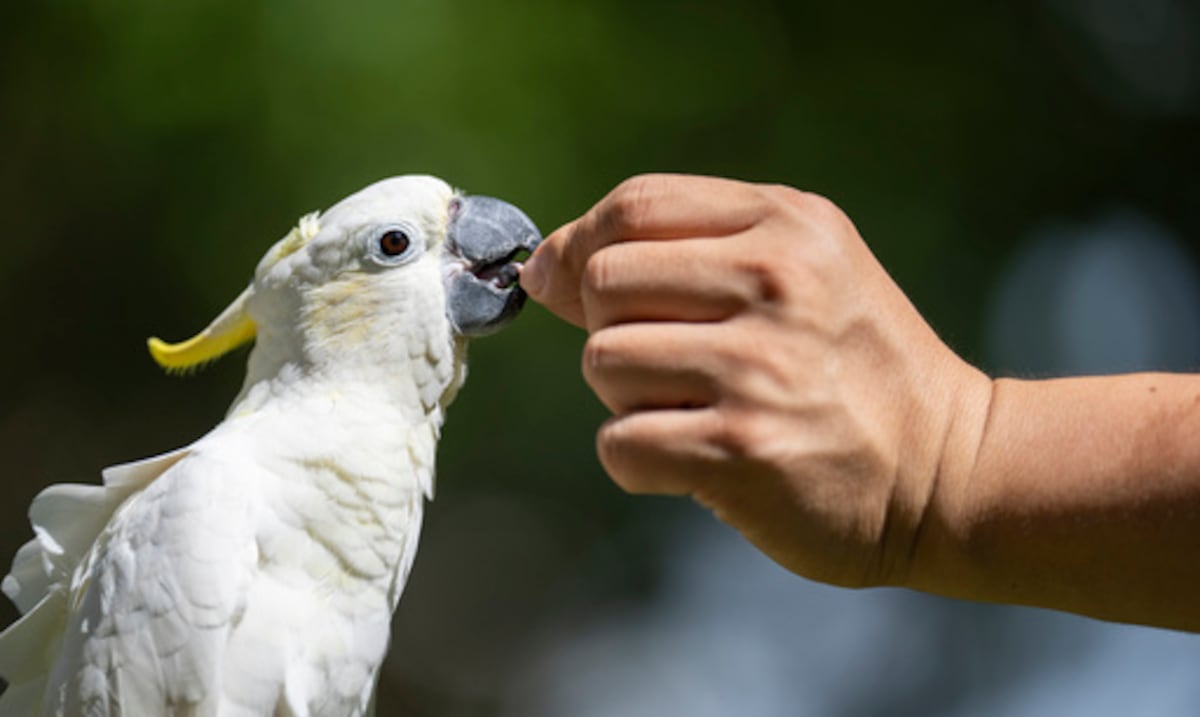
The yellow created parrots, which are in critical danger of extinction, found an unexpected sanctuary among the imposing skyscrapers of Hong Kongbut like their human neighbors, they now have trouble finding a place to call home.
Native to Indonesia and Eastern Timor, White birds such as snow, with their ridges that shine like yellow crowns, grazn in the urban parks of the Asian Financial Center. They represent approximately 10% of the world’s wild population, which amounts to only 2,000 mature birds.
The investigations show that the city of Cacatúas of the city has stagnated as the birds, which live in tree cavities, are losing natural spaces of nesting in old trees due to the typhons and the pruning of trees by the government for public safety. That adds to the global pressures on the caratúas, such as the illegal trade of pets and the Climate change.
Hong Kong conservationists have intervened with a solution: install artificial nest boxes that imitate these natural cavities.
Astrid Andersson, postdoctoral researcher at Hong Kong University who directed the project, said a couple of birds already settled in a nest box that his team set a tree on his campus, the oldest university in the city. Its objective is to install 10 boxes at the end of the year and, ultimately, increase that figure to 50 in the coming years throughout Hong Kong island.
“And then they can continue living in the city,” said.
The pet trade and the loss of habitat lead to the species of Indonesia to the edge of extinction.
Once extended by island chains from the center to eastern Indonesia and Eastern Timor, the yellow crest cade has disappeared from many islands and clings to survival in others.
The International Union for the Conservation of Nature says that it is believed that up to 90% of the population has disappeared since 1978, mainly due to the capture for pet trade.
The low application of an export prohibition of 1994 by Indonesia has allowed trade to persist, even pointing to chicks. In 2015, the Indonesian police arrested a man under suspicion of smuggling of about 20 birds putting them inside water bottles.
Deforestation caused by agriculture and logging is another problem. Indonesia lost 107,000 square kilometers (41,300 square miles) of its original tropical jungle between 2002 and 2024, an area approximately the size of Iceland, which represents approximately one third of all loss of tree coverage during that time, according to Global Forest Watch.
Climate change is getting worse. The increase in dry temperatures forests, leaving them more vulnerable to fires. Many birds live in volcanic islands, where eruptions can cause forest fires in arid landscapes.
“The fires are huge”Said Bonnie Zimmermann, director of the Indonesian Loro project, a non -profit organization.
Sales in the bird market of Hong Kong generate concern
The wild caratúas in the Urban Parks of Hong Kong could be pets escaped or released, Andersson said. An urban legend says they descend from domestic birds released by a British governor before surrendering to the Japanese invasive troops in 1941. Hong Kong, an old British colony, returned to Chinese control in 1997.
Hong Kong prohibits the commercial trade of Cacatúas captured in nature, but allows sales raised in captivity for operations registered by virtue of the Convention on International Trade of Endangered Species of Wild Fauna and Flora, or CITES. However, there is no such breeding operation registered in the city.
In August, a three -month chick cost 14,000 dollars from Hong Kong ($ 1,800) in the city’s bird market.
A survey conducted by Andersson between 2017 and 2018 found 33 Cacatúas for sale, triple the number of birds imported since 2005. They could come from domestic breeding, traffic from abroad or the wild population of Hong Kong, the university said in a statement.
Andersson has developed a forensic test to help distinguish between those who live in nature and those who are raised in captivity, and hopes that it can be applied in the market one day.
Many Hong Kong inhabitants do not know that birds are critical of extinction. Dreamy Cheung said he didn’t know when he bought his pet, Mochi, in 2021 for $ 20,000 of Hong Kong ($ 2,570). He felt anxious after learning about the danger of extinction of his intelligent bird, especially given his missing identification ring in the leg and his possible illegal origins.
“It’s like taking another person’s baby”said.
In a statement sent by email to The Associated Press, the Department of Agriculture, Fisheries and Conservation said that the government is committed to protecting endangered species, with periodic inspections in markets and stores. He has no record of pooptive hunting in the last five years, but will investigate any complaint, he said.
He added that he will provide advice on the conservation of birds for any tree pruning that may affect wild birds.
Create space for coexistence
Hong Kong Coatuas symbolize how humans and wildlife can coexist in a highly urbanized environment, Andersson said. Local birds can also carry some different genetic lineages that are missing in their native distribution area, which helps maintain their genetic diversity.
“Hopefully the population of Hong Kong can contribute to save this kind of extinction”said.
His equipment plans to use cameras installed inside the nest boxes to collect data on the reproductive behavior of the caratúas, a topic that has not been studied extensively.
The Coatúas grazn in the upper branches of a tree in a park in the city of Causeway Bay of the city while the conservationist Harry Wong installed a nest box full of wooden splinters.
Wong tried a similar project is a decade without success.
This time, seeing the Coatúas occupy a nest box at Hong Kong University only two months after its installation, he was excited and surprised.
“We can create small things in the city that allow animals that live here coexisting with us,” he said.