
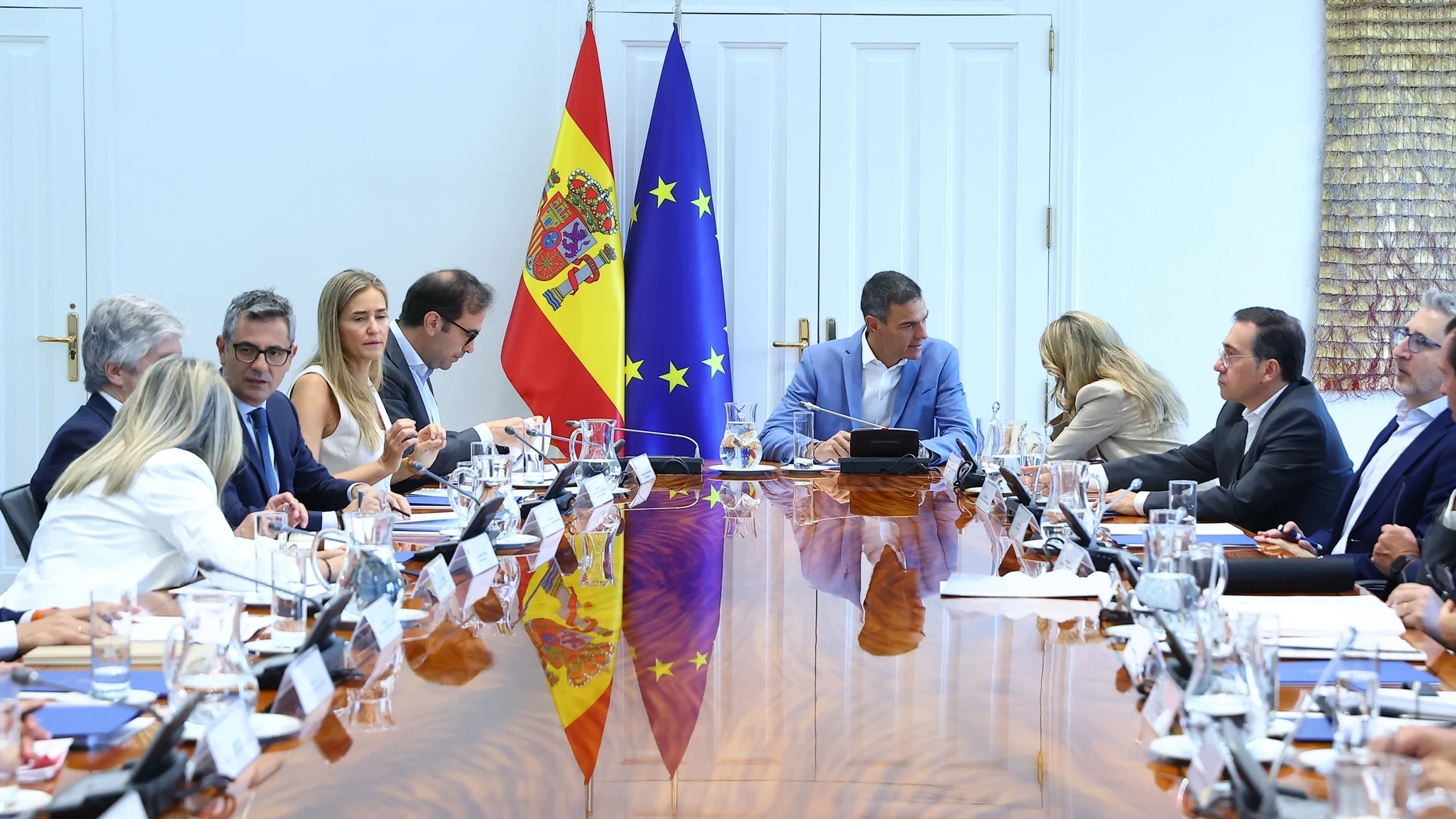
Pedro Sánchez needs to convince his people again. The crisis in Ceuta has opened a credibility hole between the President of the Government and a part of the socialist and left-wing electorate that worries Moncloa. And that diagnosis has begun to translate into movement.
Sources from the hard core of the Executive consider that the time has come to “remove” the president again, increase his public exposure and “optimize” him to try to recover the political initiative after a summer in which the massive entry of migrants on July 30 and 31 has monopolized the agenda.
The strategy is already beginning to be visible. Sánchez has had two interviews in different media in recent days and has new appearances planned. In the presidential environment, they interpret that the head of the Executive must personally assume a greater part of the political explanation of what happened and take advantage of his exposure to try to reconnect with a progressive electorate that does not quite buy the story constructed by the Government around Ceuta.
It is not just about recovering media space. In Moncloa, credibility is especially concerned. The crisis has forced the Executive to modify and qualify some of the explanations offered since tens of thousands of people crossed the border from Morocco. The debate on prior warnings, the behavior of the Moroccan gendarmerie, the anticipatory capacity of the intelligence services and the subsequent response of the State has kept an open wound that the Government has not yet managed to close.
The interview granted this Wednesday to TVE is part of that attempt to start doing so. Sánchez has introduced a dose of self-criticism that until now he had administered in dribs and drabs. He has recognized that the State must improve its preparation against “hybrid attacks”, has called for “more prepared” intelligence and has announced an investment of 180 million euros to reinforce the border. He has also defended the need to increase the available places to 6,000 to address a migration emergency of such magnitude.
But the president has kept one of his main defensive lines intact. He admits that there were warnings about an increase in swimming arrivals, but maintains that no one anticipated such an avalanche. “A massive arrival of so many migrants was not anticipated at all,” he stated. That is, Sánchez recognizes that the State must prepare better, but rejects that the available warnings allowed us to predict that more than 70,000 people would end up crossing the border.
A “flat and cold” PSOE
The president’s deployment contrasts, however, with the mood conveyed by sectors of the PSOE. Socialist sources consulted describe a colder start to the year than usual. «Honestly, I have seen a somewhat cold atmosphere. I don’t know if it’s concern, but the atmosphere was not the same as other times,” explains one of them who was at Monday’s interparliamentary meeting in Congress.
Another source establishes a comparison between the mood of the party and the tone used by Sánchez: “The atmosphere was, otherwise, like the president’s speech: flat and cold.” It does not describe a scenario of internal contestation or a rebellion against Moncloa. Yes, there is a feeling that the PSOE has not yet managed to shake off the political impact of the summer when the last year before the elections has just begun. In fact, in the PSOE there are already those who think that a “surprise” call to the polls is approaching.
And therein lies the paradox that is beginning to emerge within the party. Moncloa is warming up Sánchez politically while the PSOE remains cold. The multiplication of interviews is interpreted by part of the organization as a sign that the president has begun to put the machinery in motion to regain initiative. Although there are doubts about whether a greater public presence will be enough if it is not accompanied by a deeper review of the message.
“The speech follows the same tone as the SER interview and the appearance,” say socialist sources, who demand an additional step from the president. “I think a little more self-criticism is necessary to try to connect with the voter.”
The warning takes on greater importance because of the calendar. This is not just any beginning of the course. It is the last before Spain fully enters the next electoral cycle and some socialist sectors were hoping for a more recognizable political offensive to try to leave behind an extraordinarily complicated summer. “Being the start of the last course before elections, I expected more political initiative,” admits a source.
Sánchez has made it clear precisely in his round of interviews that he intends to continue. “If my colleagues want, I will run again,” he assured, stating that he is “with desire and strength.” He has also ruled out making the general elections coincide with the municipal and regional elections and intends to take the Budget debate to Congress before the end of the year.
The problem for Moncloa is that before building the next cycle it needs to finish closing the previous one. Ceuta continues to go through everything. It conditions the story about Morocco, it has forced the Government to show its intelligence reports, it has opened the debate on prevention errors and now it is also beginning to weigh on Sánchez’s relationship with a part of his own electorate.
In the hard core they consider that the time has come to put the president back in the center and take political advantage of his communication skills. In sectors of the PSOE, on the other hand, they hope that this greater exposure will be accompanied by something more than interviews. One source sums up the problem in one sentence: “Ceuta continues to set the mood for everything else.”