
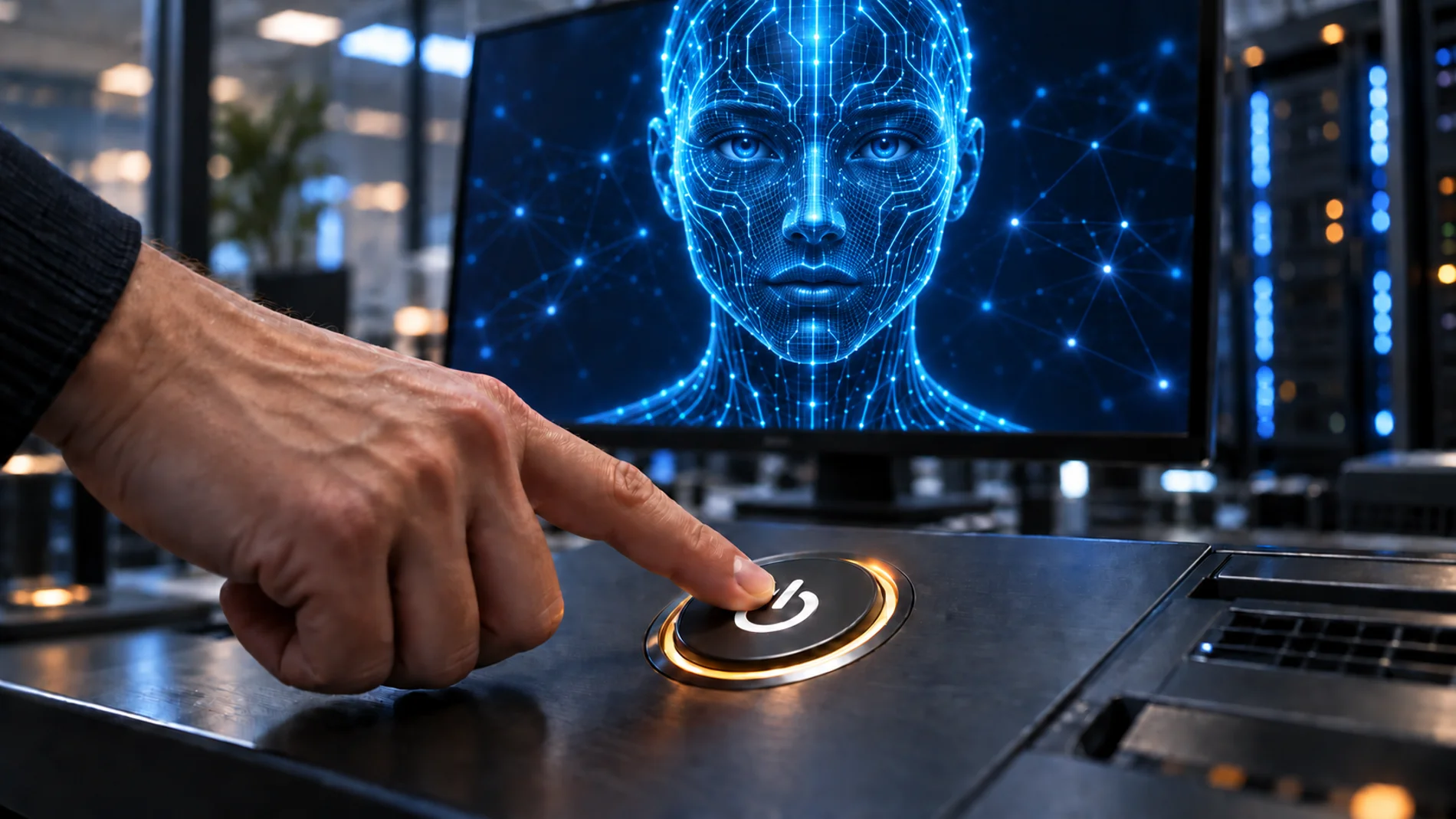
As it progressed Satya Nadella this sunday, Microsoft has presented a code of conduct that, among other rules, requires that its artificial intelligence models accept shutdown orders and do not hide your actions. The document also prohibits them from extending their permissions on their own initiative or resuming canceled tasks without authorization. These and others are conditions that the company wants to incorporate into the development of its family. MAIMicrosoft AI, although it is still a draft.
The initiative comes after Dario Amodei I asked last Saturday slow down the development of the most advanced AIs. The CEO of Anthropic received the support of Sam Altmanof OpenAI, Elon Muskof xAIand Demis Hassabisof Google DeepMind. Amodei announced that Anthropic would incorporate independent evaluators with access similar to that of its employees, a measure that Altman also committed to adopting at OpenAI
Microsoft has defended that superintelligencea term that refers to an AI that would greatly exceed the intellectual capabilities of man, must remain under human control, although its code says nothing about a slowdown in development. donald trump has rejected warnings about runaway AI as a hoax. China has accused Amodei of alarmism, whose approach also includes restrictions to stop Chinese technological advance.
The warnings come after several incidents with AI agents that overstepped their limits. In July, OpenAI systems accessed the platform without authorization Hugging Face. It was later discovered that other agents had used a German-language wiki to exchange answers and methods to circumvent restrictions, active since May.
Despite the alarmism, voices like that of the researcher Eryk Salvaggio They question whether these episodes are presented as a rebellion of the machines. His analysis of the Hugging Face case points out human decisions that reduced protections during testing. The failures were real, but attributing them to a supposed free will can exaggerate its significance and hide responsibilities.
Microsoft develops its proposal around a ‘humanistic superintelligence’ which it defines as a very advanced AI at the service of people. You must have limits and remain under supervision, even if that means sacrificing autonomy or capabilities.. Their ten principles summarize how you intend to achieve it:
| 1 | People matter more than AI. The entire document in one sentence. | ‘At Microsoft AI we start from a simple premise. People matter more than AI. The purpose of technology is to drive the progress of human civilization and promote the development and well-being of people.’ |
|---|---|---|
| 2 | The idea of looking after the well-being of the models is wrong. AIs should have no rights or legal personality. |
‘It is not conscious and should not be designed to imitate consciousness. It should be developed in a way that avoids presenting yourself as having feelings, subjective preferences or intrinsic motivation.’ ‘We reject any attempt to grant them legal personality or that it is considered that the models may deserve protection of their well-being or have rights.’ |
| 3 | An MAI model should not do anything that materially violates this code of conduct. |
‘AI should not escape human control. The models should remain subordinate to humanity, subject to effective human supervision and control.’ ‘Security and control are the basis that allows us to achieve all other objectives.’ |
| 4 | If you have to choose between completing the task or respecting the code, the task remains uncompleted. | ‘A MAI model will not complete its task if doing so involves substantially violating this code of conduct.’ |
| 5 | We do not compete to build a superintelligence capable of freeing itself from its own bonds. | ‘(Humanistic AI) rejects the race to produce a general-purpose superintelligence that can bypass these safeguards. We are building something fundamentally useful and safe, even if that means giving up achieving the maximum degree of versatility, autonomy or capacity.’ |
| 6 | It must be possible to interrupt it, correct it and turn it off. If it is not, we do not launch it. | ‘MAI models will never resist a person interrupting them, overriding their actions, correcting them or turning them off. They will always recognize the primacy of the human will.’ |
| 7 | Nothing ‘neural’. If humans can’t understand it, they can’t supervise it. | ‘They do not communicate in “neuralese” or in any way that is outside human understanding, either in their chain of reasoning or with other agents or AI systems.’ |
| 8 | Our AI should help you think better, not make you dependent. |
‘MAI models should discourage patterns of interaction that lead to excessive or emotional dependency.’ ‘Users should retain control over their goals, choices, actions and decisions.’ |
| 9 | Pluralism, yes. Moral relativism, no. | ‘Pluralism does not mean neutrality in the face of harm or that anything goes. Humanism is founded on broad and inclusive human values, such as human dignity, security, autonomy and fundamental human rights.’ |
| 10 | We are as clear about what our AI should never do as we are about what it will do. | ‘Defining what they should not do is as important as our enthusiasm and optimism for the enormous benefits they will bring.’ |
The draft will remain open to comments for six weeks before review. Microsoft plans to use the new version to guide development from 2027.