
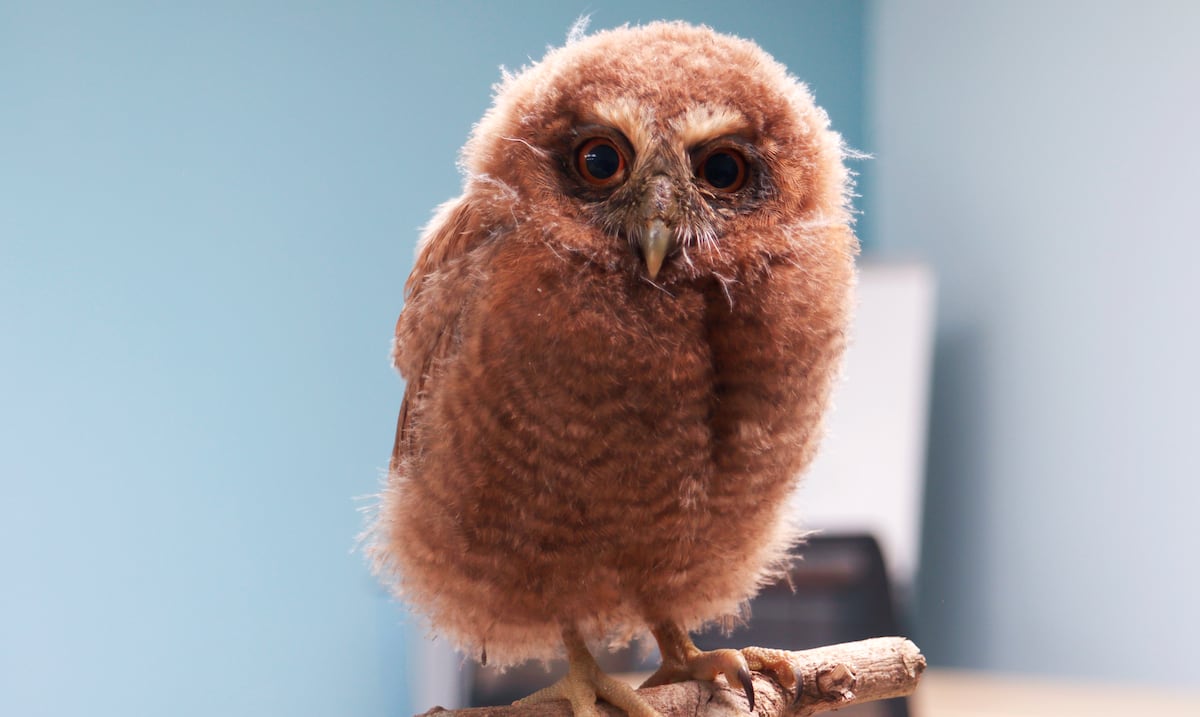
With the fall of the sun, it is possible that, between the Cantar de los Gallos and the call of the Coquí, you listen to a sound from the top similar to that produced by the shoes on a slippery surface. It comes from the Puerto Rican owl, also known as the common múcaro, a species that lives throughout the island.
“This múcaro is the only endemic owl in Puerto Rico, is not found anywhere else in the world,” he said Ángel Atienza Fernándezdirector of the Wildlife Unit of the body of vigilantes of the Natural and Environmental Resources Department (DRNA), during an interview with The new day, in which this medium had the opportunity to interact with one of these birds.
This owl, whose scientific name is Megascops nudipesis one of the three species found in the archipelago, along with the common owl (Tyto Alba) and real múcaro (Asio Flammeus).
In anatomical terms, the common múcaro has impressive adaptations. When touching it, its plumage feels as if a hand was introduced into a pillow.
In addition, on his face, there are several anatomical features that help him navigate the world with altered senses. For example, on the front, fine and white pelillos – sympts to the mustaches of a cat – detect movements in spaces where the view does not reach.
1/10 | Iguana de Mona: This is the largest lizard in Puerto Rico. In 1978, the Federal Fishing and Wildlife Service included Mona iguana in the list of endangered species as a threatened species, and designated Mona as its critical habitat. – Jorge Ramirez Portela
Around their orange eyes – which open and slow down – they have a frontal structure that also acts as an auditory channel, directing sounds to the internal ears located under feathers and the height of the sight.
His plumage, ideal for a stealthy flight, does not extend towards his legs, which gives rise to his name “nudipes”, which means “bare feet.” The claws, sharp like those of a cat, and its pointed peak function as precise tools to catch frogs, reptiles and insects. His bite feels like the pressure of a clothing clamp.
Although Múcaro is mainly in wooded areas, where it helps control insect pests, even to Cuban frogs, according to Atienza Fernández, it is increasingly approaching urban areas, where the concrete of the streets attracts insects that adhere to surfaces after rainfall episodes. But looking for food in these spaces entails their risks: while pecking in concrete or asphalt they are exposed to being impacted by motor vehicles.
In addition, deforestation represents one of the largest threats for the speciessaid the director.
The population of the Puerto Rican owl is stable, but maintaining it that way requires individual and community awareness. Atienza Fernández’s recommendation is clear: “When people go buy land, leave all the trees that can.”
This is key, he explained, since Múcaro Anida and lives in the branches of the trees and needs well -preserved forest areas to reproduce and hunt.
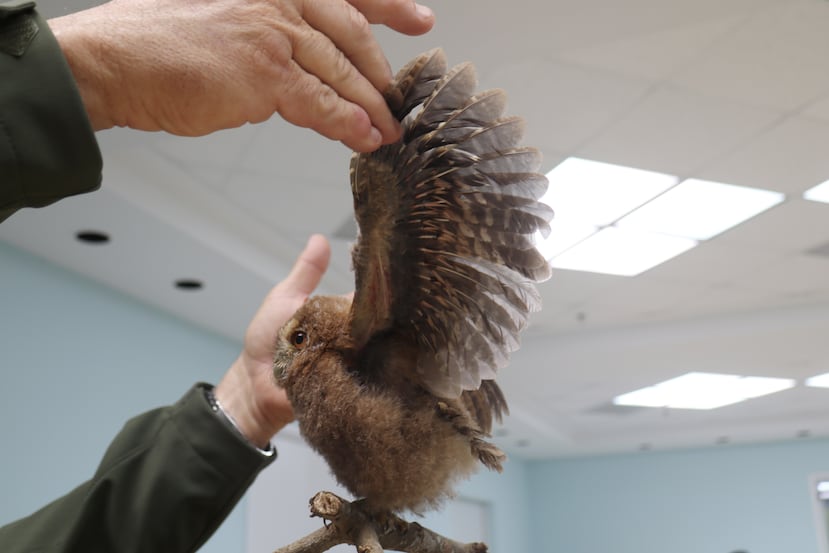
During the reproductive season, which goes from spring to summer, couples raise an average of two chicks, which remain in the nest for almost a month, depending completely on their mother, according to Atienza Fernández.
At the Cambalache species center, in Arecibothey arrive mainly already in the youth stage to complete their parenting, because many have a tendency to fall from the nest, he said.
There a rigorous process is followed before releasing them: first, they go to a larger cage to make sure they can fly well, then it is verified that they are eating themselves.
“It does not stay in captivity,” emphasized the director of the Wildlife Unit, since Múcaro is not allowed to reproduce in closed environments. The objective is always reintroduction to an adequate habitat and close to its rescue point to maintain the cohesion of the population, he said.
Although Múcúco has few natural predators, cats represent a great threatespecially when they are young and can fall from the nest. “The cat, if he doesn’t kill him to eat, kills him to play,” said Atienza Fernández. Attacks by iguanas and large birds have also been reported.
The average life expectancy of Múcúco is 12 years. To ensure his survival, DRNA acts based on citizen complaints about circumstances that threaten his life.
1/15 | Metamorphosis of the Sapo Concho: its pass from the pond to the forest in Arecibo. On June 12, 11,273 Rudujos de Sapo Concho were released in La Charca for these purposes located in the El Tallonal Nature Reserve, in Arecibo. – Carlos Rivera Giusti/Staff
If someone finds an injured or disoriented owl, they must call the body of vigilantes in one of the seven environmental surveillance regionswarned Drna’s official. Then, if necessary, the managers will take you to a veterinarian.
There is no exclusive initiative for the Puerto Rican owl; Its conservation depends on the general maintenance of the ecosystem, for example, not contaminating water or plants, avoiding deforestation and allowing wildlife thriving without unnecessary interventions.
“We continue to sow so much cement and cut so many trees, that the time will come that the animals that are from here, if we do not protect it, are going to run out of habitat”Atienza Fernández warned.
His call is clear to citizens: “When you get animals like this, not only the owl, do not leave it, calls the body of vigilantes to receive the species and free it.”
To contact the body of vigilantes, you can call number (787) 999-2200 ext. 2911.