
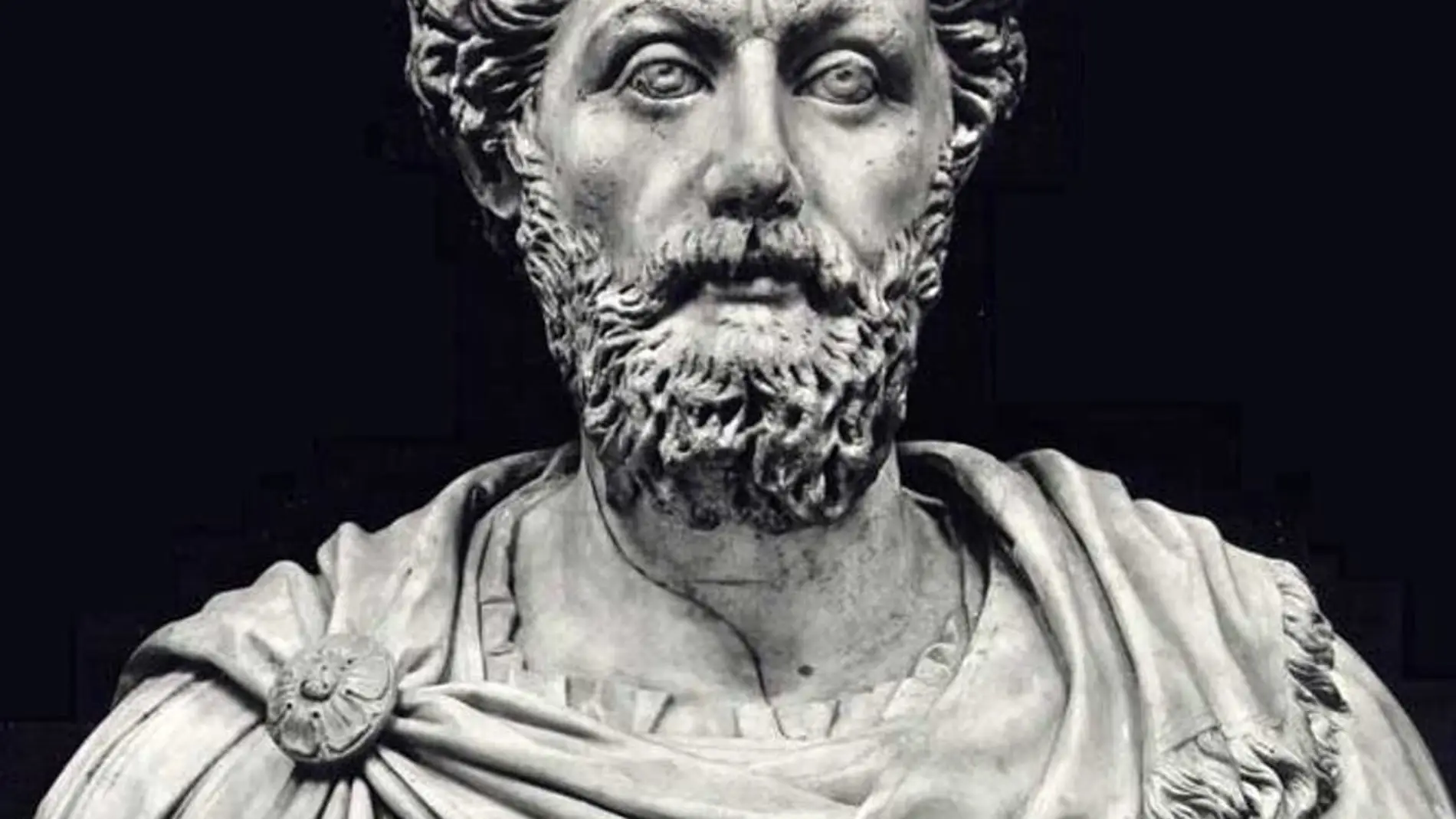
Marcus Aurelius He ruled the Roman Empire between the years 161 and 180, but his figure has survived the passing of the centuries for something that goes far beyond his role as emperor. His reflections on life, difficulties and the way to face what we cannot control made him one of the great names linked to the stoicism.
Much of this thought was collected in Meditations, a series of personal writings in which Marcus Aurelius expressed ideas about his own behavior and the way in which he should confront the circumstances around him. They were not conceived as a manual aimed at the public, but as reflections for oneself.
Among the phrases attributed to him appears one that summarizes that search for inner serenity: “It is in your power to withdraw into yourself whenever you wish. Perfect tranquility consists in the order of the mind, the kingdom that belongs to you”.
The reflection starts from a simple idea, although not always easy to apply. We cannot decide everything that happens around us, but we can work on the way we react to it.
What does it mean to “withdraw into yourself” for Marcus Aurelius?
The withdrawal that Marcus Aurelius talks about does not have to be understood as physically leaving a place or moving away from problems. The refuge it points to is in one’s own mind.
Stoicism attaches enormous importance to distinguishing what depends on us from what is beyond our control. Other people’s decisions, many unexpected events or certain external circumstances are not in our hands. The response we give to them, however, occupies a central place.
From that perspective, put order in the mind It allows you to distance yourself before reacting. It does not mean that what happens stops mattering or that we should remain indifferent to the problems. The idea is to prevent the exterior from completely dominating our behavior.
This way of understanding tranquility also appears in other reflections attributed to the emperor. One of them insists precisely on separating the mind from external events: “You have power over your mind, not over events. Realize this and you will find strength”.
Stoicism does not propose escaping from problems
The search for tranquility can be confused with the idea of getting away from everything that causes discomfort. However, Stoic thought does not necessarily propose an escape from obligations or difficulties.
Marcus Aurelius had to make his philosophical reflections compatible with the government of Rome in a period marked by conflicts and problems within the Empire. In his writings, concern about how to act correctly in situations that he could not choose appears recurrently.
Therefore, that “kingdom that belongs to you” It can be understood as the space in which a person still retains decision-making capacity. We can’t always immediately change a circumstance, but we can stop before allowing it to determine our response.
Another of the ideas present in Meditations goes in that direction. Marcus Aurelius warned of the time and energy that is wasted by paying excessive attention to what others do, say, or think. For the emperor, constantly looking outside could end up separating a person from what they should do with their own life.
Why the reflections of Marcus Aurelius are still relevant
Nearly two thousand years have passed since the time of Marcus Aurelius, but some of the questions present in his writings are recognizable. What to do when faced with something that we cannot change, how much space to give to other people’s opinions or how to prevent a difficulty from conditioning everything else are questions that do not belong only to ancient Rome.
Stoicism located a good part of the answer in the mastery of one’s own behavior. Instead of guaranteeing that circumstances will be favorable, he proposes concentrating efforts on what we can really intervene on.
That also helps to understand the phrase about withdrawing into oneself. Marcus Aurelius does not talk about finding a physical place where problems disappear. His reflection points towards something much closer, the possibility of recovering a certain internal order even when what happens outside does not depend on us.
Therein lies a good part of the validity of his thought. The tranquility that Marcus Aurelius describes is not about ensuring that nothing bad happens, but about not completely surrendering our stability to events that are beyond our control.