
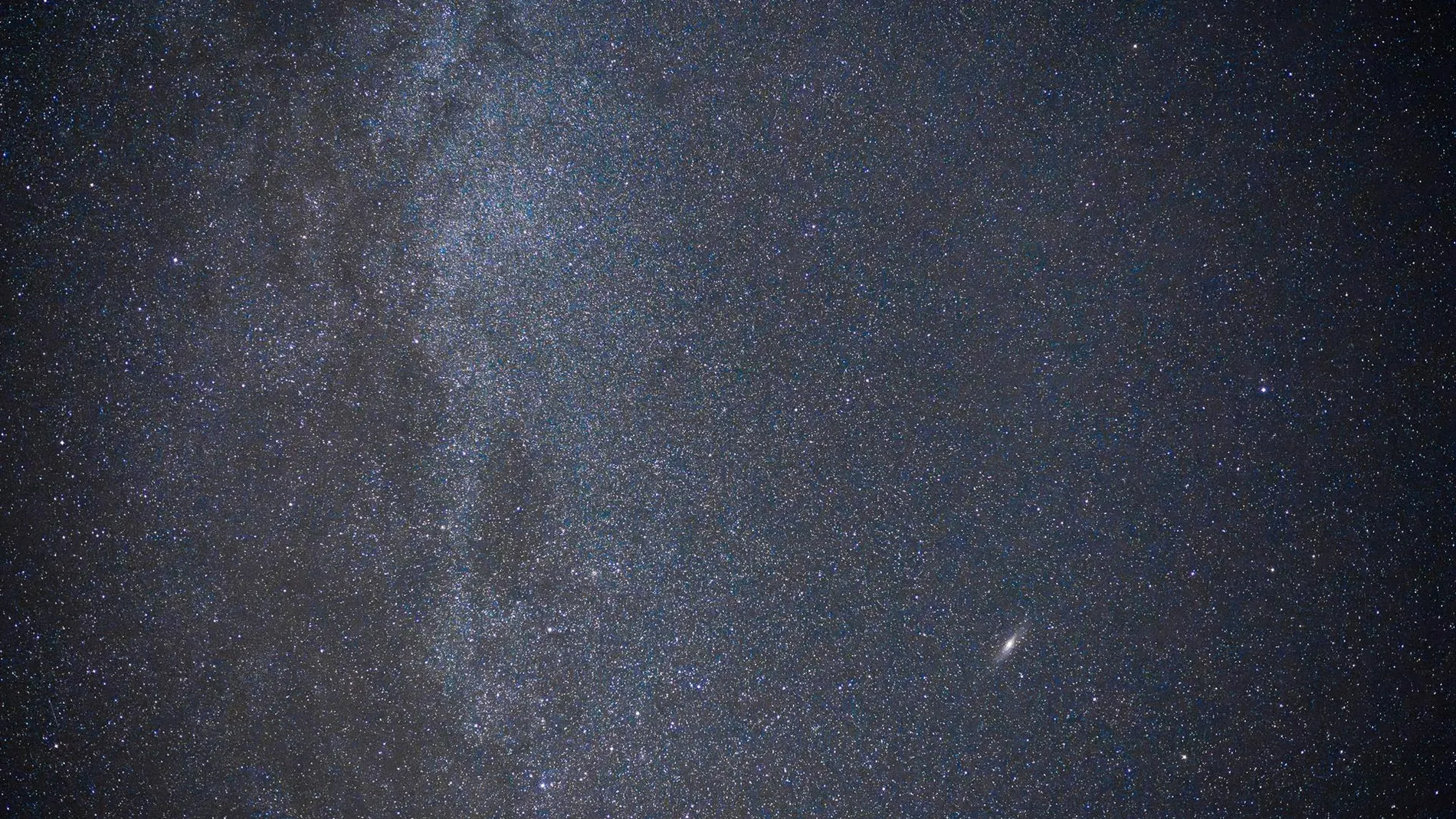
Madrid has a date with heaven this Friday. He Madrid Planetarium prepares a completely free night-time event in which attendees will be able to get closer to astronomy and observe some of the most recognizable objects in the sky through more than twenty telescopes.
The appointment will take place on Friday, September 18, between 9:00 p.m. and 12:00 a.m.on the esplanade of the Tierno Galván Park located in front of the main entrance to the Planetarium. In addition, it will not be necessary to make a prior reservation to participate.
The activity is organized by the Madrid Planetarium in collaboration with the Madrid Astronomical Group (AAM) and will have the Moon as one of its main protagonists. There will also be the opportunity to look much further away and contemplate Saturn.
More than 20 telescopes to observe the sky of Madrid
The Planetarium esplanade will be transformed for three hours into a great astronomical observation point. The Madrid Astronomical Group will install more than twenty telescopeseach one accompanied by specialized monitors.
Attendees will be able to get closer to the instruments to observe the sky and receive explanations from both amateur and professional astronomers about the objects that appear through the telescopes.
The day will begin even before you look for them. The organizers will make prior interventions to introduce the public to the observation and explain some of the elements that can be seen during the night.
The Moon will be projected live on a giant screen
One of the main attractions will be dedicated to the Moon. The Planetarium will install a large LED screen, approximately 5 x 3 metersin which the image captured by the observation teams will be projected live.
The intention is that participants can more easily distinguish some of the features on the lunar surface and learn about their characteristics while receiving explanations from specialists.
Through telescopes it will also be possible to look at some of its great seas, such as the Sea of Tranquility, the Sea of Serenity or the Sea of Crises.
Saturn will be another of the stars of the night
The observation will not end on our satellite. The telescopes will also point towards Saturnlocated around 1,267 million kilometers from Earth at the time.
The planet can be seen accompanied by some of its best-known moons, including Titan, Rhea, Dione and Thetisprovided that the observation conditions allow the equipment to be correctly directed towards the planet.
In addition, during the day specialists will help locate other elements of the night sky. Among them will be the Summer Triangleformed by the stars Deneb, Altair and Vega.
How to access the free observation of the Madrid Planetarium
The activity is free and does not require prior reservation. Access to the area where the telescopes will be installed will be organized by a line and attendees will go through in order of arrival.
The Planetarium recommends coming in advance due to the possibility of a high influx of public. The day will take place from 21:00 until 00:00.
To get there by public transport, the closest metro stations are Arganzuela-Planetario and Méndez Álvarowhile there are also different bus connections in the surrounding area.
The celebration is conditioned by a factor that is impossible to control from the ground. Observation with telescopes can only be carried out if weather conditions allow it..