
The energy transition has become an unavoidable priority, marked by the urgency of moving towards a more sustainable, safe and competitive model. The deployment of renewable energies, mainly photovoltaic solar, wind and renewable gases such as biomethane, is positioned at the center of this transformation, offering the opportunity to reduce greenhouse gas emissions and reinforce security of supply, in line with the climate commitments assumed by Spain and the European Union.
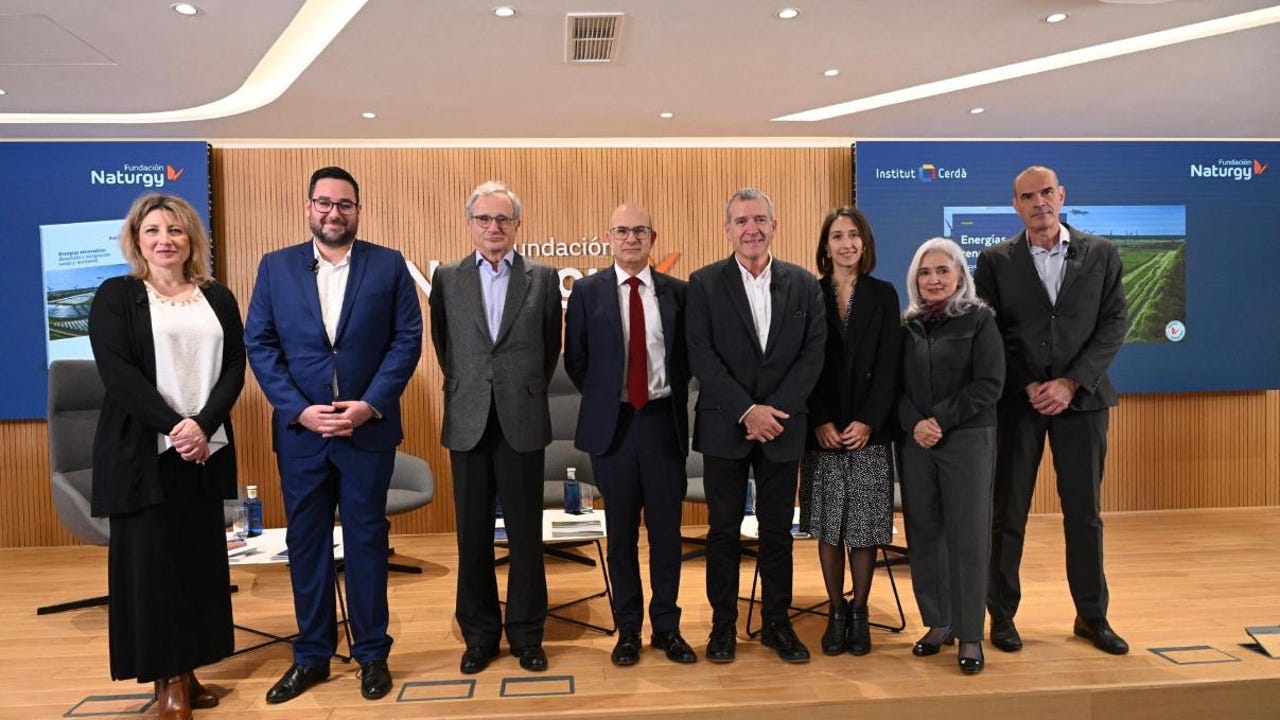
This is contemplated in the study “Renewable energies: development and social and territorial integration”, prepared by the Institut Cerdà, and presented by the Naturgy Foundation, which analyzes the challenges and opportunities of the deployment of renewable infrastructures in Spain from a social, territorial and public policy perspective.
The document analyzes the current climate and energy context, the process of implementing renewable projects and its relationship with the territory, identifying benefits, barriers and good practices. Furthermore, it focuses on the importance of integrating projects in the territory and local communities as an essential condition to move towards an effective, fair and sustainable energy transition.
Spain, renewable power
According to the study, Spain enjoys one of the greatest renewable energy potentials in Europe, thanks to its natural conditions and its industrial and technological capacity. The objectives of the National Integrated Energy and Climate Plan propose an ambitious roadmap towards 2030 and 2050, but achieving these goals requires massive deployment of energy infrastructure, accompanied by networks, storage systems and innovative solutions that guarantee the stability of the system, the report states.
This deployment, the document highlights, has a direct impact on the territory and local communities, especially in rural areas, where the majority of the facilities are concentrated. Renewable energies generate economic, social and environmental benefits, such as job creation, the promotion of local development and the reinforcement of energy autonomy; However, they also pose challenges linked to land use, landscape protection and coexistence with traditional activities such as agriculture and livestock.
Consequently, social acceptance and territorial integration of renewable projects emerge as determining factors for the success of the energy transition. The report emphasizes the importance of maintaining a continuous process of early dialogue, transparency, active listening and generation of tangible benefits for the environment. The absence of adequate management of the social component can lead to conflicts, administrative delays and even the judicialization of strategic projects that are essential to achieve climate objectives, he emphasizes.
Expert voices
During the presentation of the study, Marta Bellera, director of the Risk Management Area of the Institut Cerdà, stressed that the accelerated deployment of renewables is profoundly transforming the territory and local socioeconomic dynamics. “The key is not only where the projects are implemented, but how their benefits are planned, communicated and distributed,” said Bellera. The report warns that administrative complexity and lack of social acceptance can slow the pace needed to meet climate goals.
The subsequent colloquium brought together representatives of public administration, companies, territorial analysis and local governments. Francés Boya, general secretary for the Demographic Challenge, highlighted that “the implementation of renewable energies does not respond to a magical or uniform solution, because we are talking about unique territories, with different realities and sensitivities. Development must start from a deep knowledge of each territory and what its inhabitants expect.”
Jorge Barredo, general director of Renewable Generation at Naturgy, stressed the importance of optimizing land use and reconditioning spaces, ensuring that the environment can recover once the useful life of the plants ends. “Renewables must be understood as a long-term reserve of the territory and not as an usurpation,” said Barredo. These facilities make it possible to structure the rural environment, generate employment and develop activities compatible with agriculture and livestock, always complying with demanding environmental impact statements.
Lluís Inglada, director of the Territorial Management and Innovation Area of the Institut Cerdà, defended that the territory must be an active actor in energy projects, basing the response on strategy and logic. “Complexity often falls on public decision-makers, who are the ones who can balance individual interests and avoid the paralysis of projects,” said Inglada, highlighting the evolution of companies in the incorporation of social elements and more transparent communication.
From the municipal level, José Díaz Ibáñez, mayor of Tabernas (Almería), valued the role of city councils in renewable deployment. Díaz Ibáñez considered it essential to reinforce information and communication, in addition to increasing the companies’ commitment to local employment and the restoration of the land after the activity, so that the integration of the plants is even more accepted by the population.
For his part, Rafael Villaseca, president of the Naturgy Foundation, emphasized the importance of the energy transition being seen as “a collective challenge that cannot be addressed only from a technical or regulatory perspective.” Villaseca insisted on the need to integrate renewables in the territory, listen to local communities and generate shared value to guarantee the viability of the projects and reinforce social trust.