
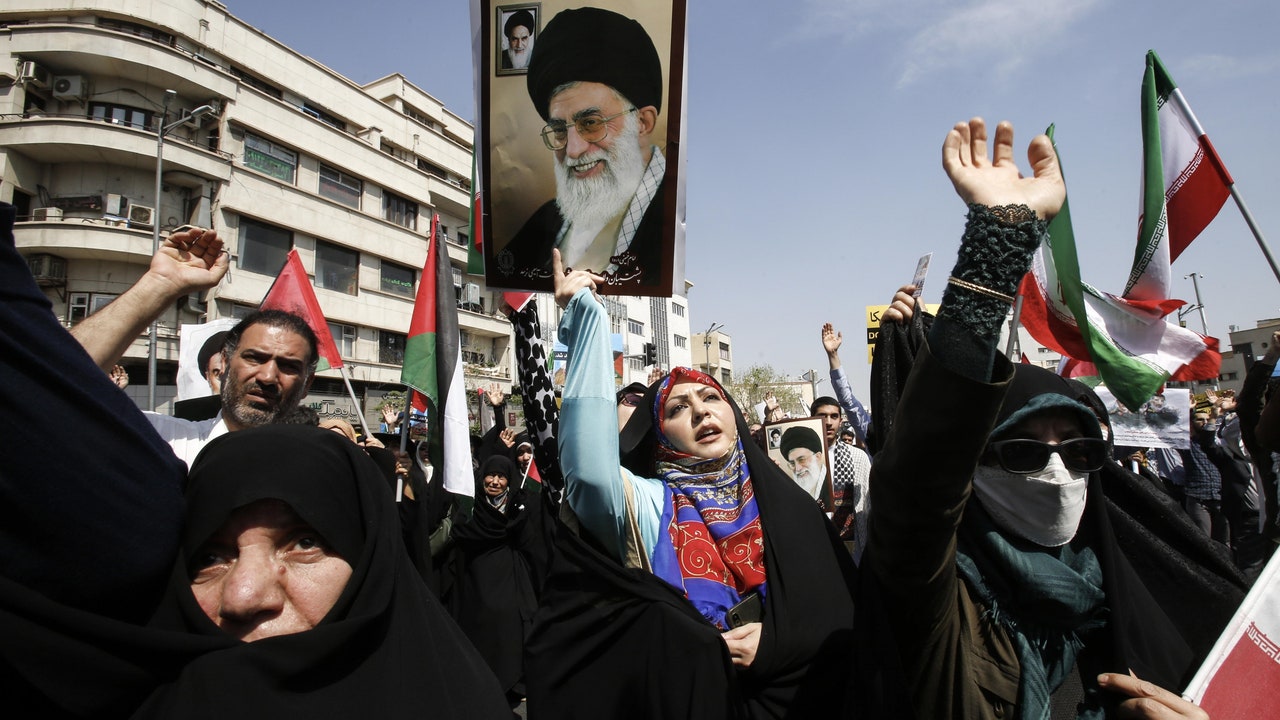
Israel and Iran have been archenemies since the Islamic revolution in the Persian country in 1979, when Iran broke diplomatic and commercial ties with Israel and its theocratic government stopped recognizing the country’s legitimacy.
For the next two decades there was a cold relationship that warmed in the early 1990s, after the fall of the Soviet Union and Iraq’s defeat in the Gulf War. The rhetorical conflict worsened during the presidency of Mahmoud Ahmadinejad.
The slow escalation did not stop, contributed to it by the development of Iran’s nuclear technology, its support for Islamist organizations such as Hezbollah, Islamic Jihad, Hamas and the Houthis, in addition to the Islamic Republic’s alleged participation in terrorist attacks such as the attack in 1992 to the Israeli embassy in Buenos Aires and the AMIA attack in 1994 in the same city, as well as other murders and bomb attacks.
In 2017, Iran showed the world its spectacular doomsday clock, in which the countdown marks the destruction of Israel in 2040.
In this context, the non-open war that both nations maintained was manifested through support for different factions in different parts of the world, not always aligned with their own interests. Iran provided aid to the Syrian government, while Israel supported opposition groups. In Yemen, Iran supports the Houthi rebels, while Israel has supported the Saudi-led coalition fighting the Yemeni rebels. The conflict has also been felt over the years in cyber attacks and attacks on nuclear facilities and oil tankers.
But with the war unleashed after the Hamas attack against Israel in October 2023 and the violence that that violence generated, the conflictive and bloodthirsty status quo in the Middle East has taken on other, more acute forms, and no less conflictive or bloodthirsty. Hamas was joined by the pro-Iranian Lebanese Shiite organization Hezbollah, which harassed Israel for a year with almost no consequences it could not bear. Until episodes of greater violence by Hezbollah found their response in an increase in the intensity of Israeli reprisals and, at the beginning of October of this year, Israel began its ground incursion into southern Lebanese territory, the political and military stronghold of Hezbollah.
Days before, two waves of detonations of communication devices by members of Hezbollah, cwith more than 30 dead and over 1,700 injuredwas followed by an aerial bombardment campaign that ended his leadership. Its historical leader, Hasan Nasrallah, was killed in an attack with bunker busters on a residential building in Beirut, as was his successor. And hundreds of civilians. Hezbollah, Hamas, the Houthis of Yemen and the pro-Iran militias of Iraq and Syria are part of the self-proclaimed “axis of resistance” against Israel sponsored by Iran. Or, also known as “the ring of fire”, that these “proxies” of Iran maintained, harassing Israel, without the need for Iran to intervene directly.
However, on April 1, Israel bombed an Iranian consular complex in Damascus, killing several senior Iranian officials, including Brigadier General Mohamad Reza Zahedi, commander of the Quds Force, the highest-ranking Iranian military officer since the assassination. general Qasem Suleimani in January 2020 in Baghdad. On the afternoon of April 13, the Israelis received media messages saying that the Iranian attack was on the way and, sure enough, the Islamic Republic fired more than 300 drones, cruise missiles and ballistic missiles at the Nevatim air base of the Israeli Forces. Israel Defense Forces in the Negev Desert and an Israel Defense Forces intelligence center on Mount Hermon. Israel and its allies intercepted the vast majority of the projectiles, with the help of an international coalition that included the United States, France, Jordan and other Arab countries.
Israel, after much international pressure for containment, responded to the Iranian attack by destroying an attack radar that was part of an Iranian S-300 air defense system in the center of the country, disabling the system so that a missile battery ground-to-air cannot track and attack its targets.
Iran carried out its second direct attack against Israel in October 2024 after Israel killed Hamas political bureau chief Ismail Haniyeh in Tehran in July, and Hezbollah Secretary General Hasan Nasrallah as well as Brig. deputy operations officer of the Iranian Revolutionary Guard Corps (IRGC) Abas Nilforoushan in September in Beriut.
Iran then fired around 180 ballistic missiles at Israel, causing minor damage to Israeli military and civilian infrastructure, but sending the entire country into shelters. The Israeli counterattack, again preceded by calls for containment, responded by launching three waves of bombing raids on Iran on October 25.
Blending equipment used to produce solid fuel for ballistic missiles was attacked in order to limit Iran’s ability to manufacture long-range types of ballistic missiles. According to the Institute for the Study of War (ISW), Iran cannot produce these mixers and purchases them from China, which takes at least a year. In this way, Israel temporarily obstructed the manufacture of these long-range missiles that Iran not only used against Israel, and could use again, but also sends to its allies, including Russia.
Iran vowed to retaliate against that latest attack. In Israel, although in the first weeks after the attack the pending account was remembered and there was speculation about what could be collected, so many things have happened that the issue has been diluted in public conversation.
However, the Israeli military does not consider the escalation to be over. And the Iranian military insists it has not.