
The intelligence and information services of the National Police and Civil Guard closely follow the movements of the more than 600 spies that Morocco has deployed in recent years in Spain. A massive hack in the middle of August brought to light the names and data of 70,381 agents from the two secret services of the Alawite kingdom: the General Directorate of Territorial Surveillance (DGST) and the General Directorate of Studies and Documentation (DGED). The sources consulted believe that they are forced to leave our country when their identities are revealed.
The National Intelligence Center (CNI) has prepared a document where more of those 600 names appear who, presumably, would be people who have been in Spain in recent years. The sources consulted give total credibility to the names that appear, but that does not mean, they point out, that they are operational at this time in our country. The number, they add, would have exceeded 900 at some times.
From the first moment, the Spanish secret service has followed in all of their footsteps. They have reproduced their steps in Spain through telephone numbers, hotel records and credit card payments. The objective is, now, to have them under control, to know where they move and who they interact with. Especially since the four exposed files, with more than 70,000 names, might not be up to date.
Between 15 and 20 of the names that appear in the leak work in the embassy, something common among spy services to provide cover for their agents. Those have been the easy names to locate. The CNI has crossed other databases, in addition to previous intelligence, to locate the rest. These revelations will force their bosses to replace them soon, when they no longer raise suspicions among Spanish agents. “They are burned, they have no choice,” says a source familiar with the aforementioned document.
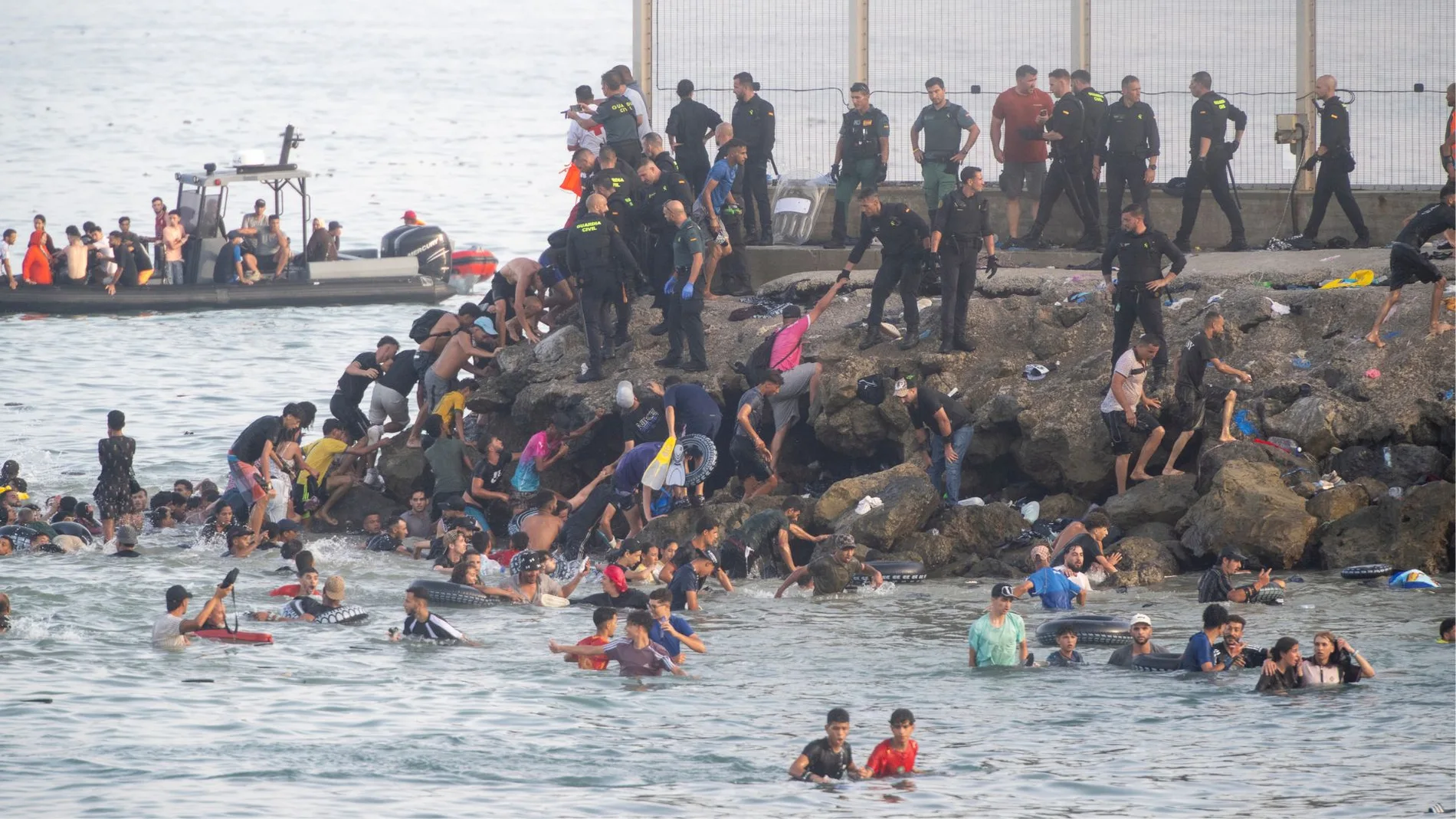
The information, leaked by an operative who calls himself “Jabaroot” – “power” in Arabic – came to light during the worst conflict between Spain and Morocco. The hacker posted the data on his Telegram channel on August 24, after the invasion of between 75,000 and 85,000 irregular immigrants in Ceuta across the maritime border of Tarajal beach. It was a “violation of the territorial integrity” of our country, in the words of President Pedro Sánchez, between July 30 and 31.
Immediately, the National Court opened an investigation to see if it was competent to investigate what happened, something it ended up assuming yesterday. Judge María Tardón commissioned a report from the National Police to detail whether there were mafias or some other organization behind the avalanche.
The agents of the National Immigration and Border Center, although they do not point to an intellectual authorship behind the entry, do identify Moroccan gendarmes wearing uniforms in the “coordination” of the assault, taking trucks loaded with people to the border. They have also located “plainclothes” agents, wearing caps and bright t-shirts, who were giving orders on how to enter Spain.