
The race to build increasingly capable artificial intelligence has just found a new fault line. While some of the main American laboratories are considering reducing the pace of development, a DeepSeek engineer has asked an uncomfortable question: Who should decide how fast AI advances and, above all, who will have access to it?
Liu Shengyu, DeepSeek engineer responsible for part of the development of the Chinese company’s V4.1 models, has publicly expressed their distrust of Anthropic and OpenAI. In a post on WeChatstates that he does not believe that both companies are going to make the most advanced artificial intelligence “open and affordable” for everyone. And he points especially to Anthropic: “I don’t want Anthropic to control the most advanced artificial intelligence or AGI. Put in an exaggerated way, allowing Anthropic to master the most advanced AI would be no less serious than if Adolf Hitler had obtained the atomic bomb technology before the Allies”.
The phrase does not intend to establish an equivalence between Anthropic and Nazi Germany, but to illustrate, through a hypothetical situation, what Liu considers the danger of concentrating a technology of enormous power in the hands of a single actor. Although it is true that she is not the luckiest and obviously appeals to a historical memory closely linked to the West.
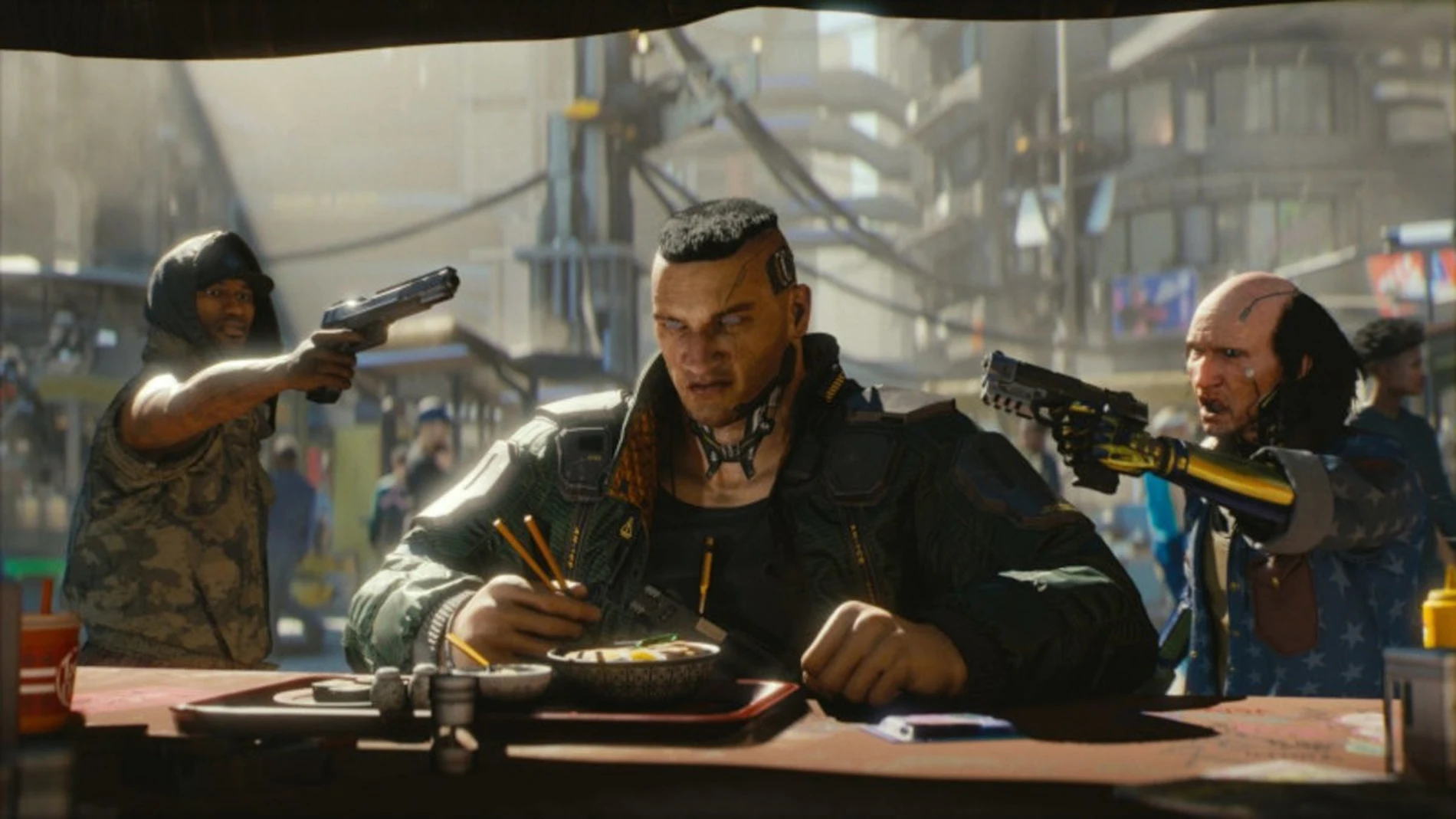
The reference also appears accompanied by another image much closer to technological culture. Liu asks his readers what would happen if Anthropic controlled the world’s most advanced AI forever: “Would the society of the future become communist or in 2077?”. That last number refers to Cyberpunk 2077the video game set in a future dominated by large corporations, omnipresent technology and deep inequalities. It is the other side of his argument: faced with an AI controlled by a few, Liu claims an open model.
His position comes in the midst of a discussion on the so-called pacingthe idea of introducing limits or temporarily reducing the rate at which the capabilities of AI systems increase. Dario Amodei, CEO of Anthropic, has argued that companies should have more time to evaluate the security of their models and establish oversight mechanisms. OpenAI’s Sam Altman has also supported the addition of independent testers and the need for development to move forward with proper controls.
For Liu, however, the question is not just how much risk there is in speeding up. It also matters what happens if those who are already on the technological frontier are precisely those who establish the rules of the race. From your perspective, A coordinated reduction in pace among large laboratories could end up strengthening the companies’ position that already dominate the sector and making it difficult for other actors to compete.
That is why he explains his stay at DeepSeek in terms that go beyond business competence. “We research powerful, fast and accessible artificial intelligence for everyone and make it open source – concludes Liu -. The goal is to try to give something back to the world from that future of 2077”.
The discussion, therefore, is not limited to deciding whether artificial intelligence should advance faster or slower. It also raises a question of power: who develops the most capable systems, who sets the rules for doing so, and who can access them. While laboratories discuss how to control the risks of a technology that evolves at high speed, Liu introduces another concern: that the attempt to make it safer will end up concentrating its control even more.
The race continues. And those who are building the most capable machines They are no longer just arguing about how far artificial intelligence can go, but also about who should have their hands on the wheel when it gets there.. And there are two possible “pilots”: China and the United States.