
The meteorological phenomenon of The Child continues to strengthen in the Pacific Ocean and presents a 69% chance of becoming the most intense episode recorded since official measurements began in 1950according to the latest report from the Climate Prediction Center of the National Oceanic and Atmospheric Administration (NOAA) of the United States.
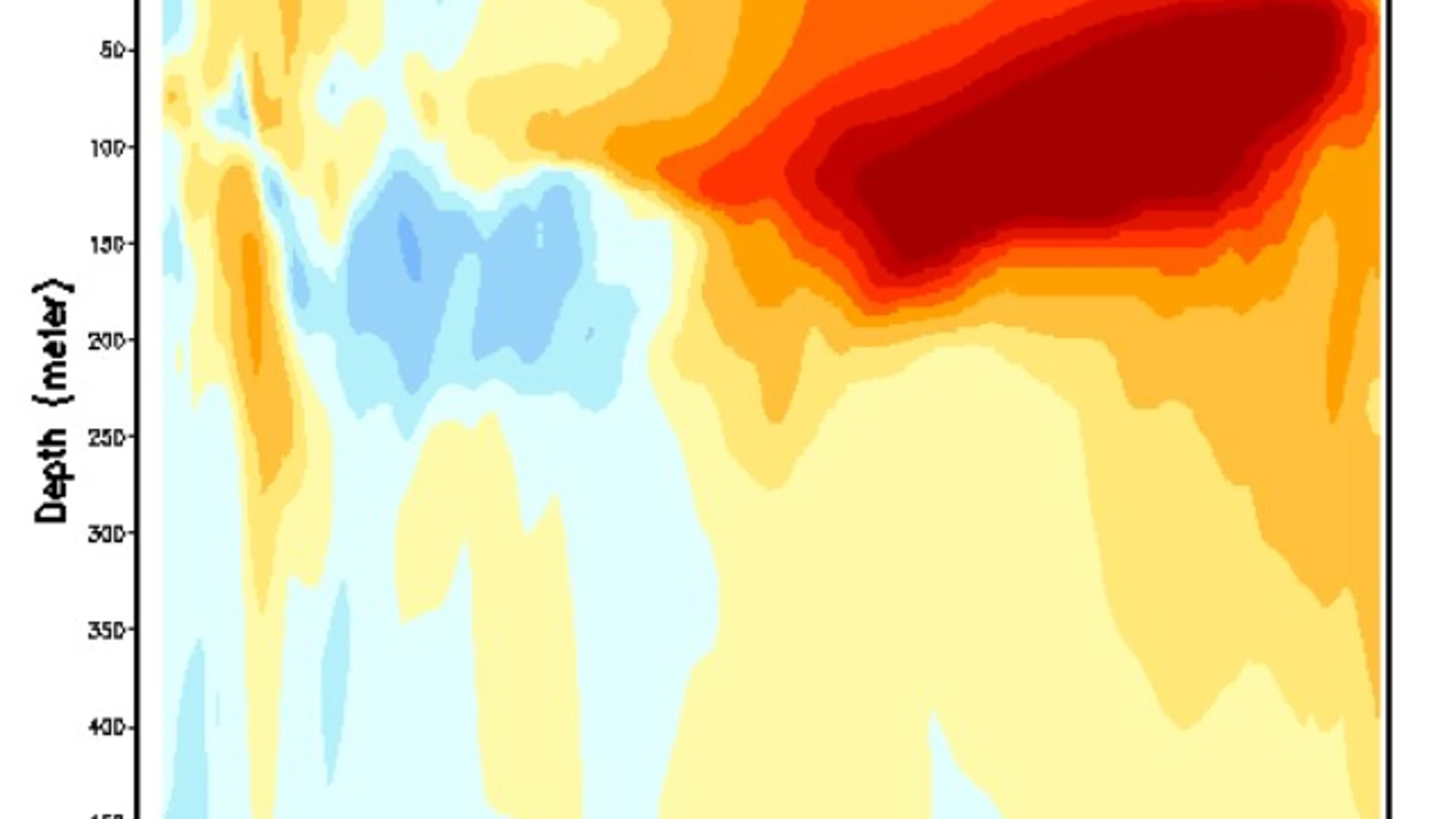
The government agency has raised its forecasts after detecting a rapid strengthening of the phenomenon during the last month. Sea surface temperature anomalies in different areas of the equatorial Pacific already exceed 2 °C, while below the surface anomalies of up to 10°C above normal.
Given this scenario, NOAA calculates that there is a probability greater than 90% to consolidate a large event during the fall and winter of 2026-2027 in the northern hemisphere. For the period from October to December, the agency also estimates a 69% probability that the El Niño intensity index willreach or exceed 2.5 °Ca threshold associated with an episode of historical intensity, above the levels recorded in previous episodes since 1950.
“With an event of this magnitude, the probability of experiencing impacts consistent with El Niño are higher, but not guaranteed. In summary, El Niño is strengthening, with a greater than 90% probability of a very strong event during the fall and winter of 2026-27 in the Northern Hemisphere,” NOAA said.
The effects of strengthening El Niño
The strengthening of El Niño can alter the usual patterns of temperature and precipitation in different regions of the planet. In the United States, NOAA foresees drier conditions and a winter warmer than usual, while the south of the country could see increased rainfall and greater flood risk.
The phenomenon also modifies the atmospheric conditions that influence the activity of the tropical cyclones. The increase in vertical wind shear associated with El Niño often makes it difficult to form hurricanes in the Atlanticwhile it may favor greater cyclonic activity in the eastern Pacific.
In fact, NOAA revised its forecast for the Atlantic hurricane season on August 6 and now estimates up to 13 named storms, a figure lower than the historical averageto. For the eastern Pacific, on the other hand, it foresees a more active season, with up to 22 tropical cyclones.
A summer marked by extreme heat
The strengthening of El Niño also occurs in a context of exceptionally high global temperatures. Last July tied with July 2024 as the warmest on record globally, according to NOAA data, with especially high ocean temperatures.
In the United States, the heat was pronounced: July became the warmest July in its historical series, with an average temperature close to 25 °C, around 1.8 °C above the 20th century average.