
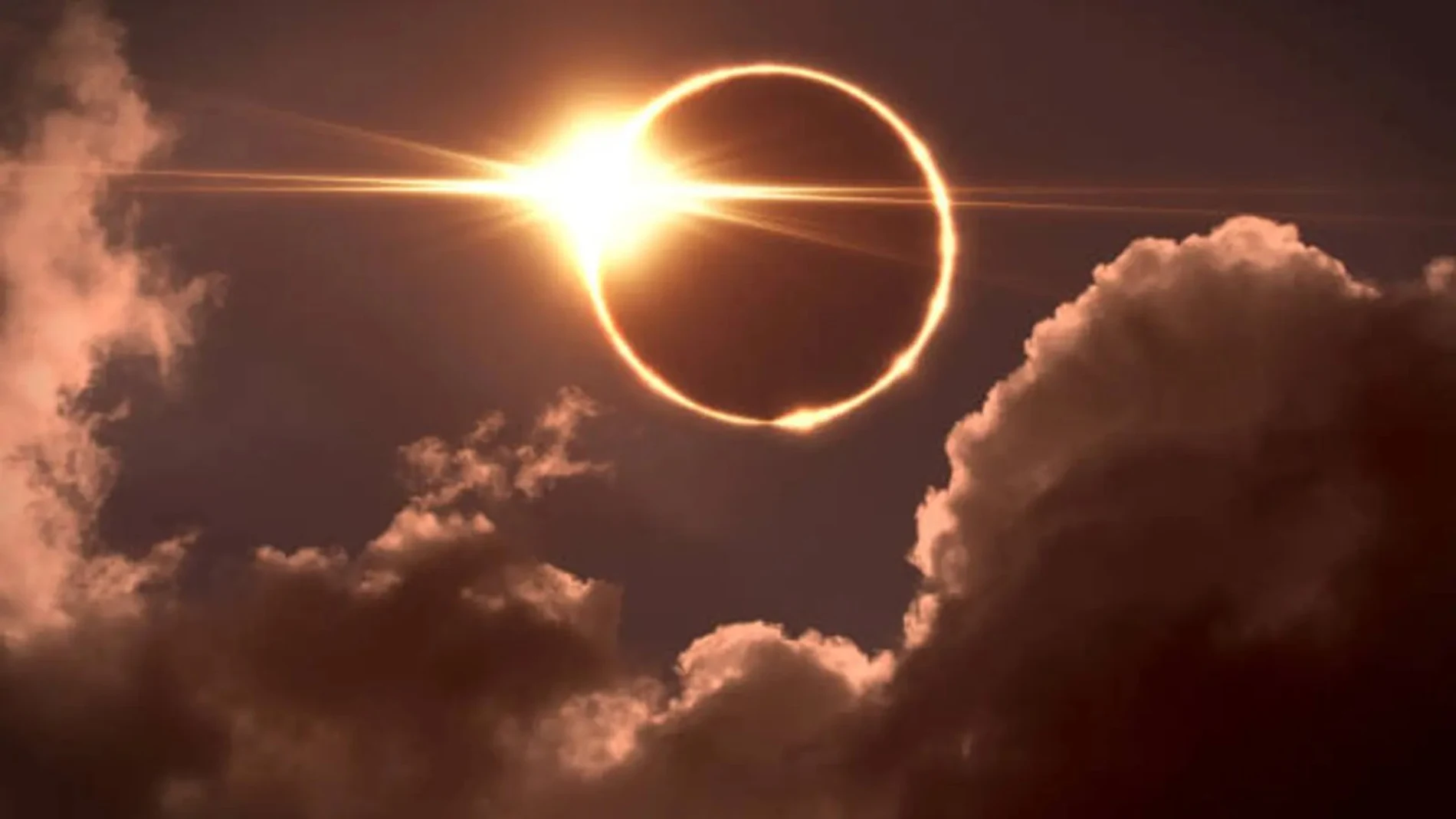
The historical total solar eclipse that the next August 12 will darken approximately 40% of the peninsular territory will be experienced in a very different way just by moving a few kilometers away from the strip of totality. A difference as small as the Moon covering 99.9% of the Sun instead of 100% separates two very different phenomena.. In one place there will continue to be partial eclipse and in the other the bright surface of the Sun will completely disappear.
The strip of totality of 2026 will cross a good part of the northern half of the peninsula from Galicia to the Mediterranean coast. Outside of it, the percentage will vary greatly depending on location. At the southern end it will be around the 93% in the environment of Cadiz and the Strait will approach the 94% in Malaga and will reach approximately 95.8% in Grenade. Madrid will be next to the limit with close to the 99.9%while a few kilometers to the north will allow entering the zone of the 100%.
The first in more than a century
The importance of this astronomical event comes from its exceptional nature. Next Wednesday will be the first total solar eclipse visible from the peninsula since August 30, 1905. In 1912 A hybrid eclipse crossed the northwest with a very brief total phase in some points. The next one will arrive August 2, 2027although its strip will only cover the southern tip of Andalusia, Ceuta and Melilla. Afterwards there will not be another visible from Spain until 2053.
The difference 0.1% makes
That small percentage makes a huge difference in practice. When the eclipse reaches 99.9%, a tiny sliver of the photosphere still remains visible.the extremely luminous surface of the Sun. That portion keeps the sky illuminatedprevents you from seeing the crown well and requires you to keep your glasses. Only when reaching exactly 100% does the photosphere disappear and the central shadow of the Moon covers people.
those who remain outside of the totality They will be able to see, using approved glasses, how the Sun becomes a narrow solar arc. They will also perceive strange lighting, sharper shadows and a drop in temperature.
In places located very close to the limit of the band of totality could appear Baily pearlssmall points of light formed by the sun’s rays passing through the lunar valleys, or a strip of the chromospherethe reddish layer of the solar atmosphere. Out of the totality, glasses must be kept on at all times.
The difference can also be measured by the amount of light that reaches the ground. At noon, a sunny day registers about 100,000 lux. With 99% of the Sun hidden there are still around 1,000 lux, illumination comparable to that of a cloudy day. During totality, some 5 luxa figure similar to that of the minutes after sunset, when there is still some clarity in the sky.
The specific figures will be different on August 12 because the maximum will occur near the sunset. The Sun will be very low above the horizon, so it will be It is essential to observe it from a place without mountains, buildings or trees to the west.. The ambient light will have already decreased and will pass through a larger layer of atmosphere, so the partial phase may appear darker than if it occurred at noon.