
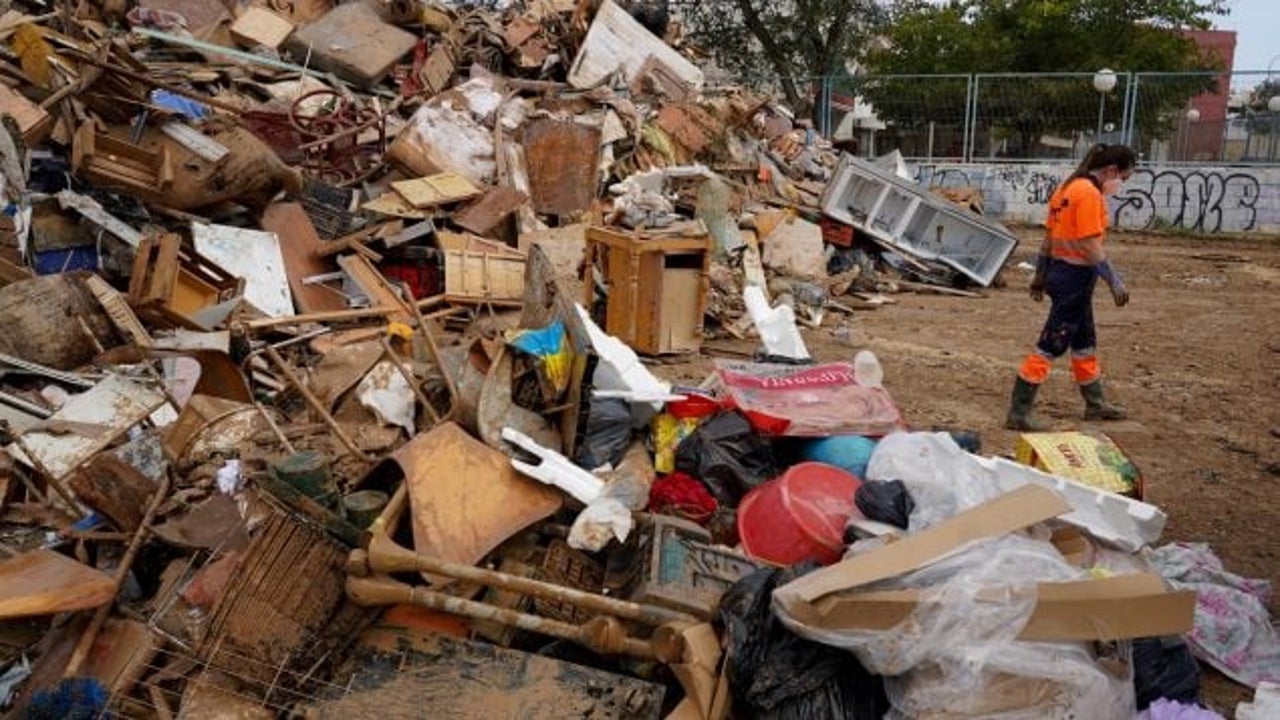
Floods are the most frequent natural disaster and the one that affects the most people in the world, -1.7 billion people since 2000-, with their frequency expected to double in 40% of regions by 2050.
After an extreme episode, the volume of waste can multiply between five and fifteen times compared to a normal year in the affected area, a circumstance that is often underestimated and that can aggravate the damage if not managed properly. “Waste management is an inseparable part of the recovery process after a disaster and must therefore be taken into consideration,” says Miguel Ángel Artacho, professor at the Universitat Politècnica de València (UPV) and director of the Research Center for Project Management, Innovation and Sustainability (PRINS).
Artacho, author of the report ‘Waste management after floods: treatments, risks and future challenges‘, published by the Naturgy Foundation, analyzes throughout the document how the massive accumulation of waste after extreme episodes strains conventional systems and compromises public health, the environment and economic recovery.
The report warns about the heterogeneity of the waste generated – a mixture of debris, sludge, hazardous materials and organic remains – and its impact on critical infrastructure, roads and drainage systems, which makes immediate response difficult and increases health and environmental risks.
The DANA of Valencia alone in 2024 generated up to 1.5 million tons of waste, similar to the waste generated for an entire year in the Valencian Community. “Documenting, learning and planning is the only way to reduce impacts and accelerate recovery,” says Artacho.
Key recommendations
The key recommendations of the report include the mandatory nature of prior planning in vulnerable areas, which includes predicting the volume and typology of waste. Likewise, the designation of safe areas for temporary storage is proposed, along with protocols that facilitate reuse and recycling.
The document highlights the need to integrate waste management experts into emergency teams and simplify legal frameworks to speed up the response. It also highlights the use of emerging technologies – such as artificial intelligence, the Internet of Things and digital twins – to ensure real-time monitoring and data-based decision making. Finally, it is recommended to promote training and citizen awareness, with the aim of promoting separation at origin and reducing health risks.
Artacho believes that, to protect lives, heritage and ecosystems, the circle of resilience must be completed: predict, prevent, respond and recover by integrating waste management as a strategic pillar. Prevention is not only hydraulic, but also organizational, technological and social.
For María Eugenia Coronado, general director of the Naturgy Foundation, “waste management after the floods in the Valencian Community has taught us many lessons and shows the need to learn and act responsibly.” That is why in the entity he directs “we constantly seek to open spaces for reflection and debate and we are aware that climate adaptation cannot be postponed, among other reasons because in the coming years catastrophes are going to intensify.”
‘Adding Energy for Valencia’
The publication of this report is included within the actions that Fundación Naturgy is promoting in Valencia as part of its program ‘Adding Energy for Valencia‘, an action plan aimed at supporting the recovery of areas affected by serious flooding.
This plan proposes solutions that are based on the knowledge and experience developed by the Foundation through its different lines of activity, within its objective of contributing to the construction of a resilient and sustainable society.
Precisely in compliance with this Plan, the Foundation of the energy company has selected seven projects from social entities based in the Valencian Community, aimed at energetically rehabilitating their headquarters. The Foundation has had the collaboration of Energías sin Fronteras for the selection of the selected candidates.
Among those selected is Fevadis (Valencian Federation of People with Disabilities), which develops therapeutic, educational and psychosocial care programs aimed at people with disabilities and their families, as well as employment, independent living and community participation itineraries. Rosa Galindo, its general director, explains that “for entities like ours, which are launching a training center, it is very positive that there is a line that allows us to cover these very specific and necessary needs.”
From the Amigó Foundation, another of those selected, which welcomes families with children at risk of social exclusion, Chighali Siid Ely Salem, director of the home for Families in Torrent, points out that for them this help is very positive, since “it represents a significant opportunity to continue strengthening our social and educational work. and represents an important support for our commitment to the most vulnerable people.”
Another of the beneficiary entities is ARTIC (Asociación Alcohólicos Rehabilitados Torrente y Comarca), Alfonso López, its president assures that “the center of the association constitutes a space for meeting, training and social care, where the well-being of the users is considered fundamental to promote their recovery process and social integration and thanks to these projects we can offer members and participants better facilities and greater comfort.
The other beneficiary entities have been the Luis Amigó School Farm, which works to improve the quality of life of children and adolescents in situations of vulnerability and social exclusion; the Citizen Movement Foundation, focused on the defense of human rights, cultural, historical and natural heritage, as well as the environment; Campoval Rubgy Club, which promotes sport and the Fundació Nova Feina, dedicated to the socio-labor insertion of vulnerable people.