
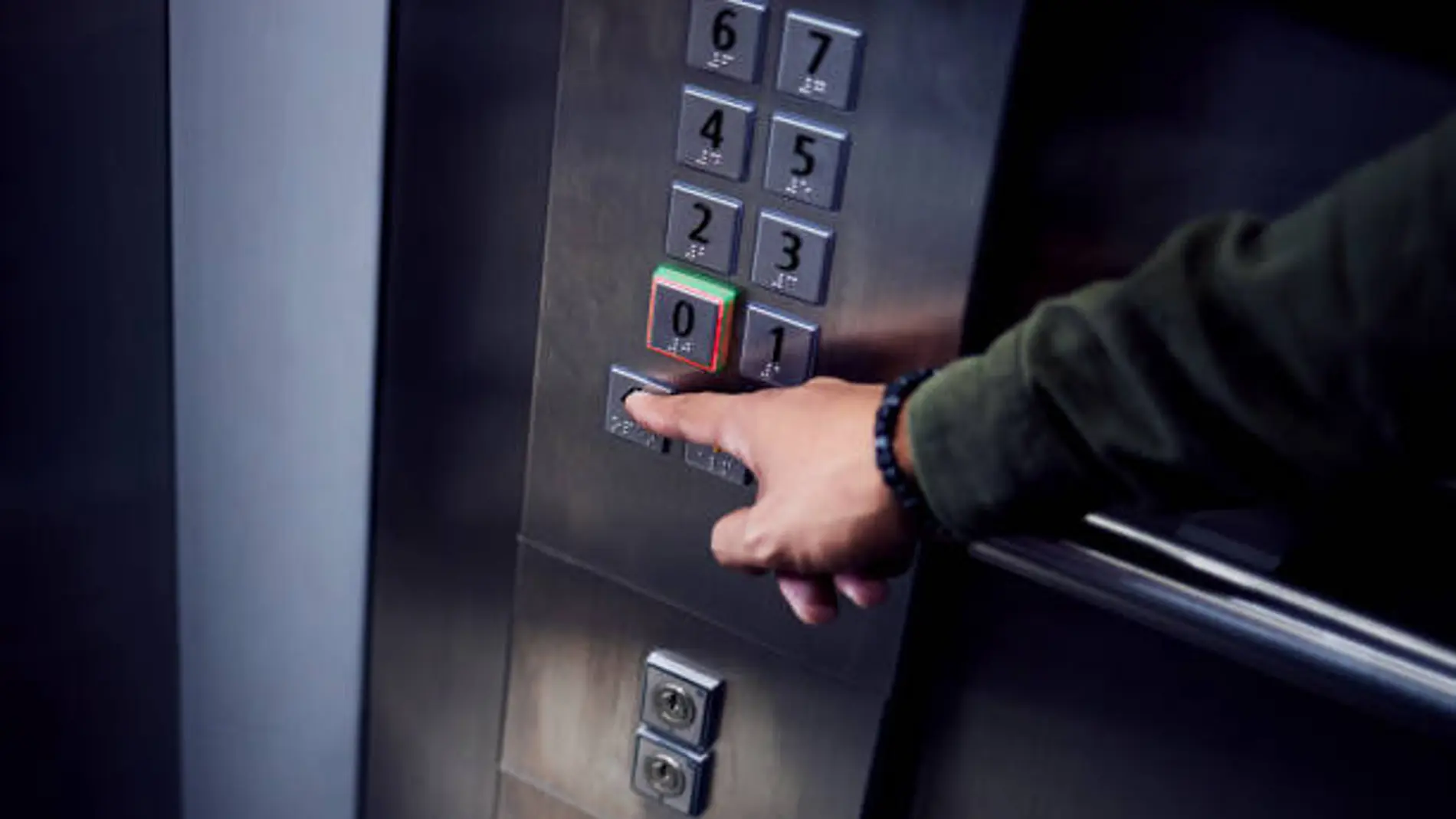
Imagine that in your community it is approved to install an elevator… and the solution is to occupy part of your living room or your premises. It is not an extreme or rare scenario, Spanish legislation contemplates it when there is no other technical alternative.
Accessibility has become a priority, and that is changing many buildings
The cost of not complying with the regulations: a spill that not everyone expects
Installing an elevator continues to be one of the most important (and controversial) works within a neighborhood community. The price is usually located between 12,000 and 35,000 euros, although it is indicative.
The final budget depends on several factors: the number of floors, the age of the property, the type of elevator chosen or the need to carry out additional works. For example, taking advantage of an existing hole is not the same as having to build an exterior structure, something that can make the project considerably more expensive.
Installation options (and their limits)
Each building is different, and the location of the elevator depends entirely on its characteristics. The most common solutions are to take advantage of common spaces or generate new structures, but it is not always enough.
When there is no space available, installation becomes complicated. This is where more invasive solutions come into play that They can directly affect private property.
The Horizontal Property Law: giving up space is possible
Spanish regulations, specifically the Horizontal Property Law in its articles 7 and 9, establish that owners may be obliged to allow works necessary for the accessibility of the building.
This includes, in specific situations, the transfer of part of a home or premises. But be careful, because the law also sets limits:
- It must be about the only viable solution to install the elevator
- The occupation must be the minimum essential
- The affected owner must receive financial compensation
In addition, there is a condition, the intervention cannot cause the home to lose its habitability. That is to say, They can’t leave you an unusable space, but they can reduce meters if necessary to carry out the work.
When is it mandatory to install an elevator
Since the end of 2021, the regulations reinforce the obligation to adapt buildings when necessary. The community is obliged to install an elevator if you live or work in the property. or a person with a disability, reduced mobility or over 70 years of age provides voluntary services. In these cases, it is not necessary to put the decision to a vote if certain financial requirements are met.
Specifically, if the annual cost corresponding to each neighbor does not exceed the equivalent of 12 ordinary monthly payments of common expenses, The work must be executed without the need for a meeting agreement.
If this limit is exceeded, the installation remains mandatory, but the excess must be assumed by whoever requested the work.
What happens if the community votes on the installation
When there is no direct obligation, the elevator can be approved by agreement at the owners’ meeting. Unanimity is not necessary, It is enough for the majority of the participation quotas to vote in favor.
This means that, even if there are neighbors against it, the work can go ahead if that majority is reached.
Who pays (and why everyone)
The cost of installation is distributed among all owners based on their participation coefficientunless the community statutes establish otherwise.
This also includes the owners of premises or homes on the ground floor. Even if they do not use the elevator, they are obliged to pay because it is a common element of the building, just like the façade or roof.
If a neighbor does not pay: the two possible ways
When a homeowner refuses to assume their share of the spill, there are two main ways to act:
- Start a judicial procedure to claim the debt
- Distribute the cost among the neighbors who do pay and limit elevator use (e.g. via key)
In practice, a judicial claim is usually the most used option to ensure that everyone contributes.
The installation of an elevator is, increasingly, a question of rights and not just of comfort. But this evolution also brings little obvious consequences, from important spills to the real possibility of losing part of your houseit all depends on the building.