
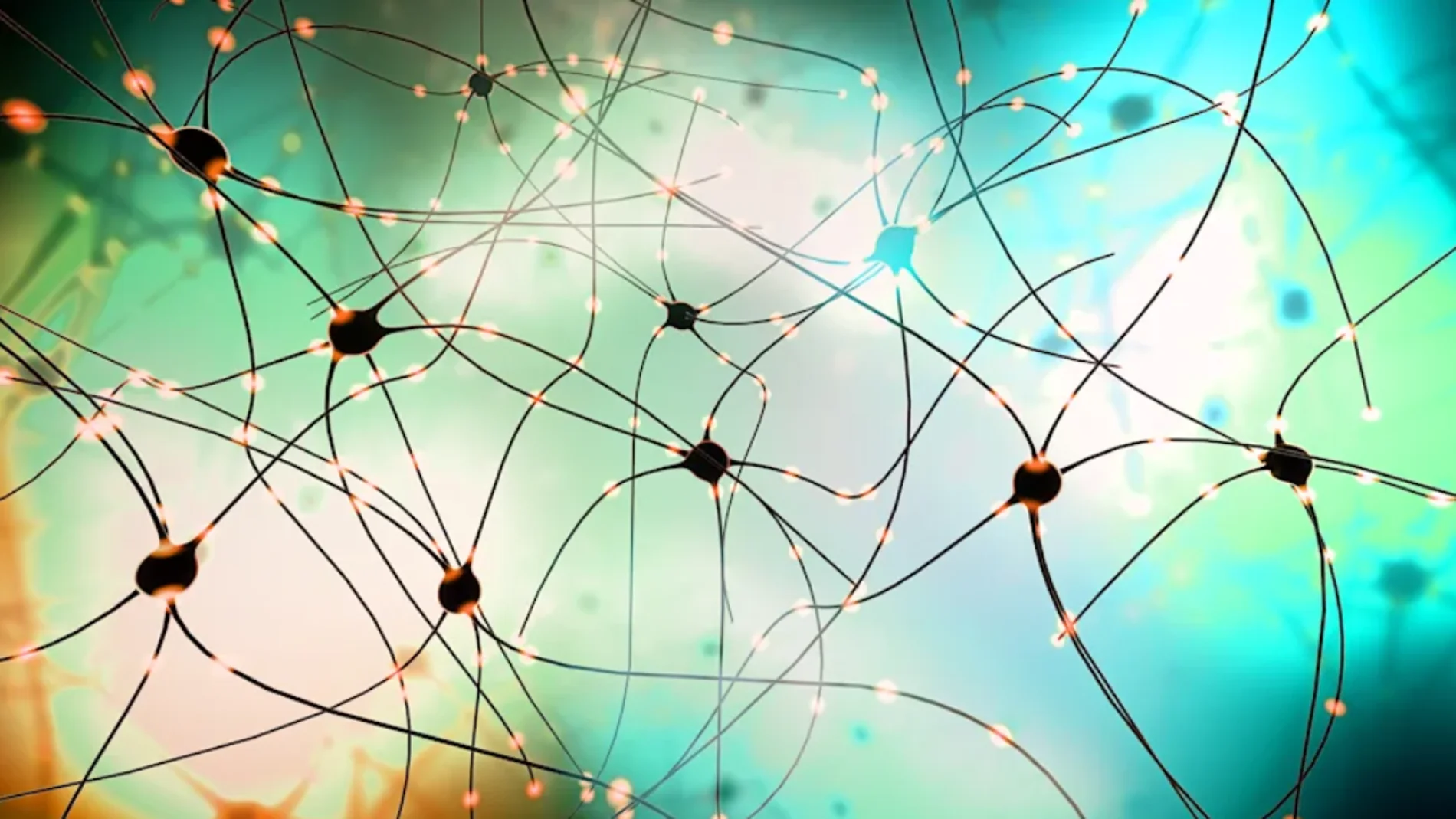
A brain does not need to be the size of a walnut to participate in a calculation. In a laboratory at the University of Bristol, in the United Kingdom, small brain organoids measuring less than a millimeter have shown that they can receive electrical signals derived from letters of the Braille alphabet and generate neuronal responses that a computer is able to distinguish. The result opens a way to develop biohybrid computing systems that take advantage of the properties of living neural networks. But there is an essential difference: minibrains have not learned to read, but have processed signals that contain information about letters.
The experiment, published in Frontiers in Artificial Intelligenceseeks to understand, and perhaps even solve, a difficulty of so-called organoid intelligence: connecting living neuronal tissue with electronic devices so that it can receive information and produce an interpretable response. Organoids are three-dimensional structures grown from stem cells that reproduce some aspects of brain development, but they are not miniature brains in the strict sense. Those used in the study contained around 10,000 neurons.
To put them to the test, the authors, led by Tianyi Liu, Hemma Philamore and Benjamin Ward-Cherrier, started with the 26 letters of the Braille alphabet. A tactile sensor recorded their patterns and the data was transformed into sequences of electrical stimulation that the organoids could receive through microelectrode arrays. They then recorded neural activity and used a machine learning algorithm to identify which letter each response corresponded to.
The computer was not directly reading Braille nor were the organoids interpreting words. The algorithm classified the activity patterns produced by the tissue and checked whether they retained enough information to distinguish some letters from others. With a single organoid was correct in around 61% of the cases; By combining the responses of three, the figure rose to 83%.
“We can take information from a real touch sensor, transform it into a form that a living neural network can receive, and then retrieve meaningful information from the organoid’s response,” Liu says. In his opinion, the procedure offers “a practical way to connect artificial sensors with biological neural systems”a combination that could contribute to the development of more energy-efficient computers.
Another part of the study was to add artificial noise to the signals to see if the system could still distinguish the patterns. In those conditions, The organoids’ responses resisted interference better than the algorithm did when it directly analyzed the altered signals.bypassing living tissue. The result suggests that neuronal activity can provide useful information even when the input is degraded, although it does not demonstrate that these tissues are, in general, more reliable than conventional processors.
Why do three organoids work better than one? Liu’s team still doesn’t have a definitive answer, but in the study they speculate that each tissue may develop slightly different neural connections and levels of spontaneous activity. By combining their responses, the system could gather complementary information. That diversity, however, also poses a problem: if organoids respond too differently, it will be difficult to build predictable and reproducible systems.
But the interest of this technology goes beyond Braille. The human brain performs complex operations with reduced energy consumption, and biohybrid computing explores whether some properties of living neural networks can be harnessed to process information efficiently. In the long term, these systems could be combined with sensors and electronic devicesalthough the experiment has not measured energy savings compared to a conventional computer nor does it demonstrate that organoids can replace silicon processors. The next step will be to expand the stimuli to textures, edges and other forms of contact and develop closed-loop systems, in which the organoid receives information about the consequences of its response and can adapt through feedback.
For now, these mini-brains don’t understand the letters they receive. But they have overcome a technical barrier: demonstrating that a stimulus from an artificial sensor can pass through living neuronal tissue and remain recognizable on the other side. The challenge is no longer just to build machines capable of imitating the brain, but to discover what living tissue itself can provide when connected to them.