
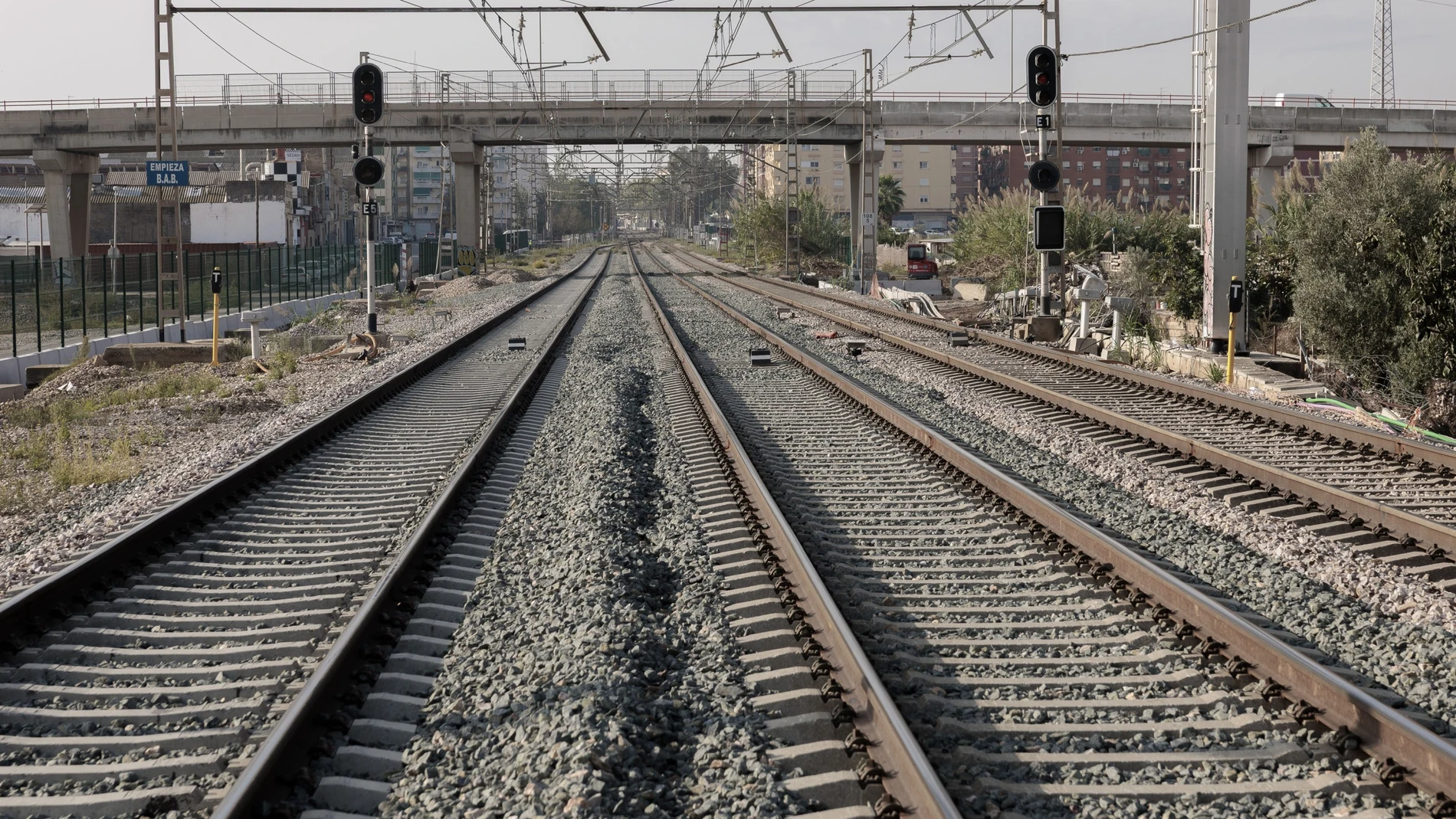
When a train car is retired, can the luggage racks, trays and armchair arms or walls, that is, almost everything that is visible to passengers, be recycled? Do the temperatures brought about by climate change alter the rails of the railways? Do the new rainfall regimes, sometimes scarce to the point of drought and other times locally torrential, modify the structure of the land on which they sit? Does climate change affect railways in all European regions equally?
Looking to the future
These and many more questions will be answered by Rail4Earth, a four-year project of the European Commission’s Horizon Europe innovation programme. 73 entities from across the Union are participating: companies, railway managers, manufacturers, technology centres, etc., in alliance to adapt trains and their infrastructure to extreme weather events, mitigate the consequences of climate change on the railway and advance the incorporation of materials into the circular economy.
Acciona is one of the companies participating in Rail4Earth, to which it will contribute its know-how in two areas of research: the circularity of rolling stock and the resilience of the tracks. David de Paz, R&D engineer for Tunnels and Railways at Acciona, explains that “this is a macro project of a large consortium of entities financed by Horizon Europe.”
“26 work areas have been defined and the resulting innovations will affect almost all areas that affect the railway, from rolling stock to tracks, logistics, stations, etc.” Acciona participates in two aspects of research: «the infrastructure, the rails and the works to install the tracks; and the recycling of materials.
In the Innovation Group for adaptation to climate change, “the challenges are very identified and one of our functions is to provide the technology to monitor the tracks, specific sensors for this function, placed on the rails themselves in a demonstration section, and collect the data to know exactly if, at a general level, temperature changes affect the railway infrastructure, especially the rails: if they expand, if they contract or if they move.” This study will take a year “because it is essential to have an exhaustive and reliable database to correctly analyze the situation and propose appropriate measures.”
The effect of torrential rains on the roads and infrastructure that surrounds them: tunnels, slopes, soil, foundations, etc., is another area of study. «In this case, sensors will identify changes in the pore pressure of the soil. “They will detect, for example, if there is a rise in pressure that could cause instability, an early warning system would be activated.”
In Spain, climate change generates impacts on railway infrastructure, which are not the same as in the Nordic countries, “where they were concerned about the freeze-thaw effect, and were, therefore, prepared for it; But now they have to prepare for other scenarios. Therefore, the regional component will also be analyzed.
For De Paz, there are two very positive issues: “one is that this world, technologically speaking, evolves very quickly and we will find solutions that are now very incipient but that are going to help a lot.” The other is that “within this working group there are public railway infrastructure operators, such as Adif, Deutsche Bahn or the Swedish operator, which can even carry out preventive maintenance. They all have their well-identified challenges and private companies try to provide technologies that allow mitigation measures to be applied; and, additionally, they will be easier to implement thanks to the fact that these public companies are in the consortium.
Trays, armrests and more
A very important part of the components in the cabin of train and subway cars are materials that have the appearance of plastics. In fact, they are. But some are very specific: “they are composites, thermostable, reinforced with fiberglass,” explains Eva Martínez, head of Acciona’s Polymers Group. The recycling of elements from train carriages, for later use in this same or other industries, is the other aspect in which Acciona participates in Rail4Earth.
The interior of carriages, walls, ceilings, luggage trays, seat tables, armrests, etc., are a great source of composite plastics. They account for 40% of the cabin weight. Its recovery and recycling of its components is, as in so many other cases of circular economy, a strategic objective of the Union, among other things to have greater autonomy to dispose of those same raw materials.
The technology applied to these elements is pyrolysis, “a heat treatment that separates the different components of that material, such as resin and fiberglass, and can be introduced into other applications.”
For this purpose, Acciona will use the ovens in which it already recycles wind turbine blades that have reached the end of their useful life. With this process, “it will be possible to recycle thermostable resins that could not be used.” «The automotive industry, indicates Martínez, is the one that absorbs the most these new raw materials. Also in construction they have various uses; one of them, for example, in plaster sheets, to reinforce them.