
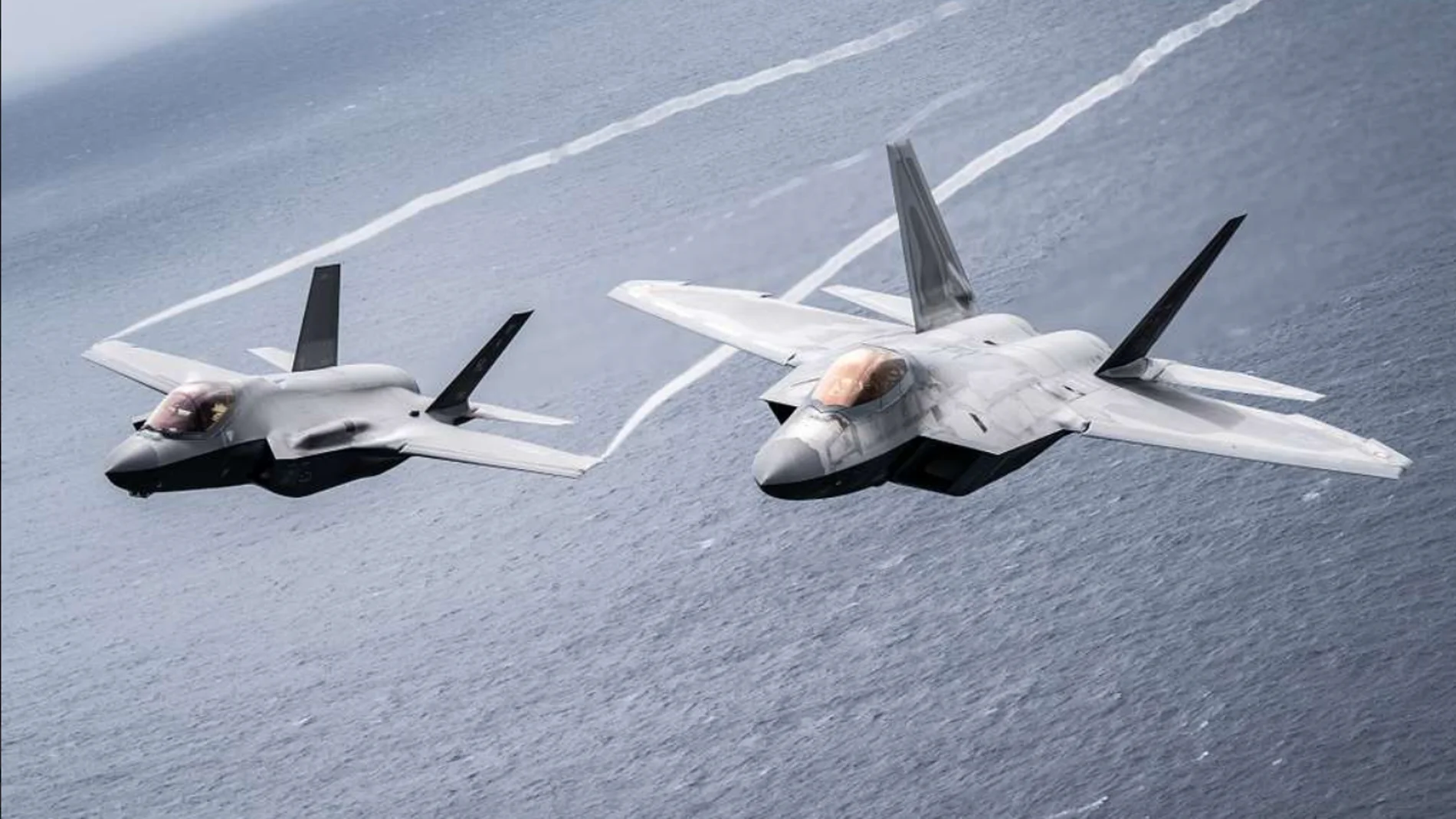
A custom F-35 is not purchased like someone who orders a car with a more powerful engine or an exclusive finish. To modify one of the most advanced fighters in the world requires more than just money: engineering, systems integration and, if this were not enough, authorization from the United States. Despite them, A foreign client has just committed to paying almost 16 million euros to finance the development of a version of the aircraft tailored to its own requirements. The striking thing is that the buyer remains a mystery.
On October 15, the US War Department announced a new contract modification for Lockheed Martin, the company that manufactures the F-35 Lightning II. The assignment includes development, demonstration and systems integration work for a variant intended for a client of the program Foreign Military Sales (FMS), the mechanism through which the United States sells military material to foreign governments. The entire $18.8 million is borne by the buyer, according to the contractual announcement.
It is not, therefore, a conventional purchase of aircraft, but rather financing the work necessary to configure a specific variant. Most of the work, around 80%, will be carried out in Fort Worth, Texaswhere Lockheed Martin manufactures the F-35. The rest will take place in other locations in the United States that have not been made public. The contract has been awarded by the Naval Air Systems Command, the US Navy agency responsible for managing this type of programs.
What exactly does the buyer want to change? That is the question that remains unanswered. The official announcement does not identify the country or detail what equipment, software or capabilities will be incorporated into the plane. That’s why, It is not possible to say that the customer has ordered a new radar, specific weapons or a specific electronic warfare system. The only confirmed thing is that work will be financed to develop and integrate a variant adjusted to its requirements.
Personalization also has limits. The F-35 is not an open platform on which each user can install any technology. Its design, mission systems and software are part of an international program controlled by the United States. Any modification must fit the technical and safety requirements of the plane, and the export conditions approved by Washington.
This does not prevent differences between aircraft from different countries. Israel, for example, operates the F-35I Adir, a version based on the F-35A that incorporates Israeli capabilities and systems. It is one of the best-known examples of national adaptation, although its particular conditions do not mean that all buyers have the same freedom to modify the device.
The F-35 is manufactured in three main variants: the F-35A, designed to operate from conventional runways; the F-35B, capable of taking off over short distances and landing vertically; and the F-35C, prepared to operate from aircraft carriers. The customization that is now financed It has not been publicly identified with any of these versions, so it cannot be assumed that it will change its basic configuration.
The mystery has fueled speculation about the client’s identity. In previous phases of the contract, some analysts pointed to countries that were joining the program, including Singapore. But The Pentagon has not publicly confirmed who is behind this development, and there is no sufficient basis to attribute the new assignment to a specific country.
The $18.8 million announced is, ultimately, the price of a development and integration phase, not the total cost of purchasing an F-35 or all of its customization. Just enough to say that A “basic” version of the F-35 starts at about 90 million euros. The episode reveals a less visible feature of the stealth fighter market: Buying the plane is only one part of the operation. Adapting it to the needs of an air force can require years of work and additional millions, while Access to the technology and the extent of modifications continue to depend on the conditions imposed by the manufacturing country.