
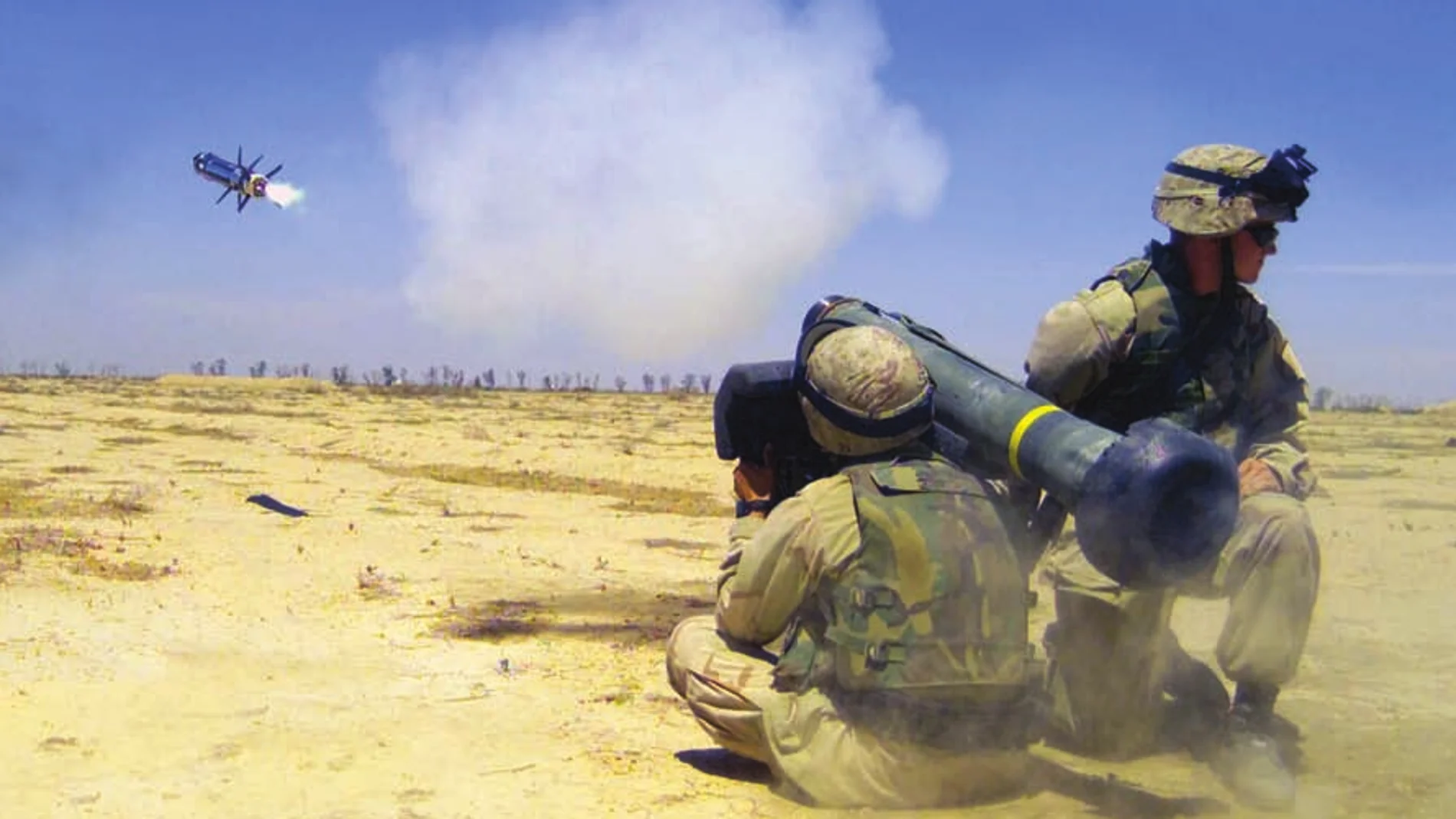
He United States Army has awarded a contract of 215 million dollars, about 192 million eurosto the joint venture of Raytheon and Lockheed Martin to manufacture a new generation of Javelin anti-tank missile launchers. The agreement, announced last Monday, comes five months after the first deliveries of this equipment, destined to replace the Javelin currently used by troops.
The new light command and launch unit (LWCLU) it’s a 30% smaller and a 25% lighter than the current one CLU Block Iaccording to their manufacturers. Besides, double the distance to which targets can be detected and recognized thanks to improvements in the launcher’s sensors.
To understand this update we must distinguish between the two main parts of the Javelin, the reusable command and launch unit and the missilehoused in a single-use launch tube that is replaced after each shot. Weight reduction affects that reusable unitwhich brings together observation, aiming and fire control equipment with which the soldier locates the target and prepares the shot.
The launcher incorporates day and night visors and also can be used as a surveillance and reconnaissance instrumentwithout needing to fire a missile. The improvements to the sensors, displays and image processing of the new version seek to offer a clearer view of the battlefield and facilitate target identification, also during the night.
Raytheon and Lockheed Martin have not provided the specific weight of the new model, but based on the announced percentages and the weight of Block I, the command and launch unit, without missile or tube, would pass from 7 kg to about 5.3 kgwhile the weapon assembly would from 22.1kg to 20.4kg.
The Javelin system entered service with the US Army in 1996as a substitute for Dragonand provides infantry with a portable weapon to confront to tanks, other armored vehicles, fortifications and helicopters. Its ability to be carried on foot and fired from the shoulder allows soldiers to carry it on the go, reducing the size and weight of the launcher for easier transport and use.
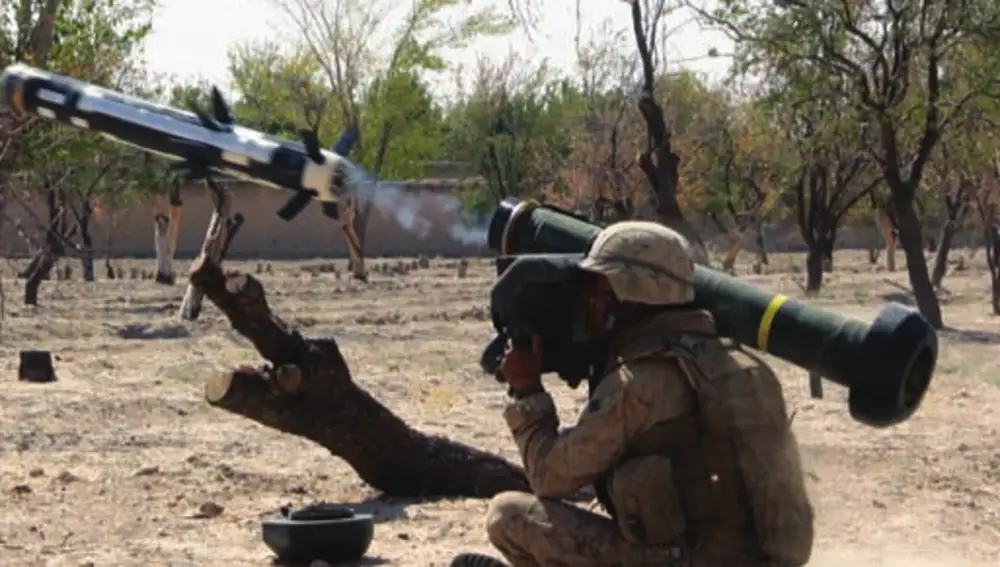
One of its main characteristics is the operation of ‘fire and forget’by which the missile is directed towards the target using your own infrared imaging finder. Once the launch has been carried out, the operator can take cover or change position without having to continue guiding it during the flight.
The Javelin can also attack a tank from above and impact in the upper part, where the armor is usually less than in the front, through an automatic ascent and descent trajectory, guiding itself towards the target with its infrared seeker.
The new LWCLU maintains Compatibility with previous, current and future Javelin variantswhich allows soldiers to renew their equipment by taking advantage of existing missiles. According to figures provided by Raytheon and Lockheed Martin, they have so far manufactured more than 55,000 Javelin missiles and more than 12,000 reusable command and launch units.