
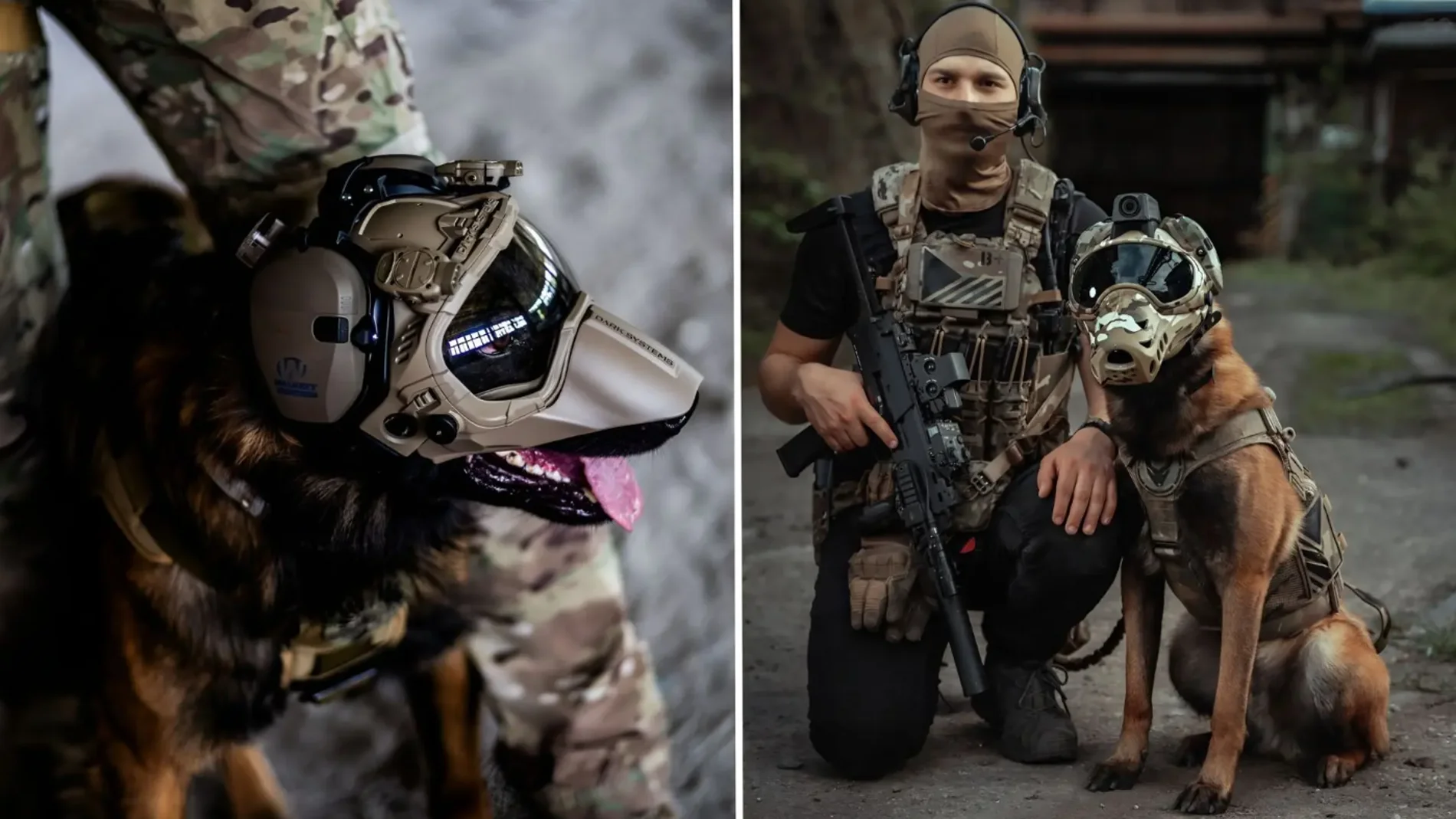
Human beings’ best ally on a dangerous mission could come out of a laboratory. It will not be a dog-shaped robot, but rather an animal whose DNA will have been modified to reduce health problems and, potentially, improve abilities such as speed, agility or smell. That is the bet of Warhound, an American company. Its objective is to transform the selection, reproduction and equipment of dogs that work for the Army, police and emergency teams.
Behind the project are Ben Lamm, co-founder of Colossal Biosciences, known for its genetic engineering initiatives and recovery of missing species (such as the direwolf from Game of Thrones), and Palmer Luckey, co-founder of Anduril, a company specialized in defense technology. The CEO of Warhound falls to David Spirk, former chief data officer of the US Department of Defense. In the same space we have genetic modification, technology and military defense. The result is quite logical.
The initiative starts from a practical problem. According to figures released by the company itself, More than 80% of working dogs used by the US Army come from Europe. Furthermore, less than half of the animals acquired end up being suitable for service. Selection and training can take about three years, so many dogs do not complete the process due to physical problems, illnesses or characteristics that make their work difficult.
Warhound wants to change that equation by combining two techniques: cloning and genetic editing. The starting point will be cell lines from dogs of breeds such as the Belgian Malinois and the German Shepherd, highly valued for their working abilities. These cells will be preserved in a biological bank and will be used to develop animals with selected characteristics. The company plans to use ViaGen, a cloning company linked to Colossal, to produce the first copies.
The first priority will not be to turn them into more aggressive animals, but to reduce the hereditary problems that can separate them from service. Among the targets mentioned are hip dysplasia, vision problems, predisposition to certain cancers and muscle atrophy. In the longer term, those responsible consider improving qualities such as resistance, speed, agility and the ability to detect odors.
This last possibility is especially interesting for explosives search missions. The canine sense of smell allows us to locate substances that may go unnoticed by conventional sensors, and an improvement in that capability could be useful in security operations. However, it is important to distinguish between the announced objectives and the demonstrated results: the company still has to develop the animals and check whether the modifications produce the expected improvements.
In a recent interview, Ben Lamm, from Colossal Bioscience, points out that his intention is to achieve healthier, longer-lived and more capable dogs. “The idea is that if we make the dog safer, healthier and perform better, it will also perform better in the line of duty.”says Lamm. The proposal, therefore, is not limited to enhancing their operational capabilities: it also aims to reduce the number of animals that suffer health problems or do not pass training.
The second part of the project will come from Anduril. Dogs may wear protective vests, glasses and equipment equipped with sensors to transmit information to their handlers. These devices would allow us to better understand the conditions of the environment and coordinate operations. They are not electronic implants nor do they turn animals into cyborgs: they are technology incorporated into the equipment they wear. “Anduril additives will make dogs safer and healthier, beyond their genetics: they will be on the dog, not inside the dog – adds Lamm -. The combination of biotechnology and external devices seeks to improve both the protection of the animal and that of the personnel who work with it.”
The company hopes that the first puppies are born at the beginning of 2027 and hopes that some can enter service approximately two years later. For now, these are deadlines and business objectives, not achieved results. The effectiveness of the modifications, the safety of the procedures and the performance of the animals under real conditions remain to be demonstrated.
The project also opens an ethical debate. Genetically modifying a dog to reduce hereditary diseases can provide benefits to its well-being, but selecting animals for dangerous missions raises questions about the limits of such intervention and the responsibility of those who use them. Warhound states that it will work under the guidance of the American Humane Society, an organization that will collaborate in the supervision of its training programs and in the retirement and adoption options for the animals. The paradox is that a technology presented as a way to better protect man’s best friend could also make it a more efficient military instrument. The challenge will not only be to obtain dogs capable of completing difficult missions, but ensure that improving your performance does not take precedence over your health and well-being.