
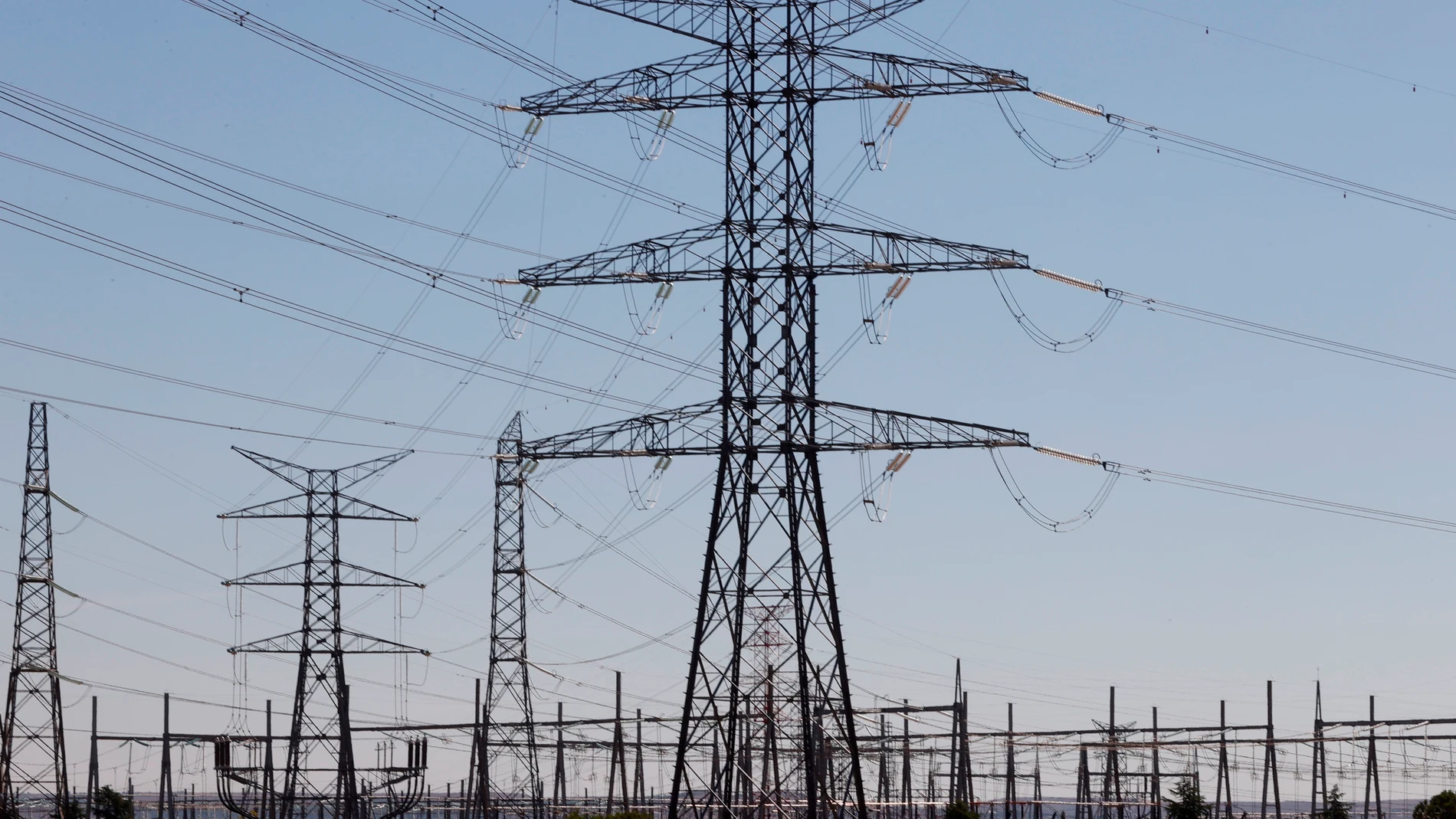
Spain throws off electricity. Between January and August the system has scrapped 4.5 terawatt hours of wind and solar generation that it could not integrate into the network, more than in all of 2025, according to the consulting firm Aurora.
In June alone, parks were disconnected for 1.2 terawatt hours (TWh), a record. The wholesale market also accumulates hundreds of hours this year with zero or negative prices: At certain times there is so much electricity available that the system has to pay to stop producing.
There appears the problem that the Government has decided to solve with a new regulatory wall.
The renewable that Spain already has installed will not be enough to prove green consumption of new data centers. For them, a good part of the clean electricity will have to come from new plants, contracted for a decade and capable of proving their production in the same hours in which it is consumed. Meanwhile, renewable electricity is being thrown away, conditions are established that may hinder the arrival of large consumers capable of absorbing it.
a few months ago Pedro Sanchez celebrated some of the largest technological investments ever announced in Spain. In March, Amazon raised its commitment to Aragón to 33.7 billion euros. Artificial intelligence and the cloud were, in the official discourse, the opportunity to convert the sun, wind and available land into a new industrial advantage for the country. At the end of August, the Government changed the rules of that race.
The origin lies in the response plan to the Middle East crisis of March 20, which committed the Executive to establish by royal decree the requirements that data centers must meet to connect to the network. Five months later, on August 25, the Government agreed to process the rule urgently. Two days later he published the text and opened a period of allegations that initially ended on September 4. Seven business days after having dispensed with prior public consultation.
Last year the Ministry had already released a draft, also in August. So there were 38 days of hearing. That text never reached the BOE. The new one has returned with more demanding requirements and a much shorter deadline. The emergency route is legal. The question is why a rule that can condition investments of billions has been processed so quickly.
The center of the regulation is a requirement that is simple to understand and much more complicated to execute: 80% of the electricity consumed by large data centers must be backed by new renewable generation. Not just any plant will do. It must have been put in service less than 18 months previously, there is a supply contract of at least ten years and produce electricity at the same hours in which the center consumes it.
Guarantees of origin, the usual mechanism to prove that electricity consumption is associated with renewable generation, will not be enough. Non-compliance can cause surcharges of up to 500% on tolls and charges and, if they are serious and repeated, even the loss of access to the network. Projects that are already in the pipeline will also have to adapt to the new conditions.
The “squatting” of the network as a pretext
The Government has a strong argument for wanting to order the phenomenon. Data centers have been granted more than 12 gigawatts of network access, compared to the 3.5-4 GW of demand that the Artificial Intelligence Strategy estimated for 2030. There are, therefore, requests that will never become installations. Part of the problem is speculation: reserving connection capacity, a scarce resource, to sell it later or wait for a project to appear. But that is precisely the part of the problem that the system already knows how to solve. A guarantee, binding execution deadlines and the withdrawal of permission from those who do not build would allow separate real projects from those that “squat” the network.
The decree goes further. It does not clear the queue but rather changes the entry conditions for everyone. Also for those who have already purchased land, obtained permits and committed capital. This is where the concern of the electrical and renewable industry begins. And especially for the leading regions in attracting data centers, all governed by the Popular Party.
Madrid and Aragon concentrate a good part of the projects, while Andalusia and Extremadura They try to use their abundance of land and renewables to join the race. The four presented allegations.
Aragón has around thirty projects in the pipeline. Amazon and Blackstone concentrate some of the biggest bets, with a large campus in Calatorao. Her Economy Minister maintains that the rule seems “designed to sink” the community, while her Madrid counterpart speaks of requirements “that are impossible to meet” for projects that have been in the works for years. Madrid is also competing to become one of the major European hubs for data centers and artificial intelligence services.
Suspicious thresholds
Extremadura offers a different perspective. Merlin Properties wants to begin this fall in Navalmoral de la Mata the first phase of a 1.6 billion euro campus with 250 jobs. The company assures that it can meet the new demands thanks to its renewable strategy, so this investment is not threatened. The limit for its growth is somewhere else: electrical capacity. It has been granted 29 MW and aspires to develop a much larger project.
Andalusia, with more than twenty projects and 10,000 million in investment according to the Board, poses a greater contradiction. The rule establishes that the requirement for new generation will disappear when renewables exceed 90% of the electricity generated in Spain.
The threshold, however, It is calculated on the entire country. The Board demands that it be measured community by community. Andalusia already produces more renewable electricity than it consumes. If the criterion were applied territorially, it would have exceeded the threshold and the requirement would cease to operate. The region can produce and export clean electricity while the investments that could consume it find new difficulties in installing due to a standard that puts 9 billion investments at risk and that the SpainDC data center employers classify as “restrictive.”
The European gigafactory, test bench
The Government itself will have the opportunity to verify the compatibility of its standard with the industrial strategy it defends. Spain competes to host one of the European artificial intelligence gigafactories through a consortium in which the State, through SETT, is the first shareholderwith 48% and 719 million euros.
The project includes two headquarters, in Móra la Nova and San Fernando de Henares. It is, in essence, a data center.
The draft of the royal decree does not exclude it: only those intended for defense, civil protection and public security are left out.
If the conditions that the Executive imposes on the sector are compatible with an investment of that scale, the State will have the opportunity to demonstrate it in its own project.