
There are things that you don’t expect to miss until they start to be missing. I live in Asturias and rain was one of those characteristics of nature that never failed. If we even have at least 10 names for it: orbayu, muga, orpín, prúa… And something similar happens in Galicia, Cantabria or the Basque Country.
For a good part of my life, saying that I lived in Asturias meant accepting an inevitable conversation about the weather. What if it rained? What if it was going to rain? That you had to carry an umbrella. The green of the meadows, the forests, the mountains and the wet roads were as much a part of the landscape as the houses or the sea. The rain was not news: it was a circumstance. But now…
The Principality has become the community where the rains suffer the most, according to the Standardized Precipitation Index (SPI) prepared by the State Meteorological Agency (Aemet). And, at the same time, Whole Spain is changing. An analysis of precipitation from 71 meteorological stations with records for more than six decades show that average rainfall has decreased in practically the entire Peninsula when comparing 1961-1990 with 1996-2025. But perhaps the most striking thing is not only that it rains less, but that the distribution is also changing: longer dry periods coexist with episodes of more concentrated and intense rainfall.
In this context, a gadget appears that, seen from Asturias, has some irony. Is called Aiper IrriSense and is used to water the garden. But, despite being a gadget, its true value is not technological since It achieves something that innovation rarely achieves: imitating an event in nature.
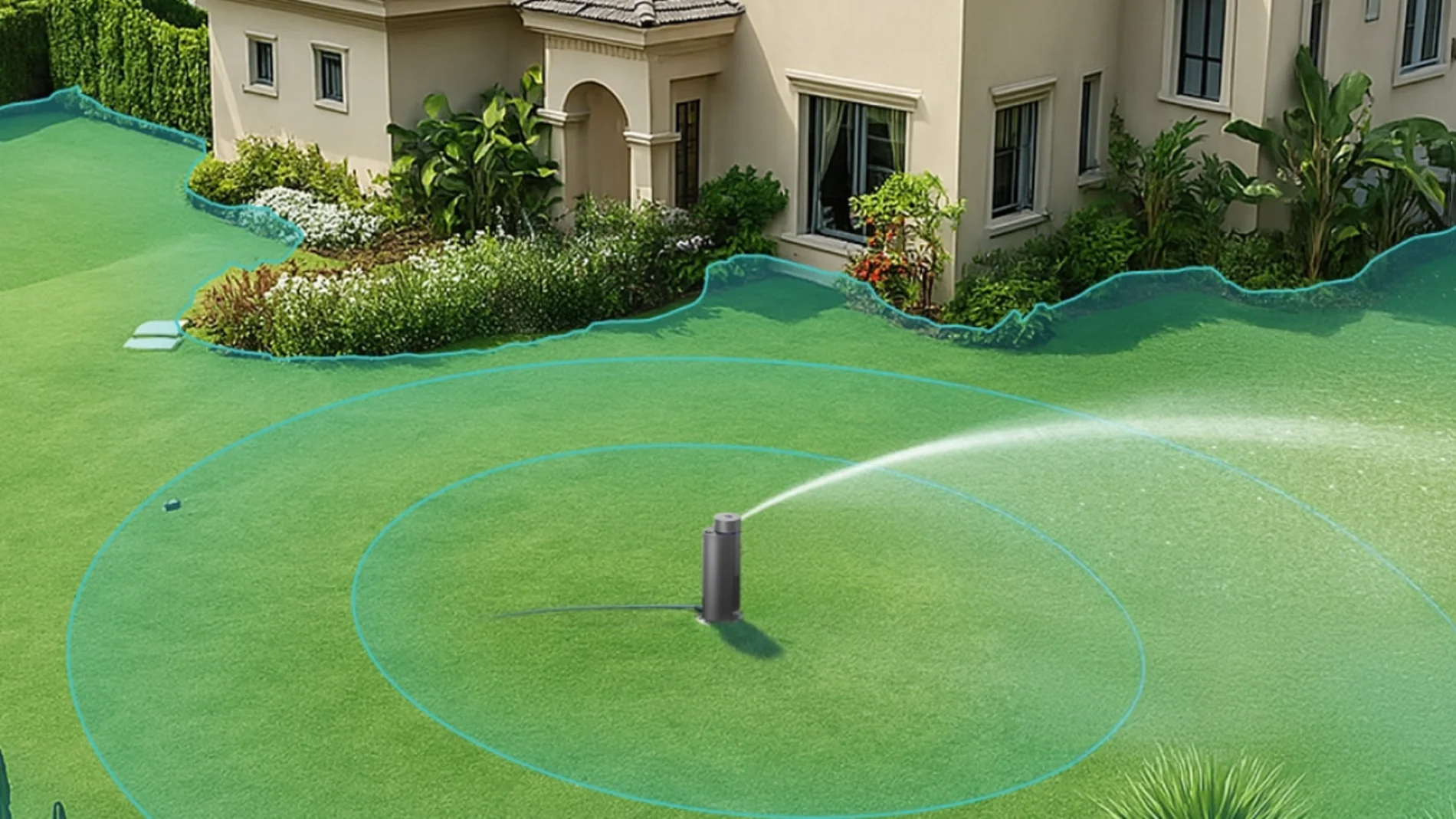
IrriSense brings together a sprinkler, an electric valve and a controller in a single device. Its EvenRain technology attempts to reproduce the behavior of a fine rain to distribute water evenly and prevent irrigation from hitting the ground with too much force. It can cover up to 445 square meters and project water up to 12 meters imitating a fine rain, which reduces the risk of erosion. Obviously it can be programmed.
But what is truly interesting is everything that happens before a drop comes out. The device incorporates a weather sensor and connects to the home Wi-Fi network. From the application you can define the areas that you want to water and schedule when to do it. If it detects five continuous minutes of rain, it automatically cancels the irrigation scheduled for that day. You can also adapt the programming to the weather conditions and warn of approaching rain. It’s a little technological paradox: we need a computer to decide when we shouldn’t water because it’s raining.
And perhaps that is the most interesting part of the product. Technology does not try to replace rain, rather it tries to learn from it. Knowing when it comes, how much we need and when we should step aside to let heaven do the work. It also allows you to customize irrigation zones and control the flow remotely.
Aiper ensures that its system can reduce water consumption by up to 40% compared to the industry standard under certain conditions of use. It is a figure from the manufacturer, not a universal guarantee, but it points to an increasingly evident need: when water is no longer abundant, watering well begins to be as important as watering less. Mainly taking into account that Spain consumes 1.5% of all your water in watering parks and public gardens. Private consumption… is already uncontrollable.
That even changes the way you look at a garden. For years, a green lawn could seem like simply an aesthetic issue. Now, in a country where rainfall patterns are changing (and will still change more according to the AEMET), maintaining it means asking yourself where each liter of water comes from and how much of it actually ends up where it is needed.
Perhaps that is why this gadget is less interesting as a piece of technology than as a symptom of an era. We have built sensors capable of knowing if it is going to rain, algorithms that modify an irrigation program and sprinklers capable of precisely distributing water. We can reproduce a fine rain for a few minutes just by opening an application. What we still cannot do is the essential thing: make it rain when the earth needs it.
And that’s the strange feeling IrriSense leaves me with. In Asturias, where for a long time rain was almost part of the furniture, we are now beginning to talk about it as a resource that must be managed. Maybe in a few years our children will find it normal that a garden needs a sensor to know when to wait for the sky. I still prefer to look out the window. And wait for it to rain.