
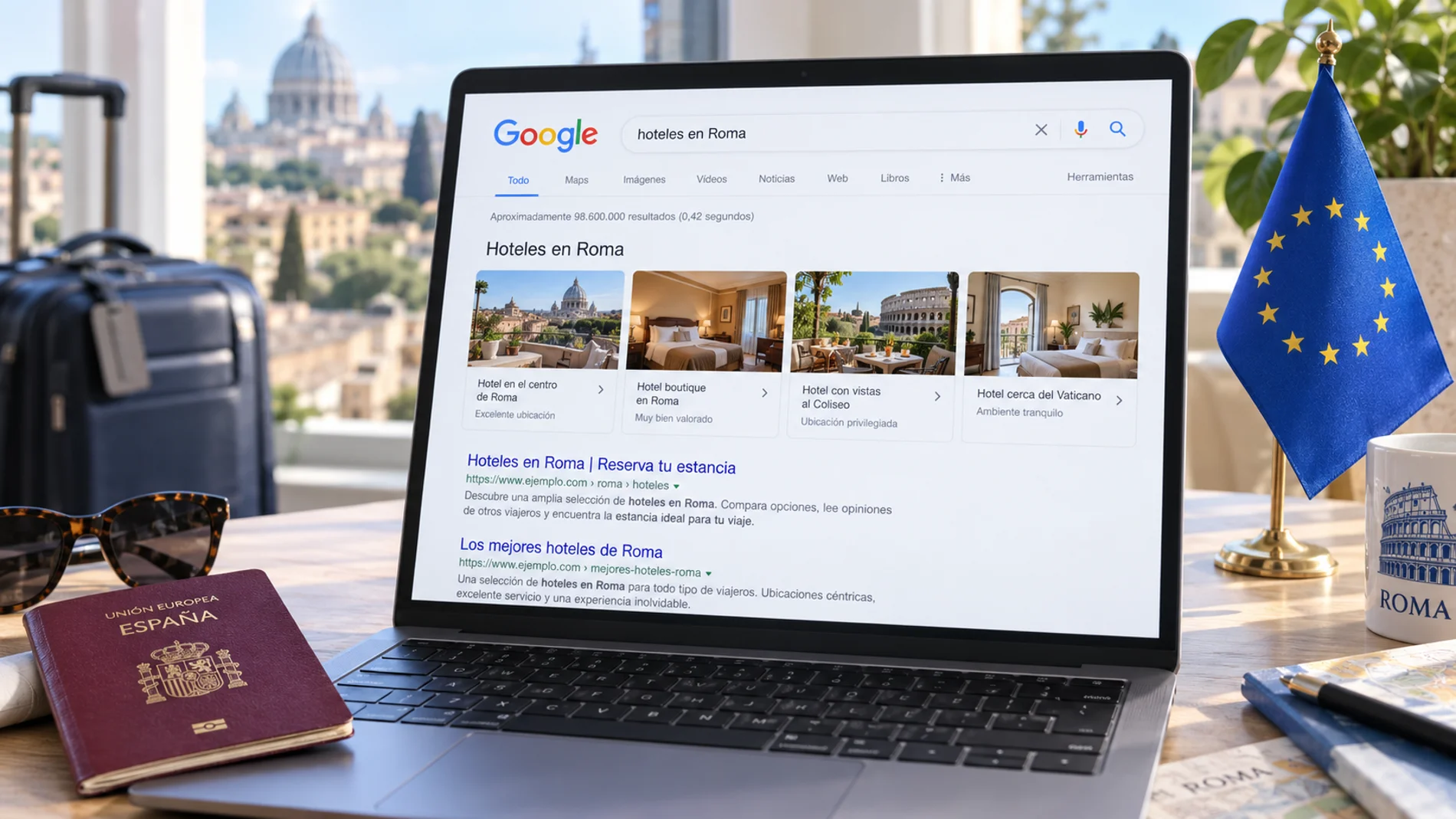
Google is changing its travel searches in the European Union to meet Community competition requirements. The changes affect the way hotels, flights and other tourism-related businesses are displayed. Part of the information that allows you to check prices and availability directly from the results will disappear and links to other specialized services will gain presence. The company assures that This reorganization will harm both users and local businesses.
The measure is framed in the Digital Markets LawDMA for its acronym in English, with which the EU seeks to limit the practices of large platforms that hinder competition. In July, the European Commission imposed on Google a fine of 460 million euros for favoring its own services in travel and shopping searches.
The Commission then considered that it gave them a more prominent position and presentation than their competitors. through visual elements and filters that were not offered on equal terms to third parties. The changes seek to correct this preferential treatment and avoid new penalties if the company continues to fail to comply with community requirements.
What changes when searching for flights and hotels
Until now, a search for hotels or flights could show modules with prices, availability and comparison tools integrated into the results page itself. This presentation allowed you to consult some of the information necessary to choose an accommodation or a flight without first entering other websites. Organic results, whose positioning is not paid, they could be much lower.
With the new design, the top will show a prominent link to a specialized search enginefollowed by two others with less details. These are services dedicated to searching and comparing travel offers, such as those that bring together accommodation or flights from different providers. The user will find access to these platforms to continue their search there.
Below it will appear a carousel with hotels, airlines or restaurants, but without real-time prices or availabilityso the user will lose that immediate query from Google. Your order must respond to the search algorithm and not to the company’s commercial interests.
Google questions the changes and their effects
The company maintains that the modifications required by Brussels will make your search engine less useful. ‘To comply with WFD requirements, we are making important changes to the search engine in Europe. These changes worsen the experience for European users, favor digital intermediaries at the expense of local businesses, and remove useful features that people depend on every day.‘, Google’s Nick Fox told Reuters.
Google claims that it has already tested the changes and that users rated the new results worse. As an indication of this dissatisfaction, he points out that they had to rewrite their queries more frequently. The company interprets this behavior as a sign that it is harder for them to find what they are looking for.
The company also recalls that in 2024 it attributed to changes required by the EU a 30% drop in free traffic to businesses for direct bookings. Now he warns that the new reorganization could cause additional declines.
The deployment is underway in the European Union, so it also affects Spain. Google has not detailed when it will reach all users, although The 60-day period granted to meet the demands ends on September 23. From then on, Google could receive fines of up to 5% of your global income under the DMA. Search results in other regions will continue to function as they currently do.