
Seventy-three tons of uranium. It’s a difficult amount to imagine until you compare it to something that is part of history: the bomb that destroyed Hiroshima in August 1945 contained about 64 kilograms of uranium-235. The figures seem to place both events in the same universe, but they hide a fundamental difference. The material now discovered in Syria is natural uranium and cannot be used directly to make a nuclear weapon. The comparison, however, helps to understand the magnitude of the discovery: inspectors from the International Atomic Energy Agency (IAEA) have located an amount of uranium that, by mass, exceeds by more than a thousand times the uranium-235 load of that first bomb used in a war.
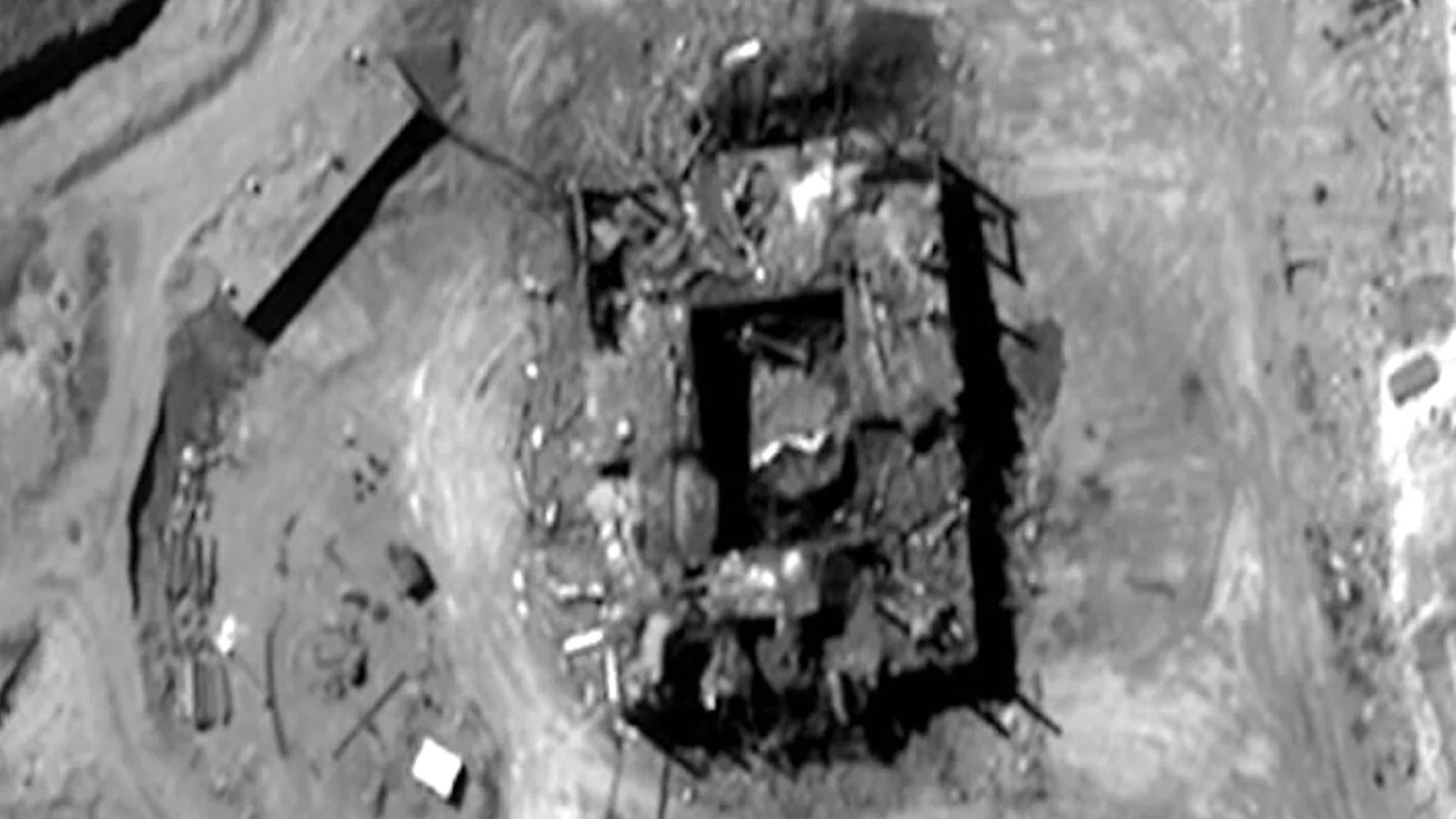
The discovery is part of a story that began almost twenty years ago, when Israel destroyed a facility located in Dair Alzour, in eastern Syria, through an air strike. The Government of Bashar al-Assad denied for years that that building was a nuclear reactor. The IAEA investigation, however, came to a very different conclusion: the structure was a nuclear reactor under construction that Syria should have declared to the agency. Now, almost two decades later, new pieces of the puzzle have emerged.
Last August, IAEA inspectors entered a site that Syria had reported to the agency in July. There they found clad fuel rods and other remains of natural uranium. After verifying the material, the agency confirmed the presence of about 73 metric tons of natural uranium metal: approximately 55 tons corresponded to some 8,808 fuel rods and another 18 tons of uranium remains and waste.
The inspectors, led by Rafael Mariano Grossi, director of the IAEA, had to cross very narrow spaces and remove parts of the structures to access the material. Once located, it was subject to the safeguards of the IAEA, which also installed surveillance systems. The immediate objective is not to remove the uranium from the country, but rather something much more basic and fundamental: knowing where it is. and ensure that none of those tons disappear from international control. And this is where the figure takes on all its meaning.
Natural uranium is composed almost entirely of uranium-238 and contains only a small fraction of the isotope uranium-235, which is what can sustain a fission reaction under certain conditions. The Hiroshima bomb little boyused highly enriched uranium-235. Historical estimates place the amount of U-235 used at around 64 kilograms.
That’s why It would be a mistake to convert the 73 tons found in Syria into more than a thousand bombs. It is not the equivalent. To transform natural uranium into material suitable for a weapon, nuclear and chemical processes would have to be carried out that had not been carried out here. The importance of the discovery lies elsewhere: the uranium was compatible with the operation of the reactor that Syria was building.
According to the IAEA report, the Dair Alzour complex was a graphite-moderated, gas-cooled reactor. Its configuration is especially relevant because this type of facility can produce plutonium from uranium fuel during its operation. Plutonium, unlike the natural uranium now found, can be used as fissile material for a nuclear weapon.
Grossi, was especially clear on September 7. The reactor was practically completed and, due to its configuration and technical characteristics, it was “very efficient” at producing fissile material that could be used in nuclear weapons. But Grossi immediately introduced an essential caution: the intention of the Syrian authorities at the time cannot be determined solely from the reactor design.
That distinction is important. The discovery does not prove that Syria was making an atomic bomb. It demonstrates something different and, for the IAEA, very serious: that the country developed undeclared nuclear activities and built a reactor whose configuration presented a significant risk of proliferation.
For years, the investigation remained practically frozen. The reactor was destroyed in 2007 and much of the evidence disappeared under the rubble. The cooperation of the new Syrian authorities, after the fall of Assad at the end of 2024, has changed the situation. The access of inspectors to facilities that had remained out of their reach has made it possible to find the fuel, examine the refrigeration infrastructure and reconstruct with much greater precision what was happening.
The report containing these new findings was presented by the IAEA Director General to the Board of Governors on September 1, 2026. It is a confidential document distributed to Member States, not a conventional public report. The available analysis of the document confirms the approximately 73 tons of natural uranium and details its distribution among fuel rods, remains and waste.
And perhaps that is the most powerful image in this entire story: We are not facing 73 tons of a bomb, but rather we are facing 73 tons of a story. A story that began with a hidden reactor in the desert, continued with an air attack in 2007 and has taken almost twenty years to reach a much more precise answer about what was behind those walls. The uranium found now does not automatically make Syria a nuclear power. But it allows inspectors to complete a critical part of the map. And in nuclear matters, knowing where each gram is can be as important as knowing how much there is.