
Let’s imagine a house in which the appliances do not wait to receive an order. A refrigerator that knows that certain foods are about to run out, a kitchen that understands what we are going to prepare, a washing machine that knows our habits or a system that understands that we are preparing a trip and adapts the operation of the home. It’s not just about talking to appliances. The idea is that they understand the context in which we live.
That is one of the directions in which LG wants to take artificial intelligence applied to the home. But there is something significant about the way the company frames the problem: It doesn’t start with a specific appliance. Start with the person.
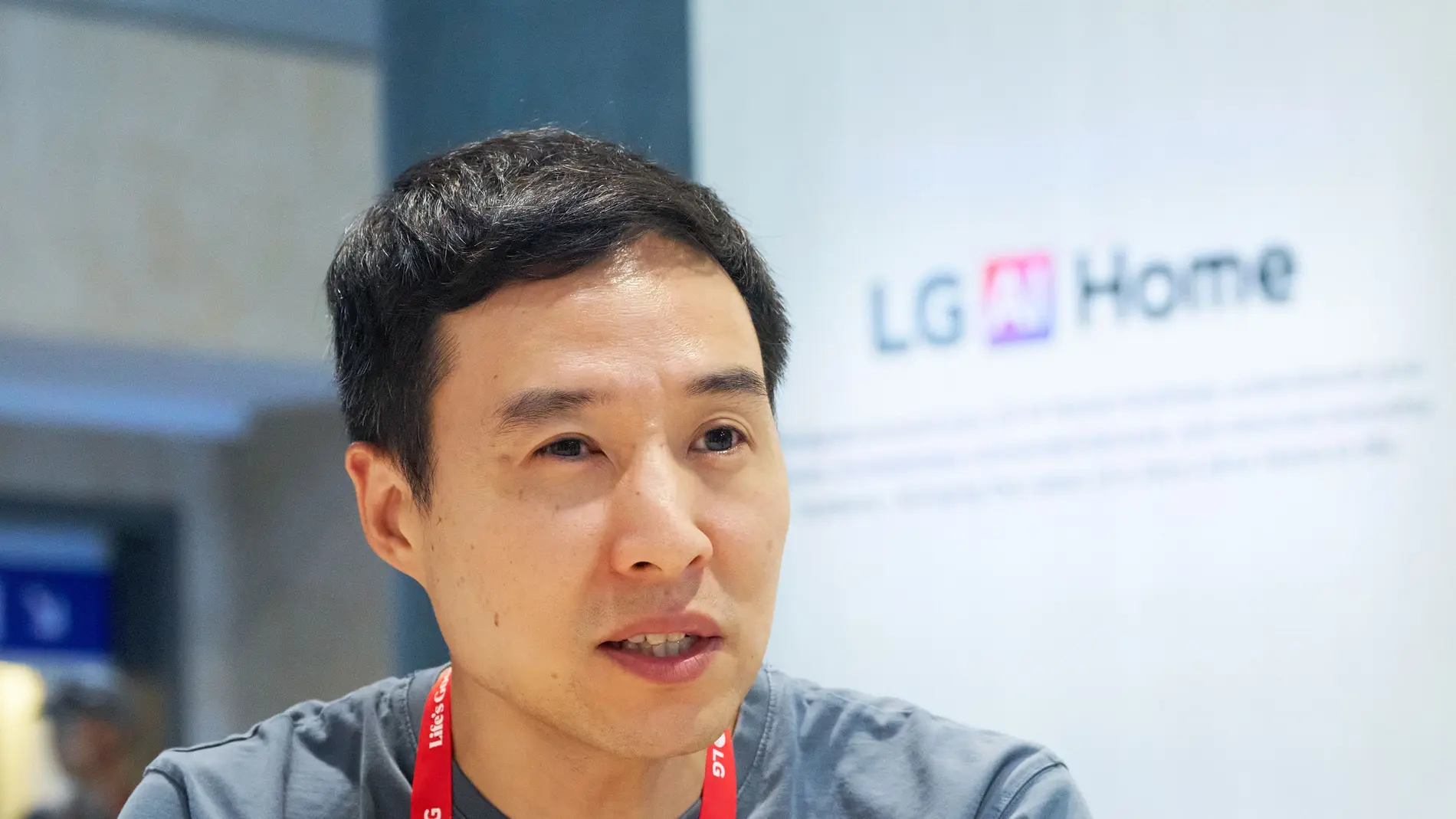
“Instead of specifying a device, we start from the user. We start from user experience – he explains to us at IFA Ronald Ro, Vice President and Director of LG’s AI Home Solution area -. “Home artificial intelligence must understand the user, the space in which they live and the context in which they use the different devices to be able to offer recommendations and assistance in a more natural way.”
The difference may seem small, but it completely changes the concept of a smart home. Until now, much of the so-called smart home has consisted of connecting devices and allowing the user to control them from an application. LG’s proposal points in another direction: Let the ecosystem understand what is happening. To achieve this, however, there is a much less attractive problem than developing a new artificial intelligence function: ensuring that all devices can share information in a secure and consistent way.
“The most difficult thing is not to develop a specific function, but how to structure user data on the back end so that it can be used so that the experience is synchronized between different devices. And that forces privacy and security issues to be resolved simultaneously,” adds Ro.
It is an especially relevant difficulty because a house is not usually made up of products from a single brand. Although LG may aspire to build a complete ecosystem, recognizes that a home exclusively equipped with company devices is not a realistic expectation. “It is almost impossible to think that there will be houses with only LG. We would like to, but that is not reality,” admits Ro.
That is why connectivity becomes one of the pillars of its strategy. The company explains that it has incorporated capabilities to connect different applications, brands and devices using local protocols such as Zigbee or Thread. But connecting is not enough. If each device belongs to a different platform, there are also different architectures and security policies. That’s where LG Shield comes in, the security system that must accompany connectivity. The question is fundamental because the more a house knows about its inhabitants, the greater the risk associated with that data.
And here appears a word that Ro himself avoids: analyze. “Users really don’t like to be monitored, analyzed. But if the data is anonymized, well managed and stored and we do not associate certain actions with your identity, then we are comfortable.”
The acceptance of the technology depends, therefore, on something as unspectacular as the data being anonymized, correctly managed and not unnecessarily associated with a person’s identity. The final objective is paradoxical. The smarter the house, the less its intelligence should be noticed.. In this way, Ro’s team works with an idea in which devices can learn about spaces, the devices they contain, the habits of their inhabitants and even certain daily needs. The objective is to develop systems capable of connecting the needs of a recipe with the products to be purchased and, subsequently, with the electronic commerce that the user usually uses. The purpose is that the person has to think and do fewer things.
But perhaps the most revealing image of the conversation appears when the question abandons technology and becomes a family question: What will the house of the future be like? “We want to keep the home part in a house – concludes Ro -. A home will continue to be the place where we want to protect joy, pain, conversations. What should change is the technology that surrounds it: the devices would have to remain completely in the background, but be very intelligent.”
It is an interesting vision because it inverts the usual logic of technology. For years, making an object smart meant adding a screen, an app, a voice assistant, or more control options. In the house you imagine Ro, intelligence works almost the opposite: the better it works, the less it forces the user to interact with it.