
The pollution It is one of the biggest problems on the planet. Among the most common gestures that encourage this progressive destruction, we find that of not throwing garbage in its corresponding place, but throwing it where it is best, whether on the ground or in the water.
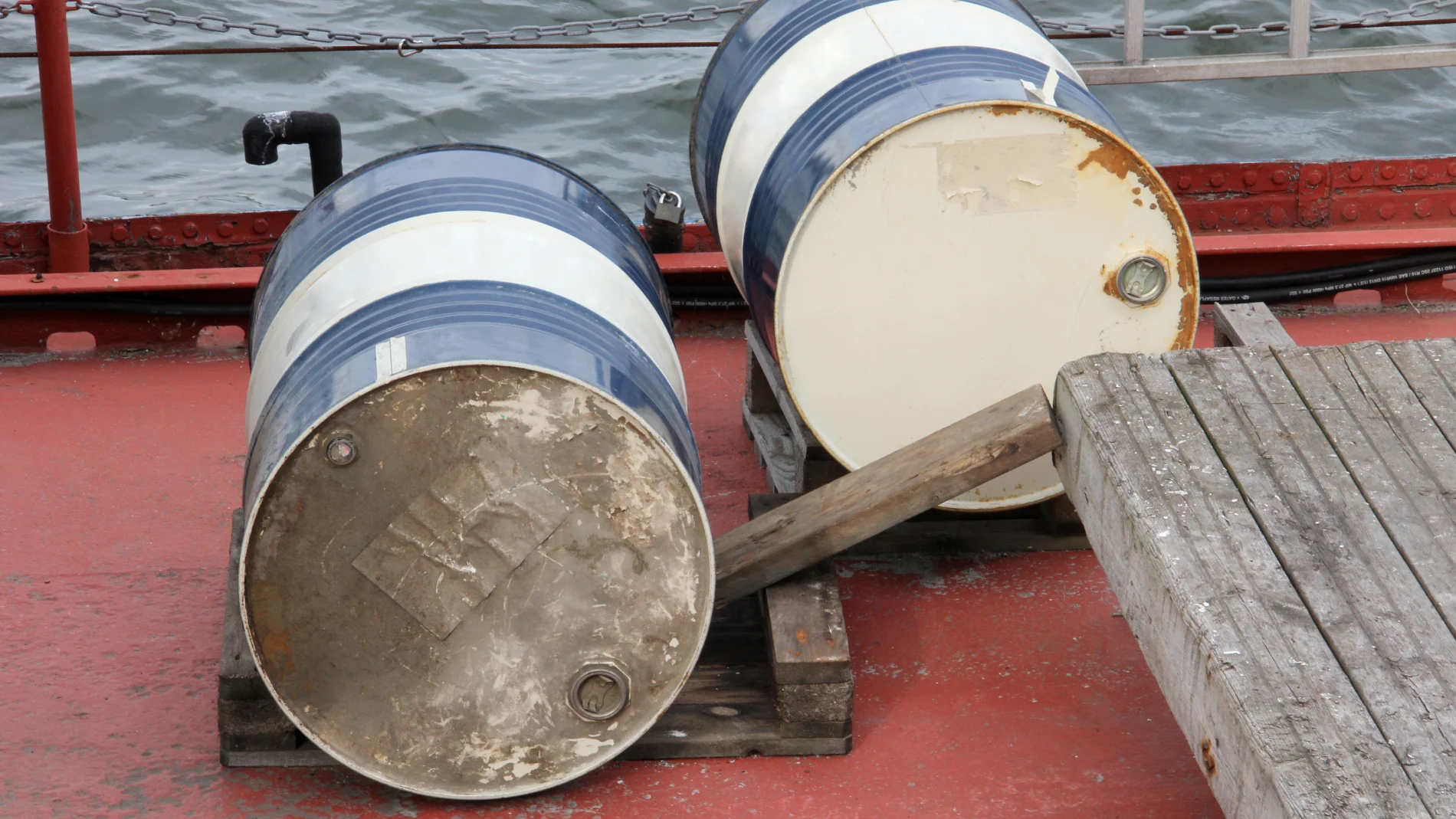
This last practice is one of the main causes of destruction of aquatic ecosystems and represents a serious danger to human health. A study of National Center for Scientific Research (CNRS), in Francereveals that between 1950 and 1990, more than 200,000 barrels full of radioactive waste were dumped in the northeast of the Atlantic Ocean.
They explain that “these barrels contain waste incorporated in bitumen and cement to fill the free spaces of the barrels“. His research on the consequences that this event has had on biodiversity, had as its First objective: prepare a plan of the area immersion of these barrels. But now, they will carry out a mission in order to document their interaction with different ecosystems.
Condition of the barrels
The investigation, called Nuclear Ocean Dump Site Survey Monitoring (NODSSUM)was carried out in collaboration with the team of French Research Institute for the Exploitation of the Sea (Ifremer) and the Nuclear Safety and Radiological Protection Authority (ASNR). They began investigating on May 27 and 28, with a submarine with which they managed to go down to almost 5,000 meters deep.
Once down, they were able todetect the state of advanced degradation of several barrels” and appreciate how in several of them, the liquid had come out. Thanks to the instruments they carried with them, they were able to “identify the different materials used for coating of waste”.
Can they have bad repercussions on health?
According to reports, the barrels are very far from fishing areas and at extreme depths for any human being. They explain that the dangerous compounds present do not last long and have since disintegrated. However, with this research They will determine if there is anything risky left in them for the human food chain.
Future of research
In an official statement that they have released on their website, they talk about how the measurements made at the site confirm the presence of radionuclides characteristic of these wastes, at activity levels higher than expected in the area. Radionuclides are atoms with unstable nuclei that release radioactivity.
With this mission, research teams will be able to use measurements taken in the laboratory and determine radionuclides more accurately. They point out that The objective will be “to study the mechanisms of dispersion and transfer of radioactivity in the environment”.